


Listen to the article
The U.S. ambassador to Chile has defended his government’s decision to impose visa restrictions on three high-ranking Chilean officials, describing it as a “sovereign decision” amid escalating diplomatic tensions between the two nations.
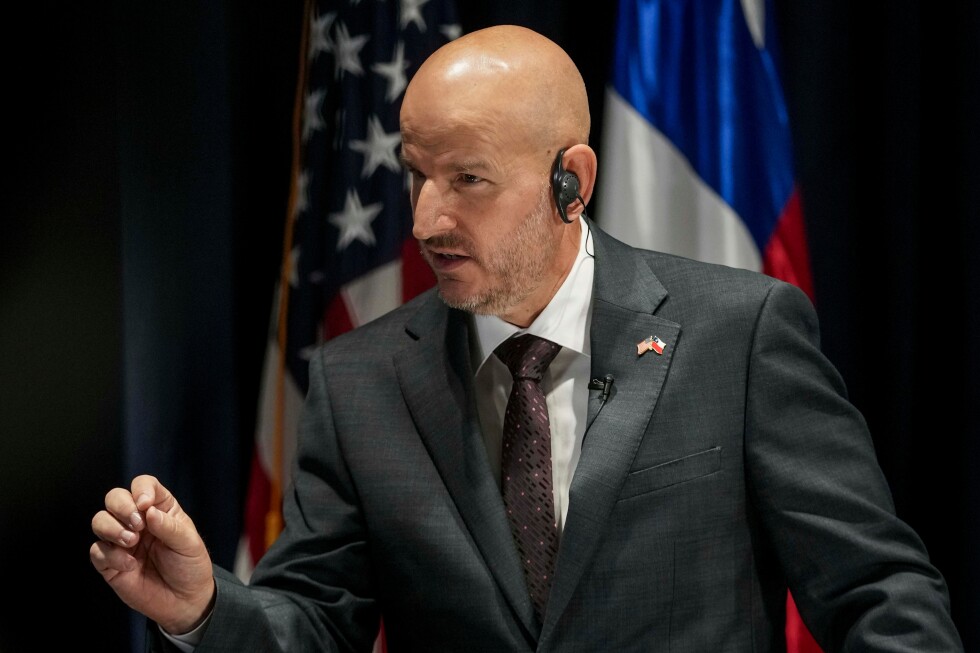
Speaking at a press conference in Santiago on Monday, Ambassador Brandon Judd addressed the controversy that erupted after the Trump administration announced travel bans against officials allegedly involved in activities undermining regional security.
“It’s our sovereign right to take actions when we feel that the region’s security is being threatened,” Judd told reporters, emphasizing that the U.S. had exhausted all diplomatic channels before implementing the sanctions.
Among those sanctioned is Chile’s Minister of Transport and Telecommunications Juan Carlos Muñoz, while the identities of the other two officials remain unconfirmed by Chilean authorities.
The sanctions, announced Friday by U.S. Secretary of State Marco Rubio, specifically cited “activities that compromised critical telecommunications infrastructure and eroded regional security.” This appears to reference a proposed submarine fiber optic cable project that would connect Chile directly to China—a project still in its evaluation phase but viewed with significant concern by Washington.
According to Ambassador Judd, despite specific warnings regarding the submarine cable, Chilean authorities failed to provide what the U.S. considered adequate transparency about the project and its implications.
The decision has provoked strong condemnation from Chile’s outgoing left-wing government. President Gabriel Boric denounced the move, accusing the Trump administration of making “indeterminate accusations” and “applying unilateral sanctions” that he characterized as an infringement on Chilean sovereignty.
When questioned about the Chilean government’s forceful reaction, Judd insisted there were “no threats” from the United States. “We are not making any threats. What we have strictly told you all the time is that everything we do depends upon communication and security,” he said.
Without specifically naming countries, the ambassador alluded to security concerns in the region, stating that “there are many malicious actors in this region that want to cause harm, not just to this region and to Chile, but to the United States as well.” This appears to reference growing U.S. concerns about China’s expanding influence in Latin America, particularly in critical infrastructure.
The diplomatic row highlights the deteriorating relationship between Chile and the United States under the second Trump administration. President Boric, who will transfer power to far-right politician José Antonio Kast in two weeks, has been among the most vocal critics of President Trump in Latin America, once describing the Republican’s leadership style as that of a “new emperor.”
Trump, for his part, has openly expressed dissatisfaction with Boric while enthusiastically welcoming Kast’s recent landslide victory in Chile’s December national election. The incoming Kast administration is expected to align more closely with Washington’s regional policies.
“We look forward to working with the new government to provide what the Chilean people demanded,” Judd remarked, signaling a potential reset in bilateral relations once Kast takes office.
The visa restrictions represent the latest point of friction in what has become an increasingly strained relationship between the longtime allies. The dispute over telecommunications infrastructure reflects broader geopolitical tensions as the U.S. seeks to counter Chinese influence in critical sectors throughout Latin America.
The proposed submarine cable project has become particularly contentious as it would potentially give China direct digital access to South America’s southern cone, raising cybersecurity concerns among U.S. officials worried about potential surveillance capabilities.
As Chile prepares for its political transition, observers note that the timing of the sanctions could be strategic, coming just weeks before a more U.S.-friendly administration takes power in Santiago.
Fact Checker
Verify the accuracy of this article using The Disinformation Commission analysis and real-time sources.

9 Comments
Travel bans on officials can be a heavy-handed diplomatic tool. I’m curious to learn if there were any prior attempts at resolving this through less confrontational means before resorting to sanctions. Open dialogue is usually better than unilateral actions.
Agreed, diplomacy works best when all sides come to the table in good faith. Hopefully this escalation doesn’t further strain US-Chile relations, which seem to have been constructive in the past.
Interesting diplomatic move by the US. It’s their sovereign right to take such actions, though the reasoning behind the travel bans on Chilean officials seems a bit vague. I wonder if there are more details on the ‘activities undermining regional security’ that prompted this decision.
Agreed, more transparency around the specific issues would help understand the rationale here. Diplomatic tensions can be delicate, so I hope both sides can work to resolve this constructively.
The proposed submarine cable project sounds like an important regional infrastructure initiative. I’m curious to learn more about how the US sees it as a security threat. Are there geopolitical concerns around the cable’s routing or ownership?
Good point. Infrastructure projects like that can have complex national security implications that aren’t always obvious. Hopefully the US and Chile can have a frank dialogue to address any legitimate concerns.
As a mining and energy-focused audience, I’m interested in the potential impacts this could have on regional cooperation and infrastructure projects. The details around the ‘critical telecommunications’ concerns are important to understand.
Sovereign decisions on visa restrictions are certainly within a country’s rights, but the lack of clear explanation raises questions. I hope the US is willing to provide more details to justify these sanctions, rather than leaving it shrouded in ambiguity.
Curious to see how this diplomatic dispute plays out. The US may have legitimate national security reasons, but transparency and engagement are key to maintaining stable international relations, especially around sensitive infrastructure projects. Hope both sides can find a constructive path forward.