


Listen to the article
Ukrainian Businesses Fight to Survive Amid Persistent Power Outages and War Challenges
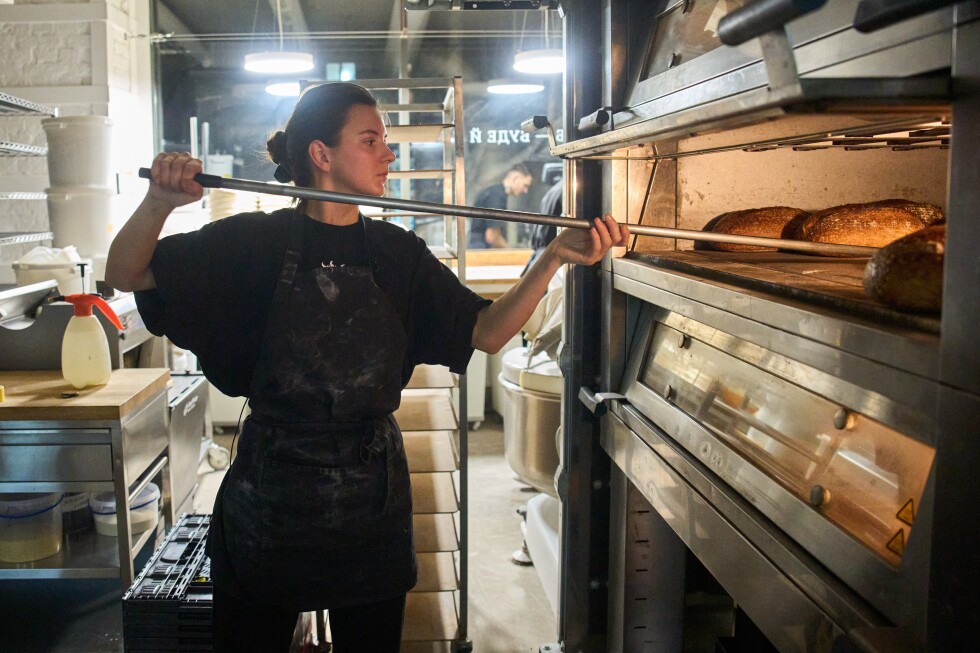
In the pre-dawn darkness of Kyiv’s historic Podil district, baker Oleksandr Kutsenko carefully shapes dough at Spelta bakery-bistro when suddenly the lights go out and the ovens shut down. Without hesitation, he steps outside into the freezing night to switch on a generator, a ritual that has become essential for Ukrainian businesses struggling to operate during Russia’s ongoing attacks on the country’s power grid.
“It’s now more than impossible to imagine a Ukrainian business operating without a generator,” says Olha Hrynchuk, Spelta’s co-founder and head baker. The 28-year-old opened the bakery 10 months after Russia’s full-scale invasion in 2022, meaning she has never experienced running her business under normal conditions.
The cost of purchasing and maintaining generators represents just one of many challenges facing Ukrainian enterprises after nearly four years of conflict. The generator at Spelta burns through approximately 700 hryvnias ($16) of fuel hourly, with the bakery relying on it for 10 to 12 hours daily. “You have no fixed schedule — you have to adapt and refuel it at the same time,” Hrynchuk explains.
Beyond power issues, businesses face acute labor shortages due to military mobilization and war-related migration, along with security risks, diminished consumer purchasing power, and complicated logistics networks.
Olha Nasonova, who heads the Restaurants of Ukraine analytical center, describes the current situation as the industry’s most difficult period in two decades. While businesses had prepared for electricity disruptions, the unusually cold winter has been especially devastating for small cafés and family-run establishments with limited financial resources.
The “Best Way to Cup” coffee project exemplifies this struggle. Co-founder Yana Bilym, who opened the venue in May, saw her business severely damaged in August when a Russian attack shattered all windows and glass doors. The renovation cost 150,000 hryvnias (about $3,400), with half financed through a bank loan she only recently finished repaying.
After consecutive large-scale Russian attacks on Ukraine’s energy infrastructure last month, Bilym’s building lost water supply and sewage functionality. “We were forced to close. We believe it’s temporary. Businesses in December and January, unfortunately, operate at a loss,” she says. Despite these challenges, Bilym holds onto hope that the closure will be short-lived, especially since her husband volunteered for military service on the front lines, and she wants him to have something to return to.
Many Ukrainian businesses have become community lifelines during the crisis. The government has allowed some firms to operate during curfew hours as “Points of Invincibility,” providing free electricity for charging devices and offering warm spaces where people can escape the cold.
Tetiana Abramova, founder of Rito Group, a clothing company producing designer knitwear since Ukraine’s independence in 1991, invested 500,000 hryvnias ($11,500) in a powerful 35-kilowatt generator and a wood-fired boiler to maintain operations. “At work we have heat, we have water, we have light — and we have each other,” she says.
However, running on generators increases production costs by 15-20% compared to standard electricity. Simultaneously, customer numbers have dropped by approximately 40% as many Ukrainians have left the country. “Profitability has fallen by around 50%, partly due to power outages,” Abramova notes. “This affects both the volume and efficiency of our work. We simply cannot operate as much as we used to.”
The broader economic impact is significant. According to a macroeconomic forecast by the Kyiv School of Economics, strikes on the energy system represent the most acute short-term risk to Ukraine’s GDP. If businesses manage to adapt, output losses could be limited to 1-2% of GDP, but prolonged energy system failures could increase losses to 2-3%.
Abramova, drawing on her three decades of entrepreneurial experience, reports spending nearly 100,000 hryvnias ($2,300) over just two months on generator maintenance. Yet she cannot pass all these costs on to retailers in the current economic climate.
“For us now, the main goal is not to be the most efficient, but to survive,” Abramova concludes, capturing the resilient but precarious position of Ukrainian businesses navigating multiple crises simultaneously as the war approaches its fourth year.
Fact Checker
Verify the accuracy of this article using The Disinformation Commission analysis and real-time sources.

9 Comments
Heartbreaking to hear how Ukrainian businesses are struggling to keep operating amid the ongoing attacks on their power grid. Kudos to these resilient entrepreneurs for finding ways to adapt, like using generators, despite the heavy costs and uncertainty. It’s remarkable they’re able to keep their enterprises running at all under such challenging conditions.
It’s a testament to the strength and resilience of the Ukrainian people that businesses like this bakery are finding ways to persevere despite the relentless attacks on their infrastructure. The sheer determination to keep their enterprises running under such dire circumstances is truly inspiring. My admiration goes out to all the entrepreneurs fighting to survive this crisis.
Absolutely. The resolve and adaptability of these Ukrainian business owners in the face of such adversity is truly remarkable. They deserve our deepest respect and support as they struggle to keep their livelihoods afloat.
It’s inspiring to see Ukrainian business owners like Oleksandr and Olha finding creative ways to keep their operations going despite the immense challenges. Relying on generators is an imperfect but necessary solution in these difficult times. I hope they and other enterprises can hang on until peace and stability returns.
Fascinating to get this on-the-ground perspective of how the war is affecting Ukrainian enterprises. The need to constantly rely on generators and adapt to unpredictable power outages must create immense operational challenges and added costs. I hope the international community can provide more robust support to help these businesses weather the storm.
The heavy burden these businesses face, from power outages to soaring fuel costs for generators, is truly staggering. I can only imagine the resilience and determination it takes to keep going in the face of such adversity. My heart goes out to all the Ukrainian entrepreneurs struggling to survive this crisis.
This is a sobering reminder of the real-world impacts of Russia’s assault on Ukraine. Beyond the human toll, the damage to critical infrastructure is devastating local economies and livelihoods. I hope the international community can step up support to help these businesses and communities survive and eventually rebuild.
Agreed. The plight of Ukrainian businesses is a heartbreaking byproduct of this senseless war. I hope they can access the resources and aid they need to weather this storm.
This underscores how the impact of Russia’s attacks ripples far beyond the front lines, disrupting the livelihoods of ordinary Ukrainians trying to run their businesses and support their families. I admire the grit and adaptability of these bakery owners, but the level of hardship they’re enduring is heartbreaking.