


Listen to the article
The British economy experienced minimal growth in the fourth quarter of 2025, expanding by just 0.1% according to figures released Thursday by the Office for National Statistics. This sluggish performance mirrors the previous quarter’s growth rate, raising concerns about the country’s economic trajectory.
For the entirety of 2025, the economy grew by 1.3%, a slight improvement from the 1.1% recorded in 2024 and the highest annual growth since 2022. However, economists have expressed disappointment with the year’s conclusion, particularly given stronger performance earlier in the year.
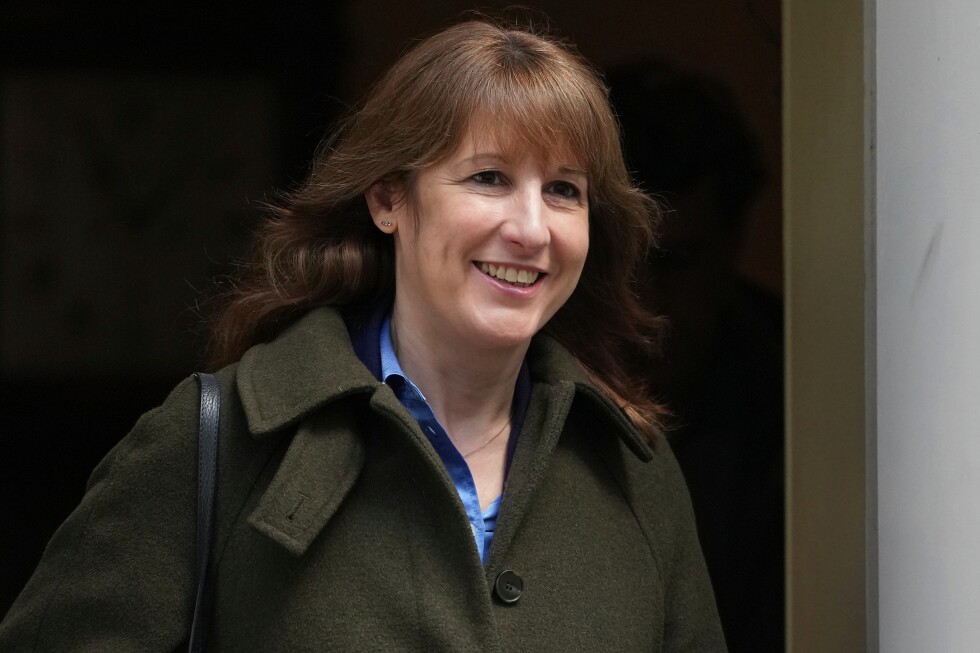
Analysts attribute the lackluster fourth-quarter performance largely to uncertainty surrounding the Labour government’s November budget. Throughout much of the period, businesses and consumers adopted a cautious approach amid widespread speculation that Treasury chief Rachel Reeves might break key promises regarding income tax levels.
“The underwhelming final quarter caps off another disheartening year for the U.K. economy with growth tailing off unnervingly quickly after the strong start to 2025,” said Suren Thiru, economics director at the accounting body ICAEW. Thiru pointed to “rising taxes, heightened uncertainty and poor productivity” as factors that increasingly constrained economic activity.
The actual tax increases implemented in the budget proved more modest than many had feared, but the prolonged uncertainty appears to have dampened both business investment and consumer spending during the crucial pre-holiday period. This cautious behavior has contributed to the world’s sixth-largest economy struggling to gain meaningful momentum.
Some economic indicators suggest a potential uptick in growth during early 2026, offering a glimmer of hope for improved performance. However, forecasts for the full year remain subdued. The Bank of England recently revised its growth projections downward, reducing its 2026 forecast from 1.2% to 0.9% and its 2027 forecast from 1.6% to 1.5%.
The tepid economic growth has presented political challenges for the Labour government, which has seen its public support decline significantly since winning the 2024 general election. Economic concerns have featured prominently in this erosion of popularity, with many voters expressing dissatisfaction with the pace of economic improvement.
Government officials are now placing their hopes on potential monetary policy adjustments. With growth remaining weak and inflation expected to decrease sharply throughout 2026, the Bank of England may consider further interest rate cuts. The central bank kept its main rate unchanged at 3.75% in its most recent meeting, but analysts suggest a quarter percentage point reduction to 3.50% could come as soon as March.
Simon Pittaway, senior economist at the Resolution Foundation think tank, emphasized the importance of policy focus in the coming year. “The task for 2026 is for the government to double down on its growth agenda to build a sustained economic recovery that will eventually flow into people’s pay packets,” he noted.
The economic challenges facing Britain come amid a complex global landscape, with many advanced economies still navigating post-pandemic adjustments and geopolitical uncertainties. For the U.K., which continues to adapt to its post-Brexit reality, generating sustained economic momentum remains particularly crucial for long-term prosperity.
As the country moves further into 2026, policymakers face the delicate challenge of stimulating growth while addressing persistent structural issues within the economy, including productivity concerns and regional economic disparities that have long characterized the British economic landscape.
Fact Checker
Verify the accuracy of this article using The Disinformation Commission analysis and real-time sources.

16 Comments
The UK economy appears to have been in a bit of a holding pattern in 2025, with modest growth but continued uncertainty. Hopefully the new government can provide a clearer vision and policy direction to support a stronger recovery in 2026.
You’re right, clear and consistent policies will be essential. The government needs to strike the right balance between supporting growth and maintaining fiscal discipline.
Sluggish 0.1% growth in Q4 2025 is pretty concerning for the UK. While the annual performance of 1.3% was an improvement, the economy seems to have lost momentum towards the end of the year. Will be interesting to see the new government’s plan to reinvigorate growth.
Agreed, the slowdown in Q4 is worrying. The new government will need to act quickly to boost confidence and investment, especially in key sectors like mining and energy.
The UK economy seems to be in a holding pattern, with muted growth and continuing uncertainty. Will be interesting to see if the new government’s policies can provide a boost, especially for businesses and consumers.
Agreed, policy direction from the new government will be crucial. They’ll need to strike the right balance between supporting growth and maintaining fiscal discipline.
Uncertainty around the budget seems to have been a major drag on the UK economy in Q4 2025. Businesses and consumers clearly adopted a cautious approach. Hoping the new government can provide more clarity and stability going forward.
You’re right, policy uncertainty is a big challenge. Providing a clear, predictable economic framework will be crucial for the new government to boost confidence and investment.
Disappointing to see the UK economy losing momentum at the end of 2025. Hopefully the new government can provide clearer policy direction and restore business and consumer confidence in 2026.
Absolutely, clear and consistent policies are key. Businesses and consumers need stability and predictability to make long-term plans and investments.
1.3% annual growth for the UK in 2025 is a slight improvement but still pretty subdued. Wonder what the outlook is for key industries like mining and energy. Hoping for a stronger economic performance in 2026.
Mining and energy sectors will be closely watched as leading indicators for the broader economy. Stability in those areas could help drive a rebound in 2026.
Interesting to see the UK economy struggling at the end of 2025. Uncertainty around the budget and taxes seems to have weighed heavily on businesses and consumers. Curious to see if the new government can turn things around in 2026.
Agreed, the budget uncertainty was clearly a major factor holding back growth. Businesses need stability and predictability to make long-term investments.
The UK’s economic performance in 2025 was quite mixed, with a strong start but a lackluster finish. Will be interesting to see if the new government can engineer a more sustained recovery in 2026, especially for key industries like mining and energy.
Agreed, the trajectory of the mining and energy sectors will be a good barometer for the broader economy. Decisive policy action in those areas could help drive a rebound.