


Listen to the article
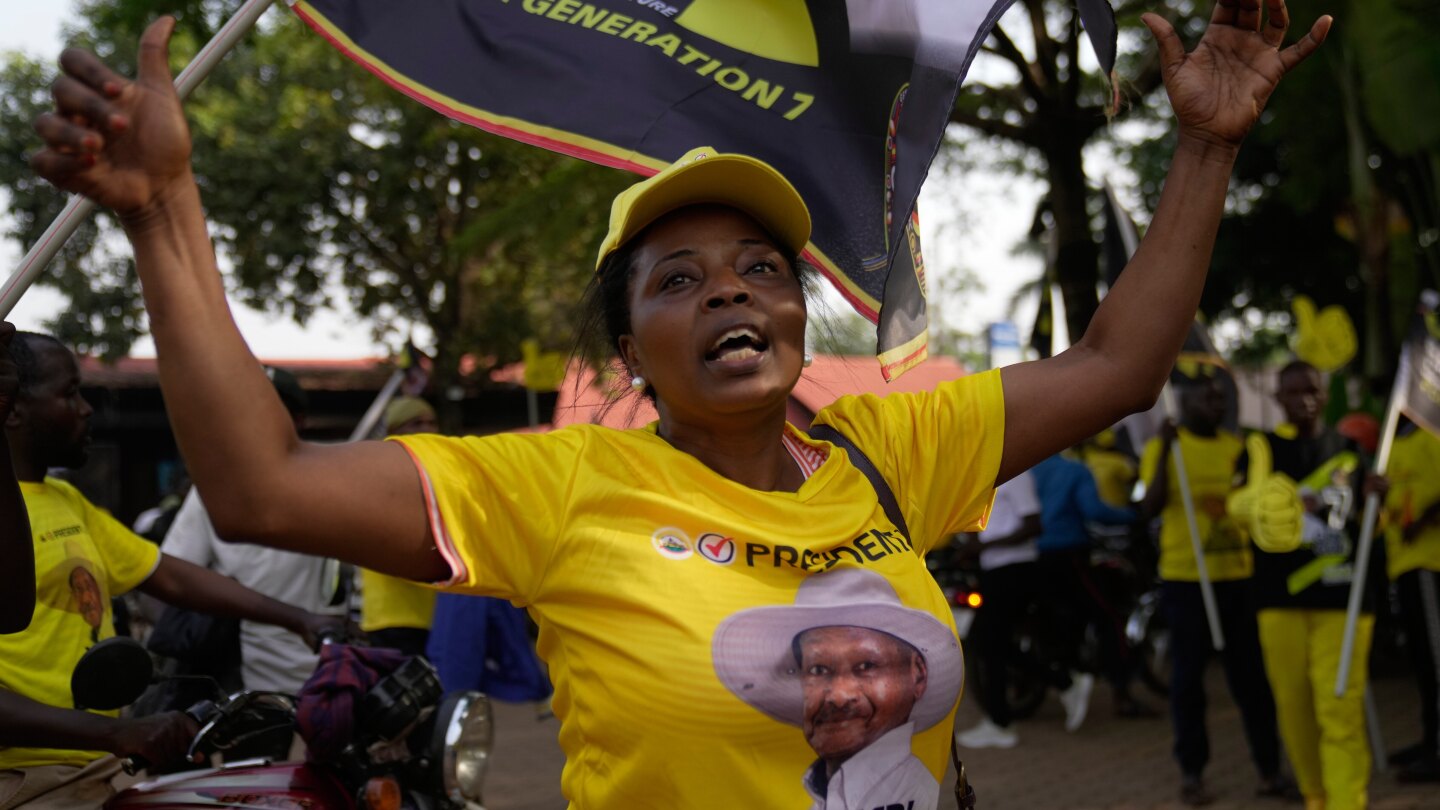
President Yoweri Museveni claimed his landslide victory in Uganda’s recent election demonstrates the overwhelming power of his National Resistance Movement party, which has governed the East African nation for four decades.
Speaking from his western Uganda home on Sunday, a day after official results were announced, the 81-year-old leader declared that the outcome provided “a good taste of the strength” of his political organization. Despite securing 71.6% of the vote, Museveni suggested his party’s dominance was even greater than the results indicated, noting that many supporters likely stayed home.
“The opposition are lucky. They have not seen our full strength,” Museveni said, addressing the historically low voter turnout of 52% – the weakest participation since Uganda returned to multiparty politics in 2006.
The election extends Museveni’s reign as Africa’s third-longest-serving president, securing a seventh term that will bring him closer to five decades in power. His continued leadership has been made possible through constitutional amendments that removed both term limits and age restrictions that would have prevented his candidacy.
Opposition leader Bobi Wine, whose real name is Kyagulanyi Ssentamu, received 24.7% of the vote according to official tallies. The 43-year-old musician-turned-politician has rejected these results as fraudulent. Wine now faces the option of challenging the outcome through Uganda’s court system, which has historically declined to overturn Museveni’s victories while recommending electoral reforms.
The election was marred by significant irregularities that could form the basis of any legal challenge. Uganda experienced a multi-day internet shutdown during voting, and the failure of biometric voter identification machines caused substantial delays in polling stations across Kampala and other regions. Wine has additionally alleged ballot box stuffing in areas considered Museveni strongholds.
Throughout his address, Museveni painted the opposition in harsh terms, accusing them of attempting to incite violence during the election. “Some of the opposition are wrong but also terrorists,” he stated, specifically labeling Wine and others as “traitors.” The president claimed that seven supporters of a parliamentary candidate from Wine’s party were killed by police after attacking a polling station with machetes in Butambala district.
Security forces maintained a heavy presence throughout the campaign season. Wine conducted much of his campaigning wearing body armor – including a flak jacket and helmet – citing security concerns. He has repeatedly stated that authorities followed him and harassed his supporters, frequently deploying tear gas against his rallies.
Uganda’s political stability has made it a haven for hundreds of thousands of refugees fleeing violence elsewhere in East Africa, a point Museveni’s supporters frequently highlight. However, the country has failed to witness a peaceful transfer of presidential power since gaining independence from British colonial rule approximately 60 years ago.
The political landscape offers few alternatives to Museveni’s continued rule. He has not indicated when he might retire, and his party lacks any apparent succession plan. Meanwhile, veteran opposition figure Kizza Besigye, a four-time presidential candidate, remains imprisoned on what he describes as politically motivated treason charges.
As Museveni prepares for another term, the election results further cement Uganda’s status as a single-party dominated state, raising questions about the country’s democratic trajectory and the potential for peaceful political transition in the future.
Fact Checker
Verify the accuracy of this article using The Disinformation Commission analysis and real-time sources.

4 Comments
Museveni has been in power for a very long time. While stability has its benefits, it’s also important to ensure a vibrant democracy with competitive elections. Curious to see if any meaningful political reforms emerge.
It will be interesting to see how Uganda’s mining and commodities sectors respond to the incumbent president’s continued rule. Diversifying the economy beyond just agriculture could be a priority for his next term.
As a major producer of key commodities, Uganda’s political and economic stability is important for global supply chains. I’ll be watching to see if the president takes steps to attract more foreign investment in the mining/energy sectors.
A 71.6% victory margin is quite significant, though the low voter turnout is a concern. Uganda has abundant mineral resources like gold, copper, and uranium – I hope the new government focuses on responsibly developing those industries.