


Listen to the article
Uganda Braces for Critical Election as Military Deploys in Capital
As Uganda approaches its presidential election on Thursday, tensions are rising across the nation of 45 million people. President Yoweri Museveni and his political rivals held their final rallies on Tuesday amid growing concerns over the government’s deployment of soldiers throughout Kampala’s streets.
The Uganda Communications Commission has directed mobile internet providers to temporarily suspend services, citing concerns about misinformation, electoral fraud, and potential violence. Internet services will remain suspended until further notice from the commission, significantly impacting communication during this critical period.
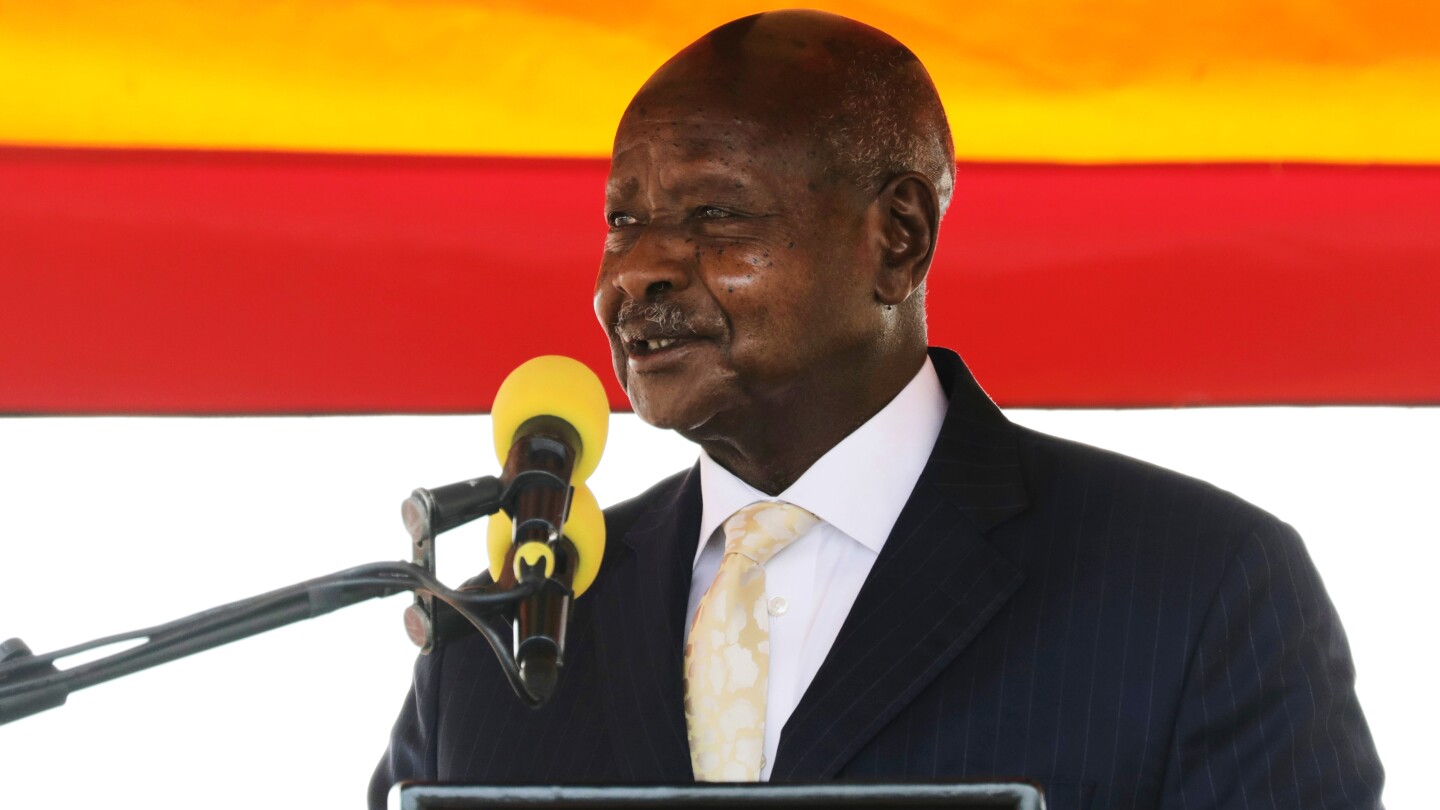
Museveni, 81, who ranks as Africa’s third-longest governing president, is seeking a seventh term that would extend his time in office into a fifth decade. His primary challenger is 43-year-old Robert Kyagulanyi Ssentamu, better known by his stage name Bobi Wine, alongside six other presidential candidates vying for leadership in this East African nation.
Military spokesman Col. Chris Magezi defended the troop deployments that began Saturday, stating they are meant to deter violence rather than suppress democratic processes. “No cause for alarm,” Magezi insisted. “However, we do not take threats of violence during the election period by some political actors and their supporters lightly.”
The election reprises the rivalry from 2021 when Wine’s bold leadership bid attracted substantial support, particularly among young urban voters. Despite facing intimidation and violence, Wine secured 35% of votes against Museveni’s 58% in that election – the president’s smallest vote share since his first campaign three decades ago.
Wine’s prominence has continued to grow. During this campaign, he has held enthusiastic rallies while wearing protective gear – a flak jacket and helmet – which he claims is necessary protection against potential attacks from security forces. In recent interviews, Wine has alleged that he and his supporters have faced attacks involving tear gas and sometimes bullets, claims that Amnesty International has echoed.
Museveni, who maintains loyal support across northern Uganda and his western home region, has repeatedly spoken disparagingly of Wine, characterizing him as unpatriotic and an agent of foreign interests – accusations Wine firmly denies.
Many observers note that the president’s National Resistance Movement party representatives have suggested Museveni would not relinquish power to Wine even if the challenger won the election. The incumbent’s campaign slogan of “protecting the gains” has been interpreted by critics as suggesting power is non-negotiable, while others see it as a reminder of the stability Museveni claims to have brought to Uganda.
“I was born when Museveni was in power,” said 37-year-old Farouk Mugaya, a motorcycle taxi operator in Kampala. “They have had enough time to protect the gains. I want to see change.” Despite his skepticism about the outcome, Mugaya plans to vote in his hometown of Iganga in eastern Uganda. “I don’t want to say they rigged the vote when I was just there and didn’t vote. I want to say they stole the vote when I also voted.”
Unemployment remains a major concern for voters seeking change. Denis Oraku, a mason working at a construction site outside Kampala, expressed this sentiment clearly: “Uganda is very hard. Getting money is not easy. We have no jobs.”
Museveni first took power by force as a guerrilla army leader fighting to restore democratic rule after the civil war and dictatorship of Idi Amin. Since 1996, he has won six elections, though nearly all have been marred by allegations of rigging and security force interference.
Critics suggest that removing Museveni through elections remains challenging, and the aging president’s authority increasingly depends on the military led by his son, Muhoozi Kainerugaba. As a four-star general, Kainerugaba has sparked controversy with social media posts widely regarded as offensive, including comments about invading neighboring Kenya and an offer of cattle as dowry to wed the Italian prime minister. He has also publicly stated his expectation to succeed his father as president, raising concerns about family rule undermining democracy.
Political analyst Robert Kabushenga recently noted on a popular podcast: “Time is not on his side. For the first time he is actually, really an outsider. Why? Because he doesn’t represent the future.”
With 21.6 million registered voters and the Brussels-based International Crisis Group predicting Museveni “will likely retain power,” the nation waits anxiously to see whether this election will mark a continuation of Museveni’s decades-long rule or signal the beginning of a new era in Ugandan politics.
Fact Checker
Verify the accuracy of this article using The Disinformation Commission analysis and real-time sources.

13 Comments
This election will be a test of Uganda’s democratic institutions. I’m hopeful the military can maintain security without interfering in the electoral process. Peaceful transitions of power are essential for the country’s long-term stability and development.
As an investor in African markets, I’ll be watching this closely. A credible election outcome is important for Uganda’s economic prospects and foreign relations. Fingers crossed for a free and fair vote.
The suspension of internet services is a worrying sign and could hinder open communication and information sharing during the election. I hope the government’s stated concerns about misinformation and violence don’t turn into an excuse to restrict democratic freedoms.
It’s critical that Uganda’s election is conducted in a free and fair manner, with international observers present to ensure transparency. The people deserve to have their voices heard without fear of repression.
This election in Uganda is certainly a pivotal moment for the country. With the military presence and internet restrictions, I hope the voting process can remain peaceful and transparent. It will be interesting to see how the incumbent Museveni fares against the younger challenger Bobi Wine.
Given Uganda’s history of political unrest, the heavy military presence is concerning. Hopefully the authorities can maintain order without resorting to heavy-handed tactics that could further inflame tensions.
Uganda’s strategic location and mineral wealth make this election outcome important for the whole region. I’m curious to see if the military presence can maintain order without undermining the integrity of the vote. Transparent and peaceful elections are crucial for Uganda’s future.
Given the rising tensions, I hope the international community is closely monitoring the situation and ready to condemn any attempts to subvert the democratic process in Uganda.
As someone interested in African politics, I’ll be closely watching how this election unfolds in Uganda. The incumbent’s long tenure and the challenger’s youth create an intriguing dynamic. I hope the democratic process can prevail, despite the apparent challenges.
It’s concerning to see the government imposing internet restrictions ahead of the election. Free flow of information is critical for citizens to make informed choices. I hope Uganda can uphold democratic norms despite the apparent challenges.
The heavy military presence in Kampala raises concerns about potential voter intimidation and suppression of dissent. I hope the Ugandan authorities can ensure a transparent process that reflects the will of the people.
This election will be a pivotal moment for Uganda. I’m curious to see if the younger challenger Bobi Wine can mount a serious challenge to the long-ruling Museveni. Peaceful and fair elections are essential for Uganda’s democratic development.
Given Uganda’s strategic location and mineral wealth, the outcome of this election will have regional implications. I hope the international community is closely monitoring the situation to ensure democratic norms are upheld.