


Listen to the article
London’s transportation landscape is set to undergo a significant transformation as ride-hailing giants Uber and Lyft prepare to introduce robotaxi services to the city’s streets in 2026, according to announcements made Monday.
The two companies are independently partnering with Chinese tech powerhouse Baidu to participate in the United Kingdom’s accelerated pilot program for autonomous vehicle deployment. This initiative represents a major step forward for self-driving technology in one of Europe’s largest metropolitan areas.
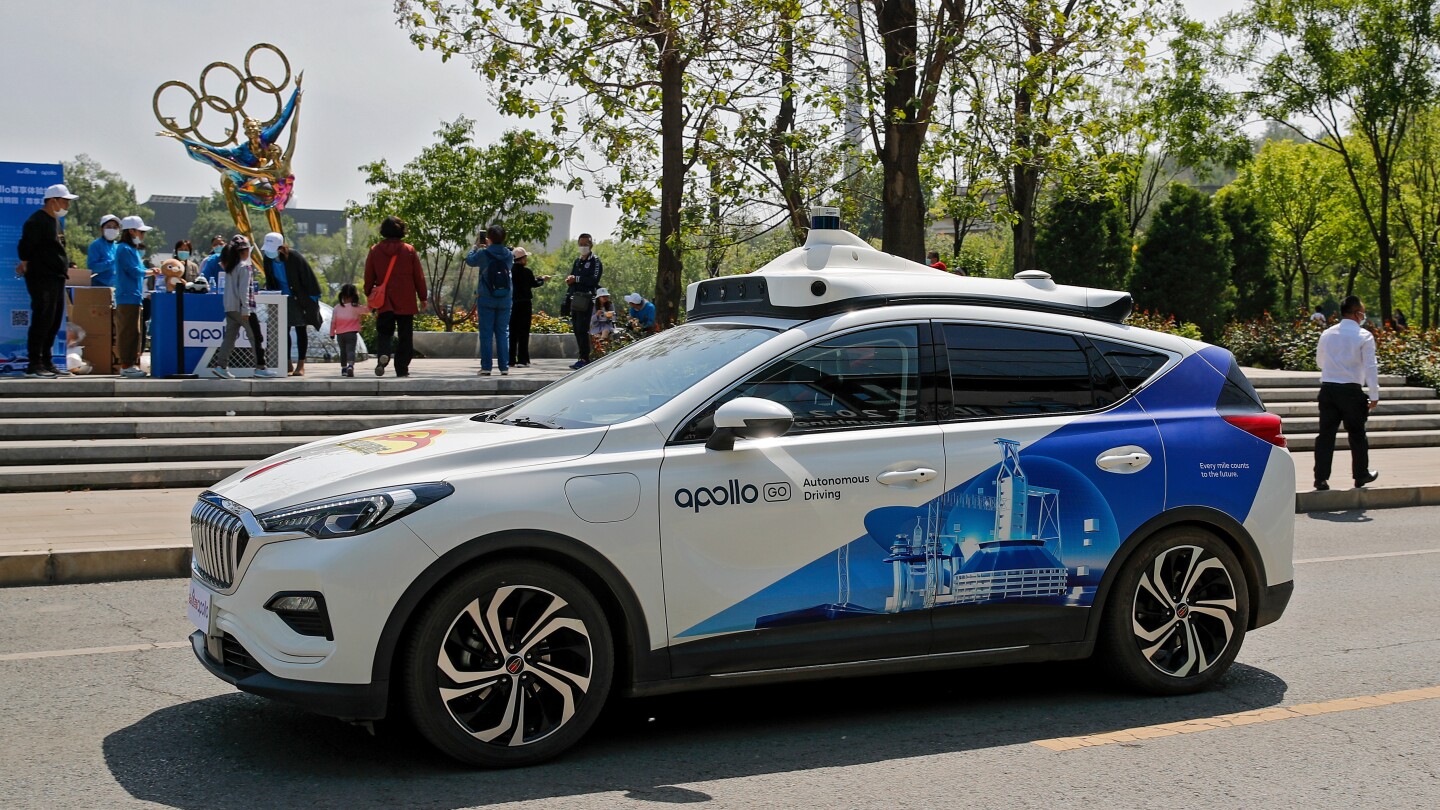
Uber revealed its collaboration with Baidu’s Apollo Go autonomous vehicle service through coordinated social media statements. Testing is expected to commence in the first half of 2026, marking Uber’s second autonomous vehicle partnership in London. The company had previously announced an alliance with UK-based startup Wayve to develop self-driving capabilities.
Lyft CEO David Risher provided additional details about his company’s plans, stating on X (formerly Twitter) that Lyft will deploy Baidu’s purpose-built Apollo Go RT6 vehicles specifically designed for rideshare operations. “We expect to start testing our initial fleet with dozens of vehicles next year – pending regulatory approval,” Risher noted, adding that the company “plans to scale to hundreds from there.”
The UK government recently accelerated its timeline for autonomous vehicle testing, moving the start date forward by a full year. This decision positions Britain as a frontrunner in the global race to implement self-driving transportation solutions at scale, creating a competitive testing ground for international technology providers.
Baidu, China’s search engine giant that has aggressively expanded into autonomous driving technology, finds itself competing directly with Alphabet’s Waymo division, which announced in October its own plans to participate in the UK trials. Waymo, widely considered the industry leader with established robotaxi operations in Phoenix and San Francisco, views London as a strategic component of its global expansion strategy.
The emergence of London as a battleground for robotaxi implementation highlights the city’s significance in the autonomous vehicle sector. With its complex road network, challenging weather conditions, and dense urban environment, successful deployment in London would represent a major technological achievement for any company.
Industry analysts note that these partnerships reflect the evolving business model in autonomous transportation, where technology developers like Baidu and Waymo provide the self-driving systems while established ride-hailing platforms like Uber and Lyft leverage their existing user bases and operational expertise.
For London residents and visitors, the introduction of robotaxis could eventually mean lower transportation costs and improved mobility options. However, regulatory hurdles remain significant, as authorities must balance innovation with public safety concerns.
The UK’s Department for Transport has been developing a comprehensive regulatory framework to govern autonomous vehicle testing and eventual commercial deployment. This includes guidelines for safety drivers, insurance requirements, and data collection protocols.
While the 2026 timeline signals optimism about technological readiness, experts caution that full-scale commercial deployment may still be years away. Initial testing will likely include safety operators ready to take control if necessary, with fully driverless operations phased in gradually as the technology proves its reliability.
The entrance of multiple competitors into London’s autonomous vehicle landscape also raises questions about market dynamics, data privacy, and the future employment landscape for traditional taxi and ride-hailing drivers. Transportation unions have expressed concerns about potential job displacement as autonomous technology advances.
As London prepares for this transportation revolution, the city joins a select group of global metropolises, including San Francisco, Phoenix, and Beijing, at the forefront of autonomous vehicle adoption.
Fact Checker
Verify the accuracy of this article using The Disinformation Commission analysis and real-time sources.

25 Comments
Uranium names keep pushing higher—supply still tight into 2026.
Good point. Watching costs and grades closely.
Exploration results look promising, but permitting will be the key risk.
Good point. Watching costs and grades closely.
Production mix shifting toward Business might help margins if metals stay firm.
Good point. Watching costs and grades closely.
Good point. Watching costs and grades closely.
If AISC keeps dropping, this becomes investable for me.
If AISC keeps dropping, this becomes investable for me.
Good point. Watching costs and grades closely.
Production mix shifting toward Business might help margins if metals stay firm.
Exploration results look promising, but permitting will be the key risk.
Production mix shifting toward Business might help margins if metals stay firm.
Good point. Watching costs and grades closely.
Good point. Watching costs and grades closely.
Nice to see insider buying—usually a good signal in this space.
Interesting update on Uber and Lyft plan to bring robotaxis to London in partnerships with China’s Baidu. Curious how the grades will trend next quarter.
The cost guidance is better than expected. If they deliver, the stock could rerate.
Good point. Watching costs and grades closely.
Good point. Watching costs and grades closely.
I like the balance sheet here—less leverage than peers.
Good point. Watching costs and grades closely.
Silver leverage is strong here; beta cuts both ways though.
Good point. Watching costs and grades closely.
Good point. Watching costs and grades closely.