


Listen to the article
Turkish Airlines Flight Makes Emergency Landing After Passenger Creates Network With Bomb Threat
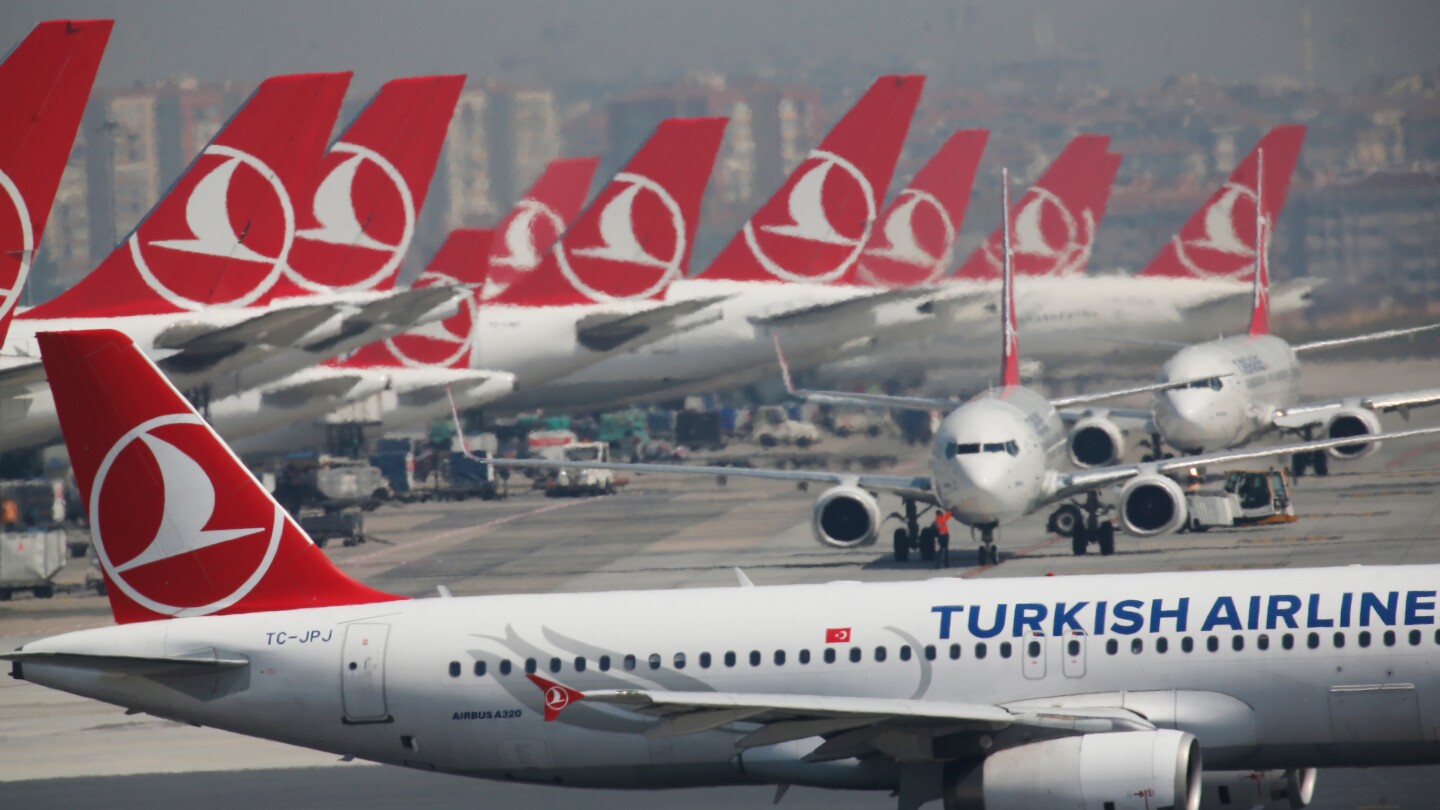
A Turkish Airlines flight was forced to make an emergency landing at Barcelona’s international airport on Thursday following a security scare triggered by a passenger who created an onboard wireless network with a name containing a bomb threat.
Flight TK1853, an Airbus A321 traveling from Istanbul to Barcelona, was approaching Barcelona-El Prat Airport when flight crew detected the suspicious network. According to Turkish Airlines spokesperson Yahya Üstün, “it was detected that a passenger established an in-flight internet access point and set the network name to include a bomb threat.”
Following standard security protocols, the pilot immediately notified air traffic control and executed an emergency landing procedure. The aircraft was directed to a secure area of the airport upon arrival.
Spain’s Civil Guard police force quickly responded to the incident, conducting a thorough investigation of the aircraft. After a comprehensive search, authorities confirmed that no explosive devices were found on board. The Civil Guard also stated that Barcelona-El Prat Airport continued to operate normally throughout the incident, with minimal disruption to other flights.
This incident highlights the growing intersection between digital security and aviation safety. Modern aircraft increasingly offer Wi-Fi capabilities, allowing passengers to create personal hotspots. While usually harmless, this case demonstrates how such technology can be misused to create security concerns.
Aviation security experts note that threats involving wireless networks represent a relatively new challenge for flight crews. Airlines have established protocols for handling traditional security threats, but digital threats require additional training and awareness.
“What might seem like a prank to some passengers can have serious consequences,” said a European aviation security analyst who requested anonymity. “Every threat must be taken seriously, resulting in emergency procedures that are costly and disruptive.”
Turkish Airlines, one of Europe’s largest carriers connecting Europe to the Middle East and beyond, maintained that the return flight would operate on its normal schedule despite the incident. The airline has a strong safety record and typically carries over 75 million passengers annually across its extensive network spanning more than 120 countries.
Authorities have not released information regarding the identity of the passenger responsible for creating the threatening network name, nor have they specified what potential charges might be filed. In most jurisdictions, creating false security threats on aircraft is considered a serious offense that can result in criminal charges.
The incident comes amid heightened security concerns at European airports following various international tensions. Aviation authorities across Europe have maintained elevated alert levels in recent months.
Barcelona-El Prat is Spain’s second-busiest airport, handling over 50 million passengers annually in pre-pandemic times. The airport serves as a crucial gateway for tourism to Catalonia and is a significant hub for connections between Europe and destinations across North Africa and the Middle East.
This incident serves as a reminder of the zero-tolerance policy that airlines and security agencies maintain regarding any form of threat to aviation safety, whether physical or digital in nature. Passengers are regularly advised that any behavior that could be interpreted as threatening is taken with the utmost seriousness by flight crews and authorities.
Fact Checker
Verify the accuracy of this article using The Disinformation Commission analysis and real-time sources.

13 Comments
Kudos to the Turkish Airlines crew for quickly identifying the threat and taking appropriate action. Emergency landings are no easy feat, but they handled it well to ensure everyone’s security.
Yes, the flight crew demonstrated great professionalism in this situation. Responding swiftly to a potential threat like this is critical for aviation safety.
It’s alarming that a passenger would try to cause such a disturbance mid-flight. I’m relieved no explosives were found and that the authorities were able to thoroughly investigate the incident.
This is a troubling incident, but I’m relieved that the authorities were able to confirm there were no actual explosives on board. Passenger safety has to come first in these kinds of situations.
Absolutely. Even if it turns out to be a hoax, the crew and authorities had to treat it as a serious threat to ensure everyone’s wellbeing. I hope the perpetrator is swiftly identified and held accountable.
It’s good that the flight crew and air traffic control followed proper protocols to handle this potential threat. Safety should always be the top priority in these situations.
This must have been a very stressful and unsettling experience for the passengers and crew. I hope everyone is doing okay after this incident.
Agreed, even if it turns out to be a hoax, these kinds of security threats can be incredibly upsetting. I’m glad the authorities took it seriously and ensured the plane landed safely.
This sounds like a serious security incident. I hope all passengers and crew are safe. It’s good the authorities responded quickly to investigate and ensure there were no explosives on board.
Yes, it’s concerning when a passenger tries to trigger a security scare like this. Glad the flight crew and air traffic control followed proper protocols to handle the situation.
Wow, creating a suspicious wireless network name on a plane is incredibly reckless and dangerous. I’m glad the authorities took it seriously and confirmed there were no actual explosives.
Absolutely, passenger safety should always be the top priority. This person needs to face serious consequences for their irresponsible actions.
Passengers should be able to travel safely without having to worry about security threats like this. I’m glad the situation was resolved without any injuries or further incidents.