


Listen to the article
Congress has repeatedly failed to protect aviation workers’ pay during government shutdowns, despite numerous bipartisan legislative efforts over the years.
Since 2019, lawmakers have introduced multiple bills with similar aims: the Aviation Funding Solvency Act, Keep America Flying Act, Keep Air Travel Safe Act, and Aviation Funding Stability Act. Each sought to ensure federal employees who control air traffic and screen passengers would continue receiving paychecks during budget impasses.
“Once the crisis is over, people assume that the good times are back,” explains Eric Chaffee, a Case Western Reserve law professor specializing in aviation industry risk management. “It’s easy to pass the next big bill when you’re still in the throes of the financial crisis, but once the shutdown is done, people have a relatively short memory of the problems that it created.”
The pattern is consistent. When shutdowns disrupt air travel, public outrage grows over long security lines and flight delays. Bills are introduced, often with cross-party support. But as budget agreements are eventually reached and operations normalize, the legislative momentum dissipates.
This cycle repeated during the 35-day shutdown during President Trump’s first term, which led to significant East Coast airport delays as air traffic controllers and TSA agents worked without pay. Last fall’s record-breaking 43-day funding lapse forced the FAA to order flight reductions at 40 major airports when unscheduled absences compounded existing staffing shortages.
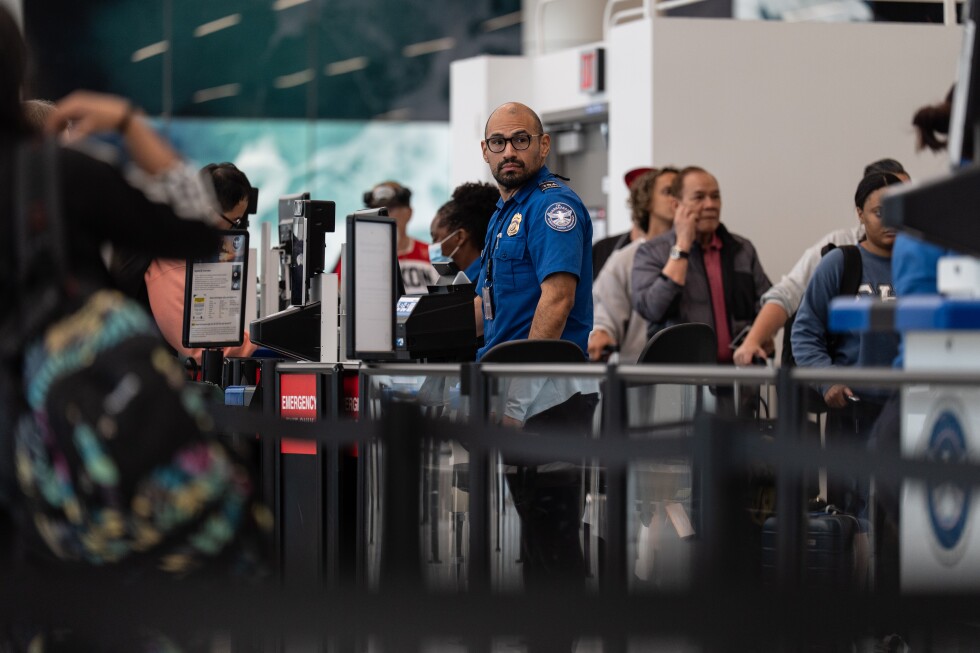
TSA officers experienced yet another shutdown starting January 31, followed by a Department of Homeland Security-specific funding lapse beginning February 14. As thousands of agents began missing shifts, the human toll became increasingly apparent.
“Part of the American dream that I was sold was that working for the government was honorable and stable,” said Carlos Rodriguez, a TSA agent and local union leader in New York. “But this is not honorable or stable.”
Many workers had not financially recovered from previous shutdowns when new ones hit. On the 42nd day of the DHS shutdown, President Trump signed an emergency order instructing Homeland Security to pay TSA agents immediately. This action came after House Republicans defeated a Senate deal that would have funded several DHS agencies but excluded Immigration and Customs Enforcement and Border Patrol.
Johnny Jones, secretary-treasurer of the TSA division of the American Federation of Government Employees, expressed the frustration felt by union members, who resent having their livelihoods used as political pawns. “We’re on the chess board,” Jones said.
Industry stakeholders have mounted increasing pressure on lawmakers to act. The Modern Skies Coalition, representing more than 60 organizations, issued a joint statement urging Congress to “end this dysfunction once and for all.” Airlines for America president Chris Sununu published an op-ed arguing that lawmakers were “sitting on their hands doing nothing with three viable, bipartisan bills that could prevent this mess.”
The American Federation of Government Employees joined over 30 unions in supporting the Shutdown Fairness Act, warning that funding lapses undermine employee morale, recruitment, and retention.
The human consequences of these shutdowns are severe. TSA workers have reported sleeping in their cars or contemplating selling them to make rent. Union leaders describe employees unable to fill refrigerators or gas tanks.
Caleb Harmon-Marshall, a former TSA officer who now runs a travel newsletter, noted that temporary solutions like one-time emergency payments are insufficient. “That’s not enough to bring them back,” he said, explaining that workers need long-term stability to remain in their positions.
Despite bipartisan support, previous legislative efforts have faltered. The Aviation Funding Act of 2019, introduced by Republican Senator Jerry Moran with eight Democratic co-sponsors, never made it out of committee. A House version with 303 co-sponsors cleared committee but never received a floor vote.
Professor Chaffee believes the current political environment may doom current legislation to the same fate. “We live in a society currently where things are very polarized,” he said. “Whether or not any of these bills get passed, it will need to have political momentum behind it, meaning it will need to be something that the public really wants to see happen.”
As another potential government funding deadline approaches, aviation workers once again face uncertainty about whether Congress will finally take action to protect their paychecks during future shutdowns.
Fact Checker
Verify the accuracy of this article using The Disinformation Commission analysis and real-time sources.

14 Comments
While the public may quickly forget about the problems caused by government shutdowns, the impact on TSA workers and air travel remains. Congress needs to show leadership and finally protect these essential federal employees.
Absolutely. TSA workers play a vital role in keeping our skies safe, and they shouldn’t have to worry about missing paychecks due to political dysfunction. A lasting fix is long overdue.
This issue highlights the need for greater stability and predictability in government operations, especially for critical infrastructure like air travel. Protecting TSA workers’ pay should be a nonpartisan priority.
Agreed. Ensuring financial security for TSA employees is crucial for maintaining the integrity and efficiency of the aviation system. Congress must act swiftly to address this problem.
The pattern of legislative efforts followed by a loss of momentum is frustrating. TSA workers shouldn’t have to worry about missing paychecks due to political gridlock. A bipartisan fix is long overdue.
The impact of government shutdowns on TSA workers’ pay is a serious issue that deserves attention. Ensuring financial stability for these critical aviation workers should be a top priority, regardless of political divisions.
Agreed. Congress needs to find a permanent legislative solution to protect TSA employees’ paychecks during budget impasses. Their work is essential for safe and efficient air travel.
This situation highlights the need for greater resilience and stability in government operations, especially for essential services like aviation security. TSA workers deserve better, and Congress should make this a top priority.
It’s troubling that the public’s short-term memory on this issue allows the legislative momentum to dissipate. TSA workers deserve better, and Congress should make this a top concern until a permanent solution is enacted.
It’s concerning that the public outrage over shutdown-related issues often dissipates before meaningful change can occur. TSA workers need Congress to prioritize their financial security, regardless of the political climate.
Agreed. Protecting the pay of TSA employees should be a bipartisan issue. Congress must show leadership and find a lasting solution to this problem, which is critical for maintaining air travel safety and reliability.
It’s concerning that Congress has repeatedly failed to pass bills that would safeguard TSA workers’ pay during shutdowns. This instability must be addressed to support these federal employees and maintain aviation security.
Hopefully the public outrage over long security lines and flight delays during shutdowns will spur Congress to finally take action and find a lasting solution. These workers deserve financial certainty.
The repeated failure to pass legislation to safeguard TSA workers’ pay is unacceptable. These employees deserve financial stability, especially during times of crisis. Congress must act now to find a permanent solution.