


Listen to the article
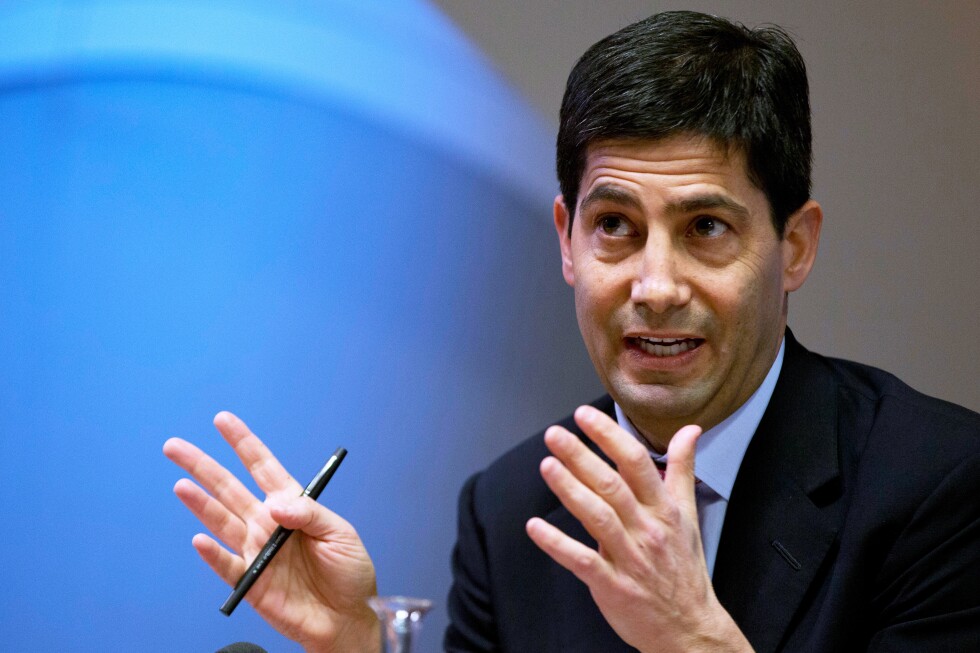
President Donald Trump has nominated Kevin Warsh to chair the Federal Reserve, a move that could usher in significant changes at the world’s most influential central bank.
Warsh, a former Fed governor who served from 2006 to 2011, would replace current chair Jerome Powell when his term expires in May. At 35, Warsh was the youngest Fed governor in history when first appointed. He currently serves as a fellow at the Hoover Institution and lectures at Stanford Graduate School of Business.
“I have known Kevin for a long period of time, and have no doubt that he will go down as one of the GREAT Fed Chairmen, maybe the best,” Trump posted on social media Friday. The president later denied asking Warsh to commit to cutting interest rates, calling such a question “inappropriate,” but added, “he certainly wants to cut rates.”
The nomination comes at a critical juncture for the Federal Reserve, which faces intense scrutiny from both markets and politicians. If confirmed by the Senate, Warsh would navigate the delicate balance between maintaining the Fed’s cherished independence while working under a president who has repeatedly demanded dramatically lower interest rates.
Former associates believe Warsh possesses both the intellectual capability and diplomatic skills needed for this challenging position. “He has a judicious temperament and both the intellectual understanding but also the hopefully diplomatic talents to navigate what is a challenging position at this point,” said Raghuram Rajan, an economics professor at the University of Chicago and former head of India’s central bank.
Warsh’s nomination presents something of a paradox. During his previous tenure at the Fed, he often objected to the low-interest rate policies pursued during and after the Great Recession, repeatedly expressing concern that inflation would accelerate—warnings that proved premature. However, his more recent statements and opinion columns have aligned more closely with Trump’s preference for lower rates.
Financial markets reacted with mixed signals following the announcement. The dollar and yields on long-term Treasury bonds edged higher, while U.S. stocks fell about 0.5%. The most dramatic moves occurred in metals markets, where gold dropped more than 5% and silver plummeted over 13%, suggesting investors anticipate Warsh might maintain slightly higher rates over time.
The nomination faces potential hurdles in the Senate. Republican Senator Thom Tillis has stated he will oppose Warsh until a Justice Department investigation into Powell is resolved. As a member of the Senate committee that will consider the nomination, Tillis’s stance could complicate the confirmation process. Senate Majority Leader John Thune acknowledged that confirming Warsh without Tillis’s support would be “probably not” possible.
Meanwhile, Democratic Senator Elizabeth Warren accused Warsh of reshaping his views to appease Trump. “I don’t know how to interpret that, except to say, that’s exactly what a sock puppet does,” she said. “If Donald Trump says it, then Kevin Warsh echoes it, even though it contradicts everything he had done for years.”
Warsh has been a vocal critic of the Fed’s massive bond-buying programs, which accumulated trillions in government and mortgage-backed securities after the 2008 recession and during the pandemic. He argues these purchases enabled Congress to increase spending without concern for higher borrowing costs. Reducing the Fed’s $6.6 trillion balance sheet would be challenging, however, as banks have grown accustomed to the abundant liquidity in the financial system.
In recent writings, Warsh has challenged conventional Fed economic models, arguing that “inflation is caused when government spends too much and prints too much,” rather than by rapid economic growth. This perspective aligns with Trump’s economic vision, despite Warsh’s history as a more traditional, pro-free trade Republican.
Trump’s selection comes after an unusually public search process and follows his attempts to exert greater control over the Federal Reserve. In August, he attempted to fire Governor Lisa Cook, though she successfully sued to retain her position. Powell recently revealed the Fed had received Justice Department subpoenas regarding congressional testimony on a building renovation, which Powell characterized as “pretexts” to pressure the Fed to cut rates.
If confirmed, Warsh would face significant challenges in implementing substantial rate cuts. The Fed’s rate-setting committee is already divided between those concerned about persistent inflation and those worried about rising unemployment. Additionally, financial markets could resist politically-motivated rate cuts, potentially leading to Treasury bond sell-offs that would drive up longer-term interest rates, including mortgage rates.
Warsh has personal connections to Trump—his father-in-law is Ronald Lauder, heir to the Estee Lauder cosmetics fortune and a longtime Trump donor and confidant. Trump had previously considered appointing Warsh as Fed chair during his first term before ultimately selecting Powell.
Fact Checker
Verify the accuracy of this article using The Disinformation Commission analysis and real-time sources.

8 Comments
Warsh’s background in economics and finance, as well as his previous Fed experience, suggest he has the right credentials for the job. But leading such a powerful institution will test his mettle in new ways.
Agreed. The Fed chair role requires both technical expertise and deft political maneuvering. Warsh’s mix of qualifications could serve him well, but it remains to be seen how he would handle the challenges.
Trump’s push for lower interest rates could put the new Fed chair in a tricky position, trying to balance the president’s demands with the bank’s independence. Navigating that dynamic will be key for Warsh if he wants to be an effective leader.
You raise a good point. The Fed chair has to walk a fine line between responding to political pressures and maintaining the central bank’s credibility as an independent institution.
As an investor, I’ll be watching closely to see how Warsh’s nomination and potential leadership could impact the markets, especially commodities and equities related to the mining sector. His policy decisions could have wide-ranging effects.
Interesting choice of Warsh to lead the Fed. He has a unique background as a young former governor, so it will be fascinating to see how he steers the central bank if confirmed. Certainly a departure from the typical Fed chair profile.
I’m a bit skeptical about Trump’s motives in nominating Warsh, given the president’s vocal criticism of Fed policy. But if Warsh can maintain the bank’s independence, that could be a positive for long-term economic stability.
From a mining and commodities perspective, the new Fed chair’s views on monetary policy, inflation, and interest rates will be critically important. Warsh’s approach could have significant ripple effects across these sectors.