


Listen to the article
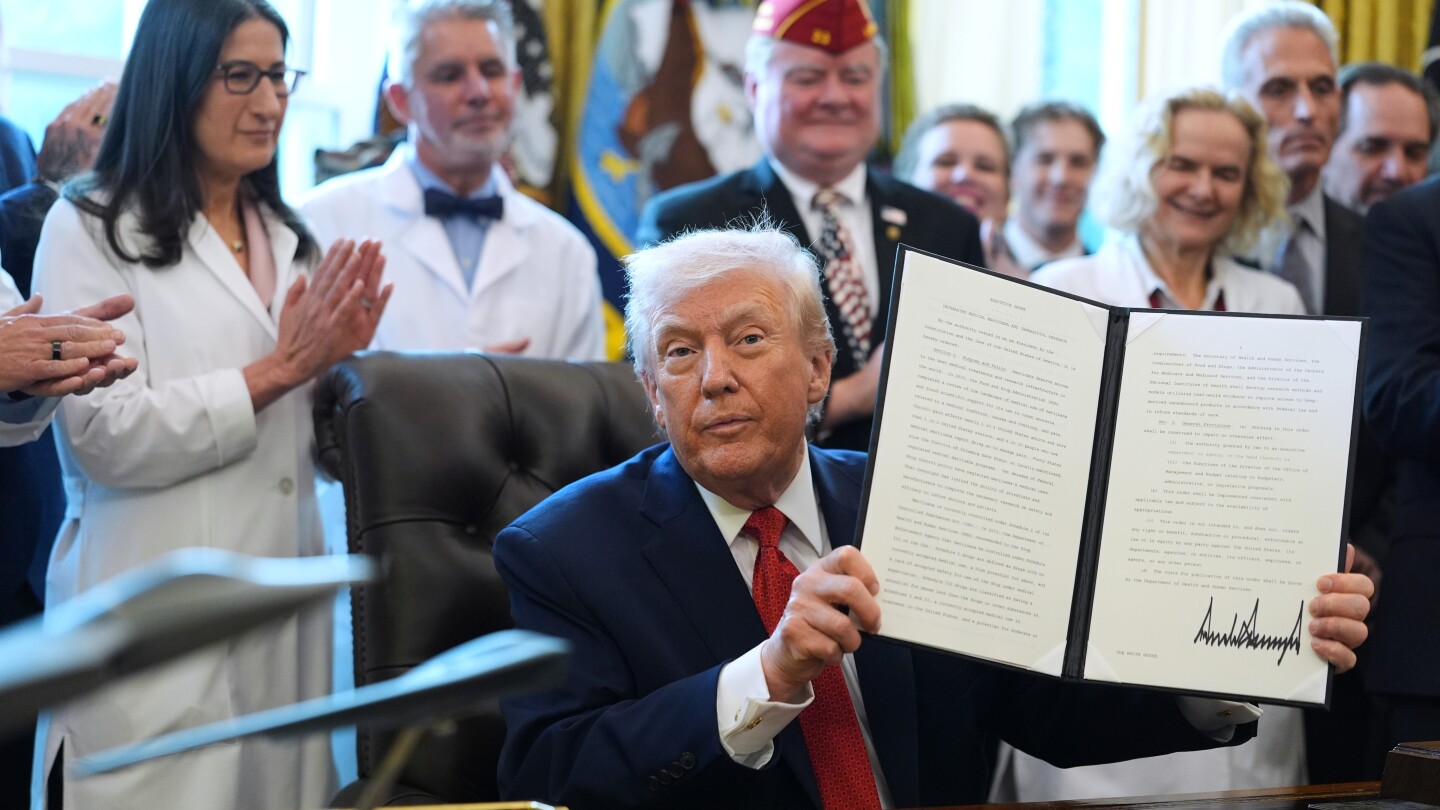
President Trump took a significant step toward easing federal marijuana restrictions on Thursday, signing an executive order that could reclassify cannabis as a less dangerous drug and expand avenues for medical research. The move represents one of the most substantial shifts in U.S. drug policy in decades.
The executive order directs federal agencies to reclassify marijuana from its current status as a Schedule I controlled substance—a category that includes heroin and LSD—to Schedule III, alongside drugs like ketamine and certain anabolic steroids. While this reclassification would not make recreational marijuana legal nationwide, it would significantly alter how the drug is regulated and potentially reduce the substantial tax burden currently faced by the cannabis industry.
“We have people begging for me to do this. People that are in great pain,” Trump said, noting the volume of phone calls he had received supporting the change and its potential to help patients seeking relief.
The action builds upon an initiative started during the Biden administration, which had previously proposed similar reclassification. However, Trump’s executive order accelerates the process, directing the Drug Enforcement Administration (DEA) to move forward “as quickly as legally possible,” though a specific timeline remains unclear.
This federal shift comes as 40 states and Washington, D.C. have already legalized medical marijuana, with many states also permitting recreational use. The existing disconnect between state and federal law has created significant legal ambiguities, potentially leaving users subject to federal prosecution despite state-level legalization.
Beyond marijuana reclassification, Trump’s order also calls for expanded research and access to CBD, a non-intoxicating hemp derivative that has gained popularity for various health applications. Dr. Mehmet Oz, who heads the Centers for Medicare and Medicaid Services, announced that a new Medicare pilot program would provide older adults access to legal hemp-derived CBD at no cost when recommended by a doctor.
Public opinion has increasingly favored marijuana reform, with Gallup polling showing support for legalization growing from 36% in 2005 to 64% this year. However, that support has slightly decreased in recent years, primarily due to declining approval among Republicans.
The executive order has faced opposition within Trump’s own party. More than 20 Republican senators, including several close Trump allies, signed a letter earlier this year urging the president to maintain marijuana’s Schedule I classification. Led by North Carolina Senator Ted Budd, the group argued that marijuana poses significant risks to physical and mental health, as well as workplace and road safety.
“The only winners from rescheduling will be bad actors such as Communist China, while Americans will be left paying the bill,” the letter stated, referencing China’s role in the global cannabis market.
Critics have also pointed to an apparent contradiction in Trump’s drug policies. Jack Riley, a former DEA deputy administrator who was considered to lead the agency in Trump’s second term, noted: “He’s blowing up boats in Latin America that he says are full of fentanyl and cocaine but on the other hand loosening the restrictions that will allow wider exposure to a first-level drug.”
Some marijuana advocates want the federal government to go further by treating cannabis more like alcohol, while opponents like Smart Approaches to Marijuana have vowed legal challenges if the reclassification proceeds.
Trump has maintained a nuanced position, stating Thursday that while he encouraged his own children to avoid drugs, “the facts compel” the government to recognize marijuana’s legitimate medical applications. According to the Department of Health and Human Services, approximately 30,000 licensed healthcare practitioners are currently authorized to recommend marijuana use for more than 6 million patients across at least 15 medical conditions.
The FDA has found credible scientific support for marijuana’s use in treating anorexia-related conditions, nausea, vomiting, and pain. Among older adults—a demographic where 1 in 3 suffer from chronic pain—cannabis has become an increasingly common treatment option.
As the reclassification process moves forward, it will mark one of the most significant shifts in federal drug policy in a generation, potentially bringing federal regulations closer to the reality that already exists in most states across the country.
Fact Checker
Verify the accuracy of this article using The Disinformation Commission analysis and real-time sources.

8 Comments
While I’m generally supportive of this move, I have some concerns about the potential public health impacts. We’ll need to closely monitor any changes in usage patterns and ensure appropriate safeguards are in place.
That’s a fair point. Reclassification shouldn’t come at the expense of public safety. Policymakers will need to strike the right balance between expanding access and maintaining sensible controls.
This is a significant step toward more sensible marijuana policy. Reclassifying it to Schedule III could open up medical research and provide relief for those in pain. It will be interesting to see how Congress and the states respond.
Agreed. This could be a game-changer, especially if it leads to more widespread legalization or decriminalization. The public has been clamoring for reform on this issue for years.
I’m curious to see how this plays out politically. There’s still a lot of opposition to marijuana legalization, even in the medical context. But Trump seems eager to make this move, so it could gain some bipartisan momentum.
That’s a good point. This executive order may face resistance from more conservative lawmakers, but the public support for medical marijuana could give it some staying power.
From an investment perspective, this could be a boon for cannabis-related equities if it leads to greater regulatory clarity and market access. But a lot will depend on the implementation details and how states respond.
Absolutely. The cannabis industry has been hampered by the federal prohibition, so this could open up new opportunities for growth and innovation. Though investors will want to watch for any legal or regulatory hurdles.