


Listen to the article
U.S. President Donald Trump has suggested the possibility of seizing Iran’s Kharg Island oil terminal in the Persian Gulf, even as diplomatic efforts to reach a ceasefire gain momentum. In an interview with the Financial Times published Monday, Trump openly contemplated the military option, saying, “Maybe we take Kharg Island, maybe we don’t. We have a lot of options.”
The statement comes as Trump claimed Iran had agreed to allow 20 oil tankers through the Strait of Hormuz as “a sign of respect.” Meanwhile, the U.S. has bolstered its military presence in the region with 2,500 Marines already deployed and a similar-sized contingent en route.
Despite these diplomatic overtures, both the United States and Israel continued their military operations against Iran on Monday. Israel launched a fresh wave of airstrikes targeting what it described as “military infrastructure” across Tehran, with explosions reported in the Iranian capital. Iranian state media confirmed damage to a petrochemicals plant in Tabriz following an airstrike, which required firefighters to extinguish the resulting blaze.
Iran has maintained its aggressive stance, striking a key water and electrical desalination plant in Kuwait, killing one worker and injuring 10 soldiers, according to Kuwait’s state-run KUNA news agency. Desalination facilities are vital infrastructure in Gulf Arab states, providing essential drinking water in the arid region. These plants require significant energy to operate and are typically paired with power stations, making them strategic targets.
The Islamic Republic has also continued its broader campaign against regional targets. Saudi Arabia intercepted five missiles aimed at its oil-rich Eastern province, Bahrain issued a missile alert, and defense systems in Dubai shot down an incoming missile, resulting in a visible fireball over the city. In Israel, sirens sounded near the country’s main nuclear research center, a frequently targeted area in recent days.
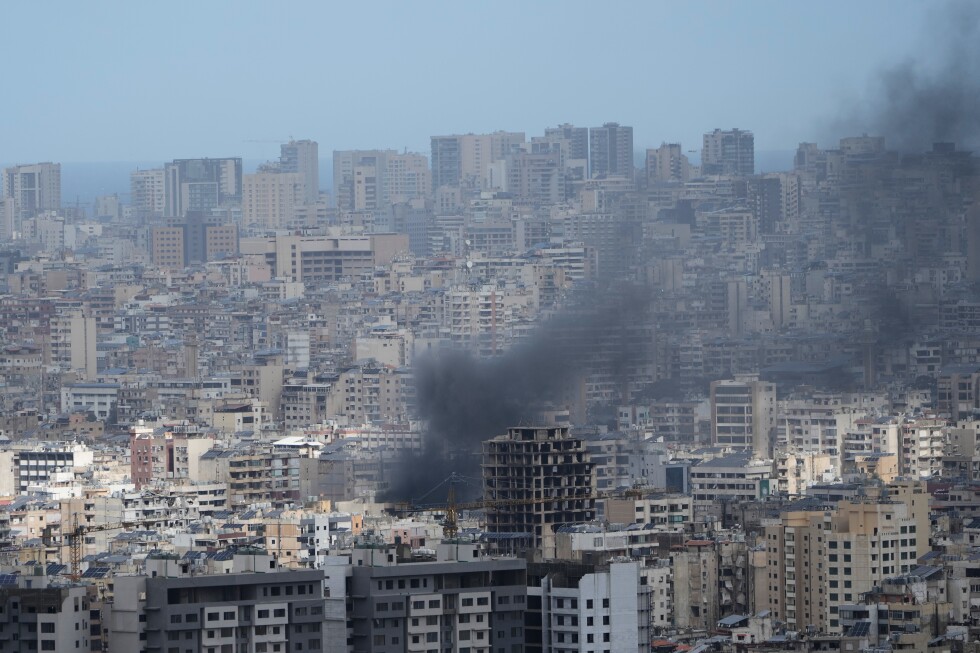
The conflict has expanded beyond Iran and Israel. In Lebanon, where Israel has launched a ground invasion targeting Hezbollah, an Indonesian peacekeeper was killed and three others wounded when a projectile exploded near a southern village. Israeli Prime Minister Benjamin Netanyahu recently announced plans to widen the invasion, expanding what he called the “existing security strip” in Lebanon’s south.
The ongoing hostilities have severely disrupted global energy markets. Iran’s attacks on regional energy infrastructure and its blockade of the Strait of Hormuz—through which approximately one-fifth of the world’s oil typically passes—have sent oil prices soaring. The spot price of Brent crude, the international benchmark, reached around $115 in early trading Monday, representing a nearly 60% increase since the U.S. and Israel initiated the conflict with attacks on Iran on February 28.
As pressure mounts to resolve the conflict, diplomatic initiatives are gaining traction. The United States has presented Iran with a 15-point plan that includes reopening the Strait of Hormuz to shipping. Iran has countered with its own five-point proposal, emphasizing its sovereignty over the strategic waterway. Pakistan announced Sunday that it would soon host talks between the U.S. and Iran, though details remain unclear whether these discussions would be direct or indirect.
While Trump told reporters aboard Air Force One that the U.S. was negotiating “directly and indirectly” with Iran, Tehran has denied engaging in any talks with Washington. “We’re doing extremely well in that negotiation, but you never know with Iran because we negotiate with them and then we always have to blow them up,” Trump remarked.
Iranian officials have dismissed the diplomatic efforts. Parliament Speaker Mohammad Bagher Qalibaf characterized the talks in Pakistan as a cover to deploy more U.S. troops to the region, warning that Iranian forces were “waiting for the arrival of American troops on the ground to set them on fire.”
Trump’s suggestion of seizing Kharg Island would represent a significant military escalation. He acknowledged such an operation might require a longer-term commitment, saying “it would mean we had to be there for a while,” but claimed, “I don’t think they have any defense. We could take it very easily.” Military experts note that an amphibious invasion would require traversing the Strait of Hormuz and most of the Persian Gulf, while holding the island would be challenging due to its proximity to the Iranian mainland.
The human toll of the conflict continues to rise. Lebanese officials report more than 1,200 people killed and over one million displaced. Iranian authorities claim more than 1,900 casualties, while Israel reports 19 deaths. In Iraq, where Iranian-backed militia groups have joined the conflict, 80 security force members have died. Gulf states have suffered 20 fatalities, and thirteen U.S. service members have been killed in the war.
Fact Checker
Verify the accuracy of this article using The Disinformation Commission analysis and real-time sources.

12 Comments
While the diplomatic efforts are encouraging, the potential for military escalation remains worrying. I hope both sides can show restraint and a genuine commitment to finding a mutually acceptable solution through negotiations.
Exactly, the stakes are too high for either side to take unilateral action that could provoke a broader conflict. Patience and good faith on all sides will be critical to reaching a lasting agreement.
The situation remains highly volatile, with military action still a possibility despite the diplomatic progress. I’m curious to see if the two sides can find a way to de-escalate tensions and reach a lasting agreement.
Agreed, the path forward is uncertain but it’s imperative that diplomacy be given every chance to succeed. Resorting to force would likely only worsen the situation for all involved.
The ongoing conflict between the U.S. and Iran is concerning, but I’m hopeful that continued diplomatic efforts can lead to a de-escalation. Seizing oil infrastructure seems like an unwise and risky move that could backfire.
I agree, a military confrontation should be avoided if at all possible. Both sides need to show restraint and a willingness to compromise in order to reach a sustainable agreement.
This is a delicate situation as both sides posture and consider their options. Seizing Iran’s oil terminal could escalate tensions further, though diplomatic efforts appear to be making some progress.
Any military action should be an absolute last resort. Maintaining open communication and negotiating in good faith will be crucial to finding a peaceful resolution.
The continued back-and-forth between the U.S. and Iran is concerning, especially with Trump’s threat to seize the Kharg Island oil terminal. I hope the talks can lead to a peaceful resolution that addresses the core issues.
Maintaining open lines of communication and a willingness to compromise will be essential. Neither side can afford to let pride or posturing derail the diplomatic process.
It’s encouraging to see some progress in the talks, but Trump’s threat to seize Iran’s oil terminal is concerning. I hope cooler heads will prevail and the diplomatic process can continue without further escalation.
Posturing and sabre-rattling rarely lead to positive outcomes. The key will be for both sides to make concessions and find a mutually acceptable compromise.