


Listen to the article
Federal Inspections Reveal Language Barriers Among Mexican Train Crews in U.S.
Federal inspections have uncovered troubling language barriers among Mexican train crews operating within U.S. territory, raising significant safety concerns at railroad border crossings in Texas.
During recent targeted inspections ordered by the Trump administration, Mexican train crews working for Union Pacific and CPKC railroads demonstrated difficulty understanding critical safety information presented in English after crossing the border into American rail yards.
The Federal Railroad Administration (FRA) has sent formal letters to both railroad companies urging them to reevaluate their practices. Regulators emphasized the need to ensure Mexican crews can speak English and adhere to rules restricting them from operating trains more than 10 miles inside American territory.
“Whether you’re operating an 80-ton big rig or a massive freight train, you need to be proficient in our national language — English,” Transportation Secretary Sean Duffy said. “If you aren’t, you create an unacceptable safety risk.”
Both railroads routinely use foreign crews to transport trains over the border to U.S. rail yards before transferring control to American engineers and conductors. According to the Brotherhood of Locomotive Engineers and Trainmen union, these handoffs previously occurred directly at the border. The union has long expressed concerns about foreign crews due to safety, security, and job-related issues.
FRA inspectors identified specific problems at Union Pacific’s Eagle Pass rail yard and CPKC’s facility in Laredo. At Union Pacific, inspectors noted that while the railroad provided a translator to assist Mexican crews, there were worries about how well crews understood operating rules and required brake tests. CPKC’s rail yard showed “numerous instances” of train crews struggling to comprehend operating bulletins and U.S. regulations requiring hazardous materials information to be maintained in English.
FRA Administrator David Fink warned both companies they could face enforcement action if additional cases of English-deficient train crews operating in the U.S. are discovered.
The crackdown extends beyond railroads. The Transportation Department has withheld $40 million from California for failing to enforce English proficiency requirements for commercial truck drivers. Secretary Duffy has also threatened sanctions against several other states for improperly issuing commercial driver’s licenses to undocumented immigrants, particularly following several fatal crashes involving semi-trucks driven by operators who should not have been licensed.
Railroad unions have applauded the administration’s actions. “The administration should be commended for standing up for border security, public safety and American jobs by creating stronger safety standards for crews that bring trains from Mexico to the United States,” said BLET National President Mark Wallace.
Earlier this year, the engineers union highlighted two separate incidents involving Mexican crew members who were arrested on smuggling charges – one for allegedly helping migrants cross the border illegally and another for attempting to bring drugs into the United States.
The railroads have pledged cooperation with authorities. “We have the same goals — a safe, secure border that keeps the supply chain fluid,” said Union Pacific spokesperson Kristen South. “Part of ensuring safe operations is good communication.”
CPKC spokesperson Patrick Waldron noted that his railroad, which operates continuously across Canada, the U.S., and Mexico, ensures international crews do not travel more than the permitted distance into U.S. territory. “Safety is foundational to everything we do,” he said.
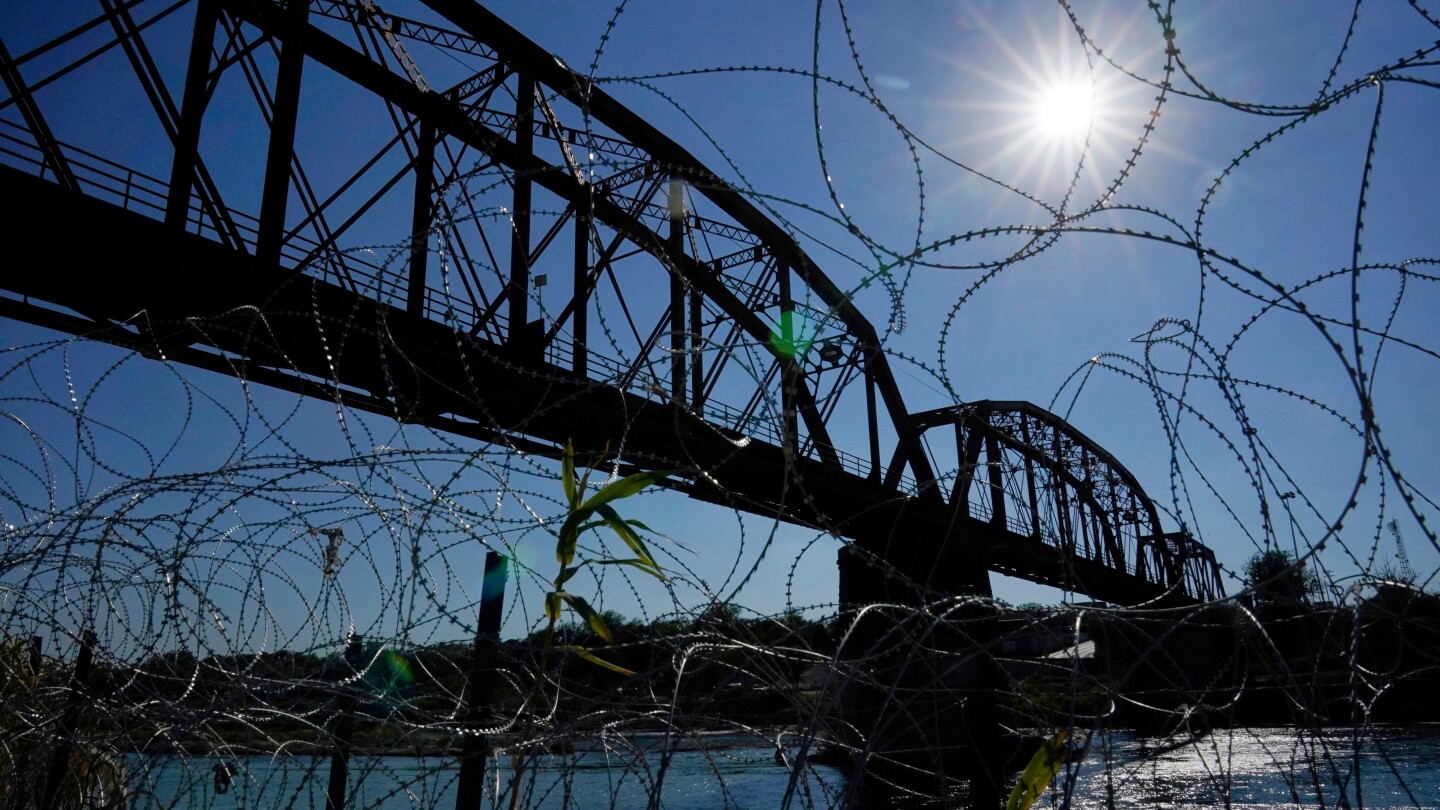
Union Pacific explained that the crew changes at its Eagle Pass rail yard, located 7 miles inside the border, help maintain efficient freight movement. Previously, crew switches occurred at a single-track bridge, which forced rail traffic to stop. The company says it coordinated with U.S. Customs and Border Protection to implement this practice.
The enforcement push reflects broader concerns about transportation safety and border security, highlighting the complex balance between maintaining efficient cross-border commerce and ensuring regulatory compliance and public safety.
Fact Checker
Verify the accuracy of this article using The Disinformation Commission analysis and real-time sources.

7 Comments
This is a complex issue with valid concerns on both sides. While the need for clear communication is understandable, there may also be practical challenges with enforcing English-only requirements for foreign crews. A balanced approach that addresses safety without being overly restrictive would be ideal.
As someone who relies on the efficient movement of goods by rail, I’m glad to see the administration taking steps to enhance safety. However, the implementation details will be critical to ensure this policy doesn’t create unnecessary disruptions to cross-border supply chains.
Safety should always be the top priority, especially when it comes to operating large and powerful vehicles like trains. Ensuring that all crews can communicate effectively in English is a reasonable requirement to mitigate risks at border crossings.
This move by the Trump administration seems politically motivated rather than solely focused on safety. Improving communication and training is reasonable, but an outright ban on non-English speaking crews could disrupt cross-border rail operations and trade. A more nuanced solution is needed.
This is an interesting development in the ongoing tensions around immigration and border security. While the safety rationale seems reasonable, I’m concerned about the potential for this policy to be used as a pretext for broader anti-immigrant measures. Nuance and fairness will be key.
Promoting clear communication is sensible, but this policy change also raises concerns about potential discrimination against Mexican workers. Finding the right balance between safety and fairness will be crucial as regulators work with the railroads on this issue.
I’m curious to learn more about the specific safety incidents that prompted these inspections and new regulations. Were there any documented accidents or near-misses linked to language barriers? Transparent data would help assess the true scope of the problem.