


Listen to the article
Supreme Court Takes Measured Pace on High-Stakes Trump Tariff Case
When the Supreme Court agreed to an expedited hearing on President Donald Trump’s tariffs last year, the unusual move suggested a quick resolution might follow. Trump’s legal team had emphasized urgency, citing Treasury Secretary Scott Bessent’s warning that “the longer a final ruling is delayed, the greater the risk of economic disruption.”
Yet nearly three months after oral arguments, the court has issued no decision and isn’t scheduled to meet publicly for more than three weeks. The timeline has now settled into what appears to be the court’s normal deliberative pace, despite the case’s significance to the administration’s economic agenda.
Legal experts dismiss speculation that the justices might be intentionally delaying a potentially uncomfortable ruling against Trump. Jonathan Adler, a law professor at the College of William & Mary, noted that while such suspicions occasionally arise, they rarely amount to more than conjecture.
The current timeline doesn’t necessarily indicate which way the court is leaning. Carter Phillips, a veteran Supreme Court attorney with 91 arguments before the high court, suggested one possibility: “The court is more evenly divided than appeared to be the case at oral argument and the fifth vote is wavering.” Even if a majority opinion has been drafted, Phillips added, a separate dissenting opinion could extend the process.
This pattern is visible in the court’s recent work. Just last week, the justices released two unanimous decisions in cases argued in October. Despite agreement on the outcomes, separate opinions likely slowed their release.
The Supreme Court has generally been moving at a more measured pace in recent terms. According to data compiled by Adam Feldman of Empirical SCOTUS, the average turnaround time for Supreme Court opinions over the past two decades is just over three months. This timeframe has lengthened in recent years, with the court now routinely releasing half or more of its opinions in June.
Decision timelines vary considerably based on circumstances. When external deadlines exist, the court can move with remarkable speed – the landmark Bush v. Gore case that effectively decided the 2000 election was resolved in just over a day, while a recent TikTok case took only seven days.
Without such constraints, major cases often take six to eight months after argument to be decided. Recent examples include significant rulings on gun rights expansion, overturning Roe v. Wade, and ending affirmative action in college admissions.
The tariffs case carries particular urgency because the Trump administration’s trade policies continue to have real-time economic impacts across multiple sectors. Marc Busch, an expert on international trade policy at Georgetown University, acknowledged his hope for a faster decision but noted the timeline isn’t surprising given the court’s typical schedule and the complex issues involved.
“The separation of powers questions central to the case are complicated,” Busch explained. “Whatever the majority decides, there will likely be a dissent, and both sides will be carefully calibrating their writing. It is the language at the end of the day that’s going to make this more or less meaningful.”
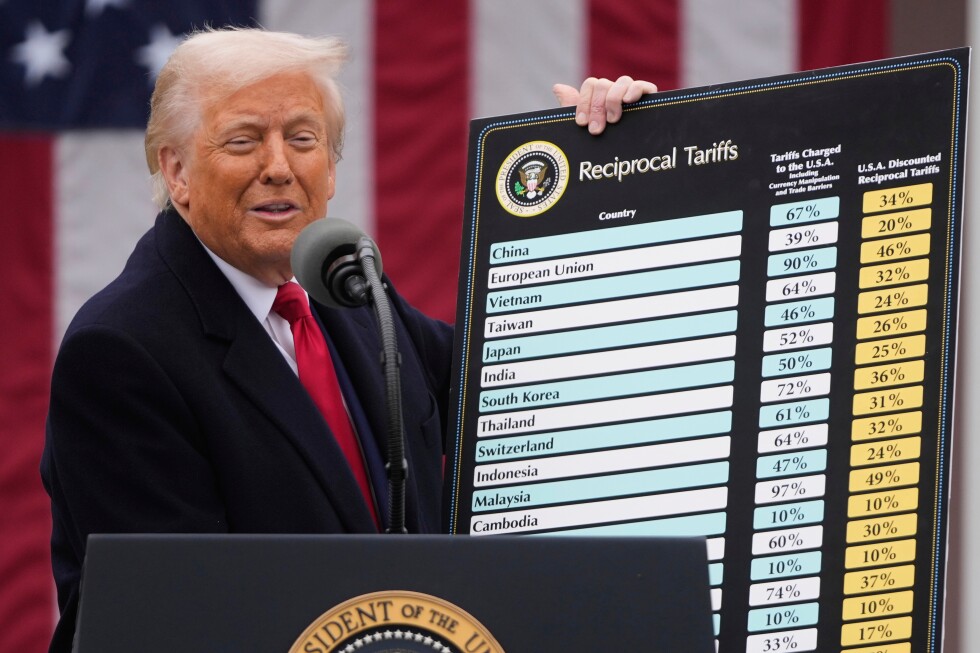
Meanwhile, as the justices deliberate, Trump continues to champion tariffs as a cornerstone policy, frequently threatening their implementation and describing the case as the court’s most consequential. “I would hope, like a lot of people, the justices have been watching the tariff threats over Greenland and realize the gravity of this moment,” Busch added.
Also awaiting resolution is another expedited case concerning redistricting in Louisiana and the future of a key Voting Rights Act provision, highlighting the court’s careful balancing of its increasingly complex and politically sensitive docket.
The court’s methodical approach to the tariffs case underscores the inherent tension between judicial deliberation and political urgency – a dynamic that has become increasingly pronounced in cases involving executive power and economic policy.
Fact Checker
Verify the accuracy of this article using The Disinformation Commission analysis and real-time sources.

14 Comments
It’s interesting that legal experts are dismissing speculation about the court intentionally delaying a ruling. Conjecture rarely amounts to more than that, and the current timeline doesn’t necessarily indicate which way the court is leaning.
Exactly. The court should be allowed to deliberate in a fair and impartial manner, without unfounded assumptions about their motives. A well-reasoned decision is what’s most important here.
The complexity of this case, with its legal and economic implications, is likely why the court is taking its time. A measured approach is probably the wisest course of action, even if it’s not the most expedient.
Agreed. The court seems to be prioritizing a thorough, well-considered decision over a hasty one. That’s the responsible way to handle a case of this magnitude.
It’s understandable that the administration would want a quick resolution, given the potential economic disruption. But the court’s deliberative approach is likely the best way to ensure a fair and well-reasoned decision.
Absolutely. While the administration may be eager for a swift ruling, the court has a responsibility to carefully weigh all the evidence and arguments before issuing a decision.
The timeline for this case seems to have settled into the court’s normal deliberative pace, despite the administration’s calls for urgency. That suggests the justices are focused on making a well-reasoned decision rather than rushing to a conclusion.
Agreed. Upholding the rule of law and carefully weighing the evidence should take precedence over political expediency in a case of this magnitude.
The veteran Supreme Court attorney’s perspective on the court’s typical deliberative pace is insightful. It’s good to know that the current timeline doesn’t necessarily indicate the court’s leanings one way or the other.
Yes, that’s a helpful point. The court seems to be following its normal process, which is reassuring in a case with such high stakes.
This case seems to have significant implications for the administration’s economic agenda. It will be fascinating to see how the court balances the legal and economic factors in their final ruling.
Absolutely. The court’s decision could have far-reaching consequences, both for trade policy and the broader economy. I’m curious to see how they navigate this complex issue.
Interesting to see the Supreme Court taking a measured approach to this high-stakes tariff case. It’s understandable they want to carefully deliberate the complex legal and economic implications before issuing a ruling.
Yes, this is a significant decision that could have far-reaching impacts on trade policy and the economy. I appreciate the court taking the time to thoroughly review the arguments.