


Listen to the article
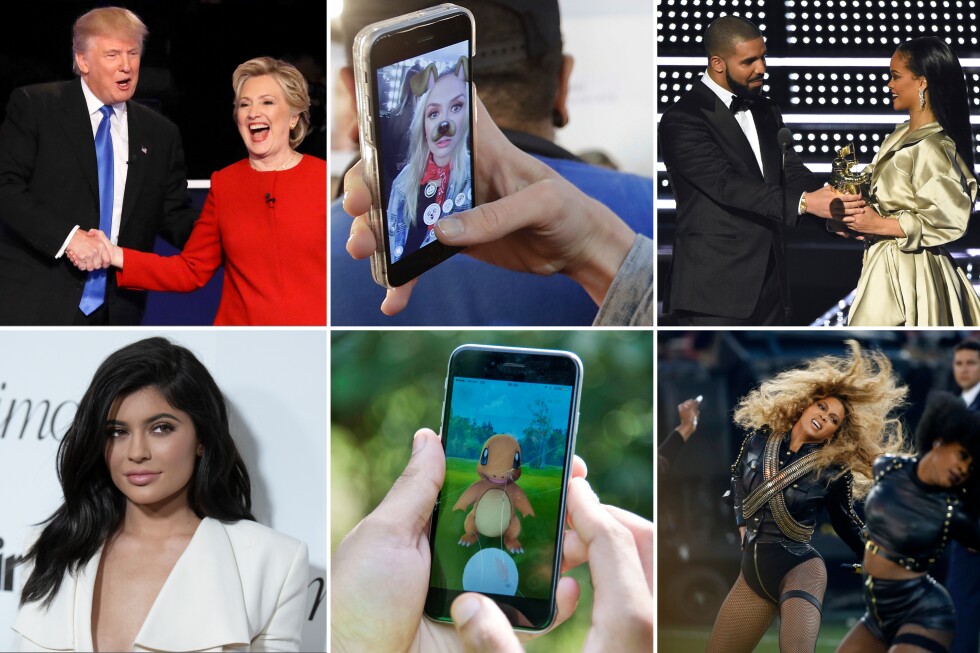
The year 2016 is experiencing a nostalgic revival as social media floods with throwback photos, igniting one of 2024’s first viral trends. For many in their 20s and 30s, 2016 represents a simpler time characterized by carefree internet culture and distinctive aesthetics.
Maren Nævdal, 27, remembers it as a period of “fun, unserious things” with over-the-top makeup trends. For Njeri Allen, also 27, the year was defined by chart-topping artists like Beyoncé, Drake, and Rihanna’s last music releases before her extended hiatus. “Everything felt new, different, interesting and fun,” Allen reflects.
The trend’s popularity stems partly from the realization that 2016 was already a decade ago. However, experts note that 2016 marked a pivotal transition point in social, political, and technological developments that shape our current reality.
“The nostalgia being expressed now, for 2016, is due in large part to what has transpired since then,” explains Janelle Wilson, a sociology professor at the University of Minnesota-Duluth. By late 2016, significant shifts were on the horizon: Donald Trump’s first presidential term, Brexit’s aftermath, and a few years later, the COVID-19 pandemic that upended global life.
Wilson describes 2016 as a time when the world was “on the cusp of things, but not fully thrown into the dark days that were to come,” noting increased polarization and populism as transformative forces that followed. “For there to be nostalgia for 2016 in the present, I still think those kinds of transitions are significant.”
For Nævdal, 2016 “was before a lot of the things we’re dealing with now.” She enjoys seeing “how embarrassing everyone was, not just me” in shared photos, which felt “more authentic in some ways.” Today, she believes “the world is going downhill.”
Nina van Volkinburg, a professor of strategic fashion marketing at University of the Arts, London, characterizes 2016 as the beginning of “a new world order” marked by “fractured trust in institutions and the establishment.” The year also represented possibility, she notes, with social media displaying “the maximalism of it all” through bohemian Coachella fashion, “cut crease” makeup, and popular dance music.
“People were new to platforms and online trends, so were having fun with their identity,” van Volkinburg explains. “There was authenticity around that.” The year also introduced the “boss babe” aesthetic and millennial pink, signaling young people entering adulthood in a hopeful climate.
For Allen, 2016 was the summer when she and her friends graduated high school, a formative period they knew would remain significant. Now living in Taiwan, she finds that “unprecedented things are happening” globally. “Both of my homes are not safe,” she says of the U.S. and Taiwan, making it “easier to go back to a time that’s more comfortable and that you felt safe in.”
The acceleration of nostalgia has been intensified by technology. In recent days, Nævdal decided to hide social media apps on her phone, citing concerns about artificial intelligence. “It freaks me out that you can’t tell what’s real anymore,” she explains. “When I’ve come off of social media, I feel that at least now I know the things I’m seeing are real, which is quite terrifying.”
Cultural trends increasingly reflect this nostalgia, from vinyl record collections to letter writing and aesthetic references to bygone eras. Wilson notes that technology has made nostalgia more accessible than ever. “We can so readily access the past or, at least, versions of it,” she says. “We’re to the point where we can say, ‘Remember last week when we were doing XYZ? That was such a good time!'”
Both Nævdal and Allen describe themselves as nostalgic people. Nævdal enjoys reviewing old photos, particularly when they appear as “On This Day” updates on her phone, sharing them with friends and family. Allen wishes she had documented more of her younger years to reflect on her personal growth.
“I didn’t know what life could be,” Allen says of 2016. “I would love to be able to capture my thought process and my feelings, just to know how much I have grown.”
Fact Checker
Verify the accuracy of this article using The Disinformation Commission analysis and real-time sources.

17 Comments
Exploration results look promising, but permitting will be the key risk.
Good point. Watching costs and grades closely.
Good point. Watching costs and grades closely.
Uranium names keep pushing higher—supply still tight into 2026.
Good point. Watching costs and grades closely.
Good point. Watching costs and grades closely.
Nice to see insider buying—usually a good signal in this space.
I like the balance sheet here—less leverage than peers.
Uranium names keep pushing higher—supply still tight into 2026.
Good point. Watching costs and grades closely.
Good point. Watching costs and grades closely.
Production mix shifting toward Business might help margins if metals stay firm.
Good point. Watching costs and grades closely.
If AISC keeps dropping, this becomes investable for me.
I like the balance sheet here—less leverage than peers.
Good point. Watching costs and grades closely.
Good point. Watching costs and grades closely.