


Listen to the article
Olympic Host Town Livigno Sees Mixed Economic Impact During Winter Games
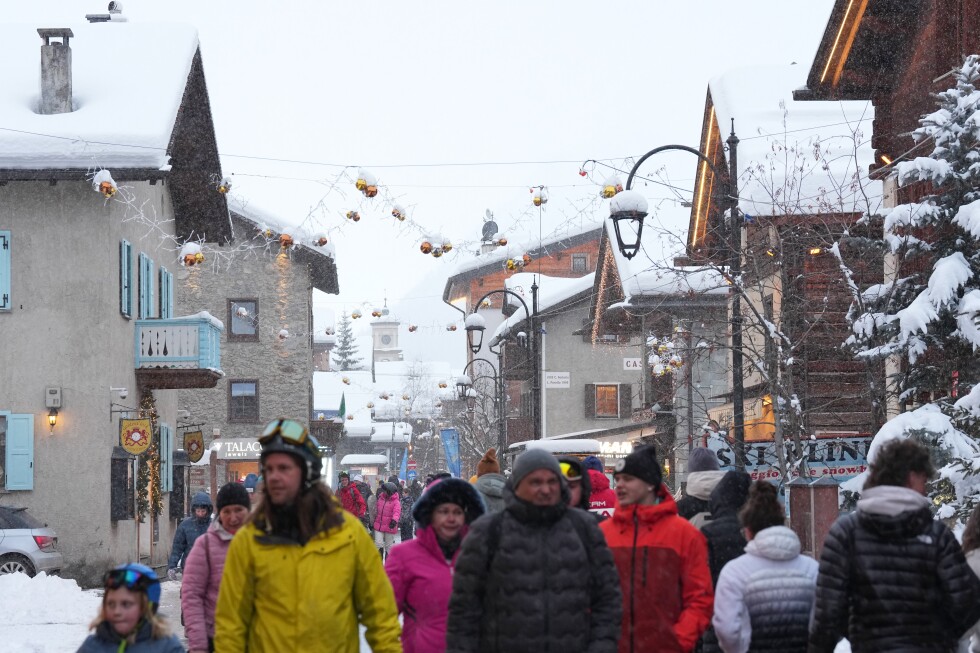
On the climb to Livigno, Italy, a lonely customs checkpoint marks the entrance to a village that has enjoyed duty-free status for centuries. This unique tax exemption typically draws shoppers from across Europe, but during the Winter Olympics, the Italian mountain town’s retail businesses are experiencing an unexpected economic downturn while hospitality venues thrive.
Shop owners along Livigno’s main street report significant sales drops as Olympic restrictions limit the usual influx of day-tripping bargain hunters who normally flock to the duty-free haven during February’s peak season.
“I’m not positive about the Olympics, because usually you are working more than double in this period,” said Olga Salari, owner of a toy store filled with Lego sets. “Now, this period is like our low season.” Salari reports a staggering 70% drop in sales compared to an average February. “Olympic visitors don’t even visit the shops,” she added.
The reason for this retail slowdown stems from access restrictions. Visitors to all six mountain Olympic venues must have accreditation, accommodation reservations, event tickets, or a ski pass—effectively eliminating the casual day shoppers who drive to Livigno specifically for tax-free bargains.
A Centuries-Old Tax Haven
Nicknamed “Little Tibet” for its historic isolation and snow-clad peaks, Livigno has maintained tax exemptions since medieval times. These concessions originally helped the impoverished, cut-off community import essential goods. When paved roads finally connected the village in the 20th century—first to southern Italy and later to Switzerland through a tunnel—the duty-free status transformed into a powerful economic engine.
Today, visitors can purchase up to €300 ($356) worth of goods without Italy’s 22% sales tax. The town enforces specific limits on perfumes, cigarettes, cigars, liquor, and gasoline. This tax advantage has made Livigno a popular destination for skiers from Austria, Germany, Switzerland, and beyond, who typically combine their sporting trips with shopping expeditions.
“The tourists are more interested to see the competition. They’re not so focused on shopping,” explained Manuel Galli, whose family owns an electronics store.
Long-Term Economic Benefits Expected
According to Italy’s Banca Ifis, the overall economic impact of the Games is projected to reach €5.3 billion ($6.2 billion), with tourists expected to spend €1.2 billion ($1.4 billion) at host sites during the next 18 months. Milan Cortina organizing committee president Giovanni Malagò cited more than €5 billion in potential economic benefits during an interview with Italian radio.
The committee notes that the Olympics have already catalyzed infrastructure improvements, including upgraded electrical distribution systems, health facilities, and rail service for Livigno and other mountain venues—investments that will benefit the region long after the Games conclude.
Unlike Livigno, other mountain venues are seeing immediate retail benefits. In Cortina d’Ampezzo, Vice Mayor Roberta Alverà reported “a significant influx of people” filling not just accommodations and restaurants but also shops along the town’s pedestrian-only Corso Italia. Similarly, Bormio’s historic center has bustled with fans throughout the men’s Alpine ski racing program, bringing activity to local businesses.
A Marketing Opportunity for Global Tourism
Sergio Schena, a member of the organizing committee for Livigno, acknowledges the uneven economic impact but remains optimistic about long-term benefits. The global spotlight, he believes, will attract tourists from new markets, similar to Turin’s experience after hosting the 2006 Winter Olympics.
“What we expect to happen is that the markets change, and we get more tourists from the United States and Asia,” Schena said.
This shift concerns some shop owners like Salari, whose business model depends on European visitors who drive to Livigno and use their vehicle trunk space to transport purchases home. She fears that long-distance tourists arriving by plane will only buy items small enough to fit in their luggage.
Nevertheless, most Livigno residents, including struggling retailers, are hopeful that the televised images of snowboarders and freestyle skiers soaring off the town’s slopes will eventually expand their tourism base.
“This is very important because the Games are providing 360-degree publicity around the world and Livigno is coming across very well,” said Derio Claoti, owner of a perfume shop that has experienced a 70% sales drop during the Olympics.
Nearby at the Golden Clock shop, which sells luxury watches and jewelry, Damiano Longa echoed this sentiment despite his own sales decline: “We hope that the advertising that it’s making for Livigno will work for the future.”
Fact Checker
Verify the accuracy of this article using The Disinformation Commission analysis and real-time sources.

9 Comments
The 70% drop in sales that the toy store owner reported is staggering. Livigno’s duty-free status is a major draw, so it’s surprising to see that the Olympics are having such a negative impact on retail. I wonder if there are any long-term consequences for these businesses.
The contrast between the retail and hospitality sectors in Livigno is quite stark. It underscores the importance of diversifying a local economy to be resilient to these kinds of disruptions. Businesses need to be able to adapt and cater to both tourists and residents to weather major events.
This underscores the importance of diversifying an economy beyond just retail. Even with a unique duty-free status, Livigno’s businesses appear vulnerable to changes in visitor patterns during major events. Adapting to serve both tourists and local residents could help smooth out these fluctuations.
It’s an interesting case study in the unintended consequences that can arise from hosting the Olympics. The retail businesses are struggling, while the hospitality venues are thriving. I wonder if this dynamic is common across other Olympic host towns as well.
This is a complex issue without any easy solutions. On one hand, the Olympics bring significant tourism and economic activity to the region. But on the other, the access restrictions seem to be hurting local retail businesses that rely on that foot traffic. Balancing those competing interests will be an ongoing challenge.
Interesting to see how the Winter Olympics can have such a mixed impact on a local economy like Livigno’s duty-free enclave. The retail shops seem to be struggling with fewer day-trippers, while the hospitality sector is likely benefiting from Olympic visitors. It’s a complex dynamic to navigate.
I’m curious to see if the Olympic organizers or local government can find ways to better integrate the retail businesses and drive more foot traffic to the main street during the games. Targeted marketing, transportation links, or event programming could potentially help offset the access restrictions.
That’s a good point. Creative collaboration between the Olympic hosts and local merchants could yield some innovative solutions to share the economic benefits more evenly.
This situation highlights the challenges that host towns can face during major sporting events. The potential economic windfall doesn’t always translate evenly across all sectors. Careful planning and stakeholder engagement seem crucial to maximizing the benefits for a community like Livigno.