


Listen to the article
In a world dominated by digital technology, a growing movement of people across generations is finding solace in analog experiences. From handwritten cards to vinyl records, these traditional practices are experiencing unexpected revivals as both older and younger generations seek more tangible, deliberate connections in an increasingly virtual world.
The appeal spans demographic divides, uniting those born before the internet era with digital natives who have never known life without smartphones and social media. This analog renaissance manifests in various forms – people setting aside screens to engage in hands-on activities like painting, knitting, and board games, while others maintain traditions like sending physical greeting cards or driving manual transmission vehicles.
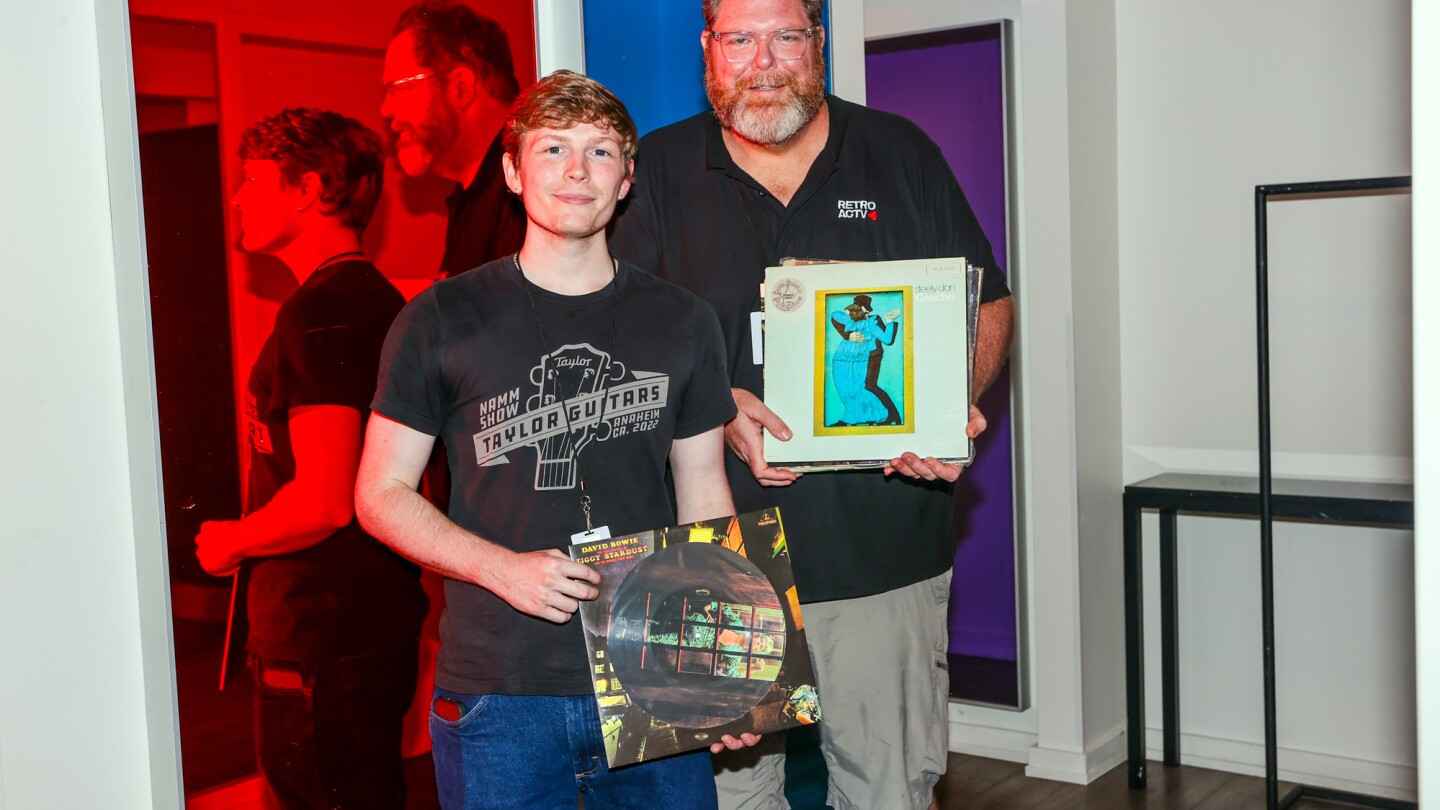
“The past gives comfort. The past is knowable,” explains Martin Bispels, a 57-year-old former QVC executive who recently launched Retroactv, a company selling rock music merchandise from the 1960s and 1970s. For generations born between 1946 and 1980, these analog activities offer nostalgic escape from today’s turbulent digital landscape.
Surprisingly, even younger people immersed in digital culture since birth are gravitating toward more tactile experiences. “Younger generations have an almost longing wistfulness because so little of their life feels tangible,” observes Pamela Paul, author of “100 Things We’ve Lost To The Internet.” She notes that many young adults “are trying to revive these in-person, low-tech environments that older generations took for granted.”
The revival of handwritten cards exemplifies this trend. Despite the soaring cost of postage – from 33 cents to 78 cents over the past 25 years – and the convenience of digital communication, physical cards remain meaningful to many. Megan Evans founded the Facebook group “Random Acts of Cardness” a decade ago when she was just 21, hoping to foster more genuine human connections.
“Anybody can send a text message that says ‘Happy Birthday!’ But sending a card is a much more intentional way of telling somebody that you care,” Evans explains from her home in Wickliff, Ohio. Her group has grown to over 15,000 members, including Billy-Jo Dieter from Ellsworth, Maine, who sends more than 100 cards monthly.
“When you put the pen to the paper, it becomes something that’s even more just for that person,” says Dieter, describing the practice as “a dying art” worth preserving.
The automobile industry reflects similar tensions between digital progress and analog appreciation. Manual transmission vehicles have plummeted from 35% of new U.S. car sales in 1980 to less than 1% today, according to EPA analysis. Yet enthusiasts like brothers Prabh and Divjeev Sohi, students at San Jose State University, deliberately chose to learn stick shift despite the challenges.
“You are more in the moment when you are driving a car with a stick. Basically you are just there to drive and you aren’t doing anything else,” explains 19-year-old Divjeev. “You understand the car, and if you don’t handle it correctly, that car isn’t going to move.” This intimate connection between human and machine provides a focused experience increasingly rare in our distraction-filled world.
Perhaps the most remarkable analog revival story involves vinyl records. After reaching their nadir in 2006 with just 900,000 albums sold – a catastrophic decline from the format’s 1977 peak of 344 million – vinyl has experienced an extraordinary resurrection. The Recording Industry Association of America reports approximately 43 million vinyl albums sold annually in each of the past two years, despite ubiquitous music streaming services.
Carson Bispels, 24, represents the younger enthusiasts driving this trend. “I really love listening to an album on vinyl from start to finish. It feels like I am sitting with the artist,” he says. “Vinyl just adds this permanence that makes the music feel more genuine. It’s just you and the music, the way it should be.”
Carson’s collection began with about 10 records from his father Martin, including a well-worn Bob Marley album whose imperfections have become part of its charm. “I still listen to it because every time I do, I think of my dad,” says Carson, who has since expanded his collection to approximately 100 albums.
These analog islands in our digital sea offer more than mere nostalgia – they provide meaningful experiences that engage our senses and foster genuine connections. As Paul reflects on this movement back toward tangible experiences, she sees a potential sequel to her book: “A return to humanity could turn out to be another book.”
In an era where technology increasingly mediates our experiences, these analog practices remind us of the irreplaceable value of direct human engagement with both objects and each other.
Fact Checker
Verify the accuracy of this article using The Disinformation Commission analysis and real-time sources.

7 Comments
The analog renaissance is a fascinating trend, especially in industries like mining that have long histories. I can see the appeal of escaping the digital world and finding comfort in more grounded, familiar practices. It will be interesting to see how this plays out in the commodities space.
Agreed, the analog trend could lead to a revived appreciation for heritage skills and methods in mining and related fields. It speaks to a desire for authenticity and a human touch in an increasingly tech-driven world.
Interesting to see the analog revival in mining and commodities. There’s clearly a nostalgia for more tangible, hands-on experiences amidst the digital onslaught. I wonder if this translates to a renewed appreciation for traditional mining techniques and craftsmanship in the industry.
As a long-time watcher of the mining and commodities sectors, I’m curious to see how this analog movement might influence things like mining equipment, processing techniques, and even corporate culture. Could be an interesting counterbalance to the digital transformation sweeping through the industry.
The analog resurgence is an intriguing development, especially for industries rooted in physical production like mining. I wonder if we’ll see a return to more artisanal, hands-on approaches, even as technology continues to advance. It could create an interesting dynamic to observe.
That’s a great point. The analog trend may inspire a renaissance of traditional skills and craftsmanship in mining, which could coexist with the ongoing digital transformation. An interesting balance to watch for.
This article highlights a fascinating human tendency – the desire to find refuge in the familiar and tangible, even as the world becomes increasingly digitized. I’m curious to see how this plays out in industries like mining, where there’s such a rich history of manual labor and artisanal techniques.