


Listen to the article
America’s First Mass-Produced Suburb Created a Housing Legacy with Mixed Impact
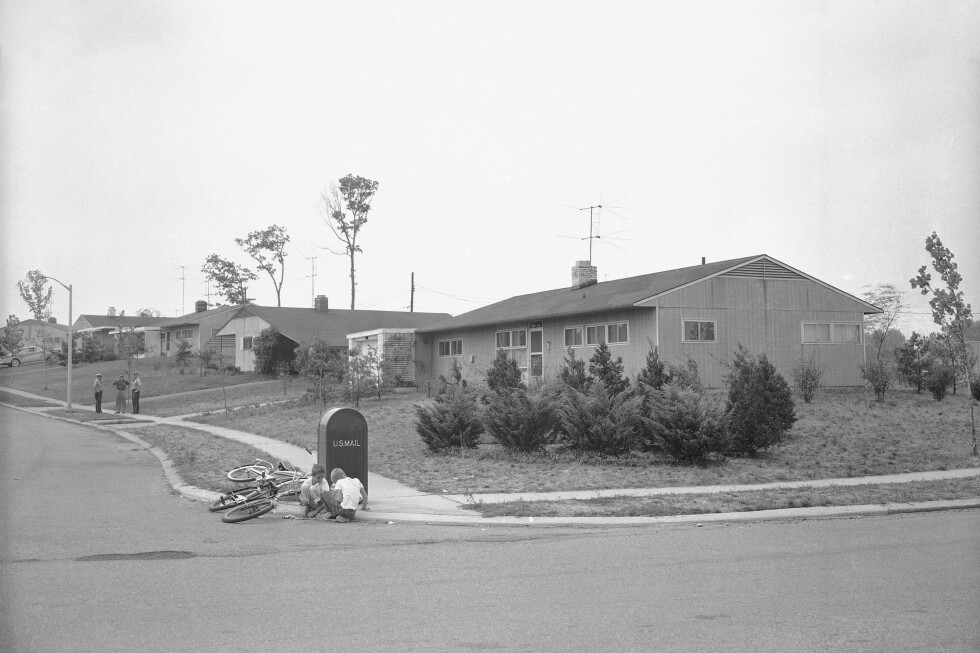
They weren’t the most impressive-looking houses: boxy and small, two bedrooms with a living room and kitchen, no basement, tossed up one after another in assembly-line fashion.
For certain families in the years after World War II, though, they were perfect — a chance to have a home of one’s own, an answer to a serious housing shortage. So was born Levittown, about 40 miles outside of New York City on Long Island. It grew to more than 17,000 houses, becoming America’s first wholly planned suburb.
Developer William Levitt wasn’t the first builder to use mass-production methods to build homes accessible to the middle class, but “nobody was building on the scale that he did,” says Ed Berenson, professor of history at New York University and author of “Perfect Communities: Levitt, Levittown and the Dream of White Suburbia.”
Levitt started with 2,000 homes, unsure of what demand would be. About three times that many people signed up, so eager were returning veterans for their own homes. The Federal Housing Authority (FHA) played a critical role by guaranteeing mortgages, making homeownership possible for many first-time buyers.
The timing was perfect for the Levitt model to flourish. The post-war period saw an acute housing shortage across the country as servicemen returned home and started families. Traditional construction methods couldn’t keep pace with the rapidly growing demand. Levitt applied assembly-line techniques learned during wartime production to housing construction, with specialized teams performing specific tasks as they moved from house to house.
But the first Levittown and others that Levitt built, along with suburbs developed by others, weren’t open to all Americans. Federal backing of mortgages was aimed specifically at white buyers in white communities, not Black buyers. Levitt refused to sell to Black families and included restrictive covenants that barred those who bought the homes from reselling to Black people.
When William and Daisy Myers became the first Black family to move into Levittown, Pennsylvania in 1957, they faced hostile crowds and police had to be called in with riot sticks to maintain order. The incident highlighted the deeply entrenched racial segregation that defined American suburban development.
This exclusionary approach to housing development has created a lasting legacy in a country where the biggest financial asset for many Americans has been their homes, Berenson explains.
“What Levitt did by creating these exclusively white communities is he set up a structure that still exists today, and it’s a structure that has really maintained racial inequality, even more than class inequality,” Berenson says. “It’s not nearly as bad as it was, but it still exists.”
The racial wealth gap in America can be traced in part to these housing policies. While white families were able to build generational wealth through home equity in appreciating suburbs, Black families were systematically excluded from the same opportunities through redlining, restrictive covenants, and other discriminatory practices.
Despite its problematic legacy, Levittown remains significant as an architectural and social innovation. The development introduced affordable homeownership to millions of Americans and established patterns of suburban living that would transform the American landscape in the decades that followed.
The original Levittown homes, initially priced at about $8,000 (roughly $95,000 in today’s dollars), were designed to be expandable. As families grew and prospered, many owners added rooms, dormers and garages. Today, few original unmodified Levitt homes remain, as successive generations of homeowners have customized their properties.
The Levittown model spread across America, with similar developments appearing nationwide. The suburban housing boom it helped launch transformed not just where Americans lived, but how they lived—prioritizing car ownership, creating new retail formats like shopping malls, and establishing commuting patterns that still influence urban planning today.
While contemporary housing developers have moved away from the cookie-cutter approach of early Levittowns, the legacy of mass-produced suburban housing remains integral to American cultural identity and economic history—both as an achievement in democratizing homeownership and as a cautionary tale about the social costs of exclusion.
Fact Checker
Verify the accuracy of this article using The Disinformation Commission analysis and real-time sources.

11 Comments
Fascinating history of the Levittown model and its impact on suburban development in post-war America. It was a bold experiment in mass-producing affordable housing for the middle class, though not without its critics and social implications.
The ability of the FHA to guarantee mortgages was a key factor in making homeownership accessible to more families at that time. It was a transformative period for the suburban landscape.
The housing shortage after WWII was a major driver behind the Levittown model. While it helped address immediate needs, the longer-term social and environmental implications are worth examining. What can we learn about building more sustainable and equitable communities today?
As someone interested in architectural history, I find the Levittown story fascinating. It reflects both the aspirations and constraints of its era. The standardized, mass-produced homes may have lacked character, but they provided a path to homeownership for many.
The Levittown story is a fascinating look at a pivotal moment in American suburbanization. While the standardized homes may have lacked character, they provided an important pathway to homeownership for many families in the post-war period. It’s a complex legacy to reflect on.
Absolutely, the Levittown model represents both progress and challenges in how we approach community development. Understanding its nuances can help inform more sustainable and equitable approaches moving forward.
The Levittown model was an innovative approach to addressing the housing shortage after WWII, but I wonder about the long-term social and environmental impacts of such a homogenized, sprawling suburban development pattern. What lessons can we learn for sustainable community planning today?
Good point. The tradeoffs of rapid suburban expansion merit careful consideration, especially around issues of equity, resource use, and community character. Finding the right balance is an ongoing challenge.
The Levittown model seems to have been a double-edged sword – enabling more affordable homeownership but also contributing to a homogenized suburban landscape. It’s a complex legacy that still shapes our views on urban planning and community development.
Agreed, the legacy is nuanced. The Levittown story highlights both the benefits and drawbacks of rapid, mass-produced suburban expansion. Finding the right balance remains an ongoing challenge for policymakers and urban planners.
I’m curious to learn more about the role of government programs like the FHA in enabling the Levittown model. To what extent did public policy shape the growth of these mass-produced suburbs, and what were the intended vs. actual impacts on communities?