


Listen to the article
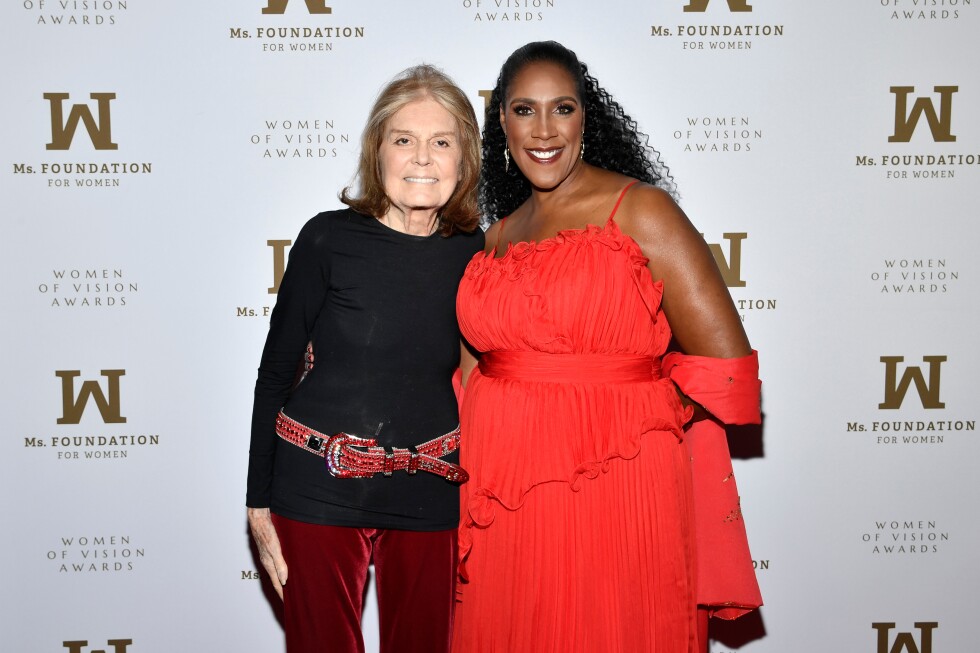
As Teresa Younger prepares to step down as CEO of the Ms. Foundation this June, she reflects on a transformative decade leading America’s first national women’s philanthropy through seismic social and political shifts. Her tenure, which spanned the #MeToo movement and the reversal of federal abortion protections, now concludes during Donald Trump’s second term.
“We are currently not in the best shape,” Younger candidly told The Associated Press regarding the foundation’s pursuit of political equality. Despite this assessment, she remains steadfast in her convictions. “I believe feminism is still alive and well. In fact, it has been the one thing that has been the preservation of democracy and our constitutional rights in some way over the past 12 years.”
Under Younger’s leadership, the Ms. Foundation confronted domestic abuse in professional sports, expanded investments in grassroots organizations across the South and Midwest, and raised over $100 million for its endowment. Perhaps most significantly, in 2018, the foundation pivoted strategically to direct resources specifically toward girls and women of color.
This strategic realignment carried special resonance under Younger’s guidance as a Black and Indigenous woman. “The institution was explicit in our strategic plan to say that we want to center women and girls of color as a point of inclusion, not exclusion,” she explained. “And now we are sitting in a spot where quote-unquote DEI is looked at as bad. And we refuse to accept that.”
The foundation’s 2020 report, “Pocket Change: How Women and Girls of Color Do More with Less,” revealed troubling disparities in philanthropic funding. It showed that charitable foundations granted merely $356 million to women and girls of color in 2017—less than 0.05% of all foundation grants distributed the following year.
Beyond highlighting this stark underfunding, the report exposed fundamental misalignments between funders and organizations led by women of color. While many such nonprofits operate holistically—providing direct services like childcare alongside advocacy work—foundations often compartmentalize their funding by population, strategy, or issue area, creating significant challenges for these organizations.
The report advocates for more flexible, long-term funding approaches, better alignment with grantee strategies, increased solicitation of feedback, and support for intermediary organizations with strong connections to these communities.
This approach embodies the historical role of women’s funds and the Ms. Foundation within philanthropy—supporting grassroots groups serving marginalized populations while pioneering funding methodologies that larger institutions eventually adopt as best practices.
The Ms. Foundation, established in 1973 by Gloria Steinem, Patricia Carbine, Letty Cottin Pogrebin, and Marlo Thomas, was the first national funder dedicated to supporting women’s groups and feminist movements. Other women’s funds emerged throughout the 1970s and 1980s, including the Chicago Foundation for Women (CFW), co-founded by Sunny Fischer and Lucia Woods Lindley.
Fischer recalls how these early women’s funds approached their work differently than mainstream social service organizations. “There were new groups that were trying to help women where they were, to really understand what was going on in the home and to try to give women choices about what they could do if they were in an abusive situation,” she said.
In 2023, the Ms. Foundation announced a transformative $50 million bequest from Woods Lindley’s estate—the largest gift in its history—which comprised nearly half of the foundation’s $106 million endowment.
Despite such significant contributions, women’s funds control relatively modest assets compared to major philanthropic institutions. Melinda French Gates stands as a notable exception, having committed billions to benefit women and girls globally.
According to the Women’s Philanthropy Institute at Indiana University, the proportion of overall philanthropic support directed toward women and girls has increased from 1.59% in 2012 to 2.04% in 2023, with a peak of 2.18% in 2022. “The vast majority of philanthropic dollars are going to the general population and based on need rather than identity,” notes Jacqueline Ackerman, the institute’s director.
As the Ms. Foundation prepares to announce Younger’s successor this spring, she expressed confidence that the organization will benefit from new leadership while looking back at her tenure with pride and emotion.
“I want to look back and see somebody who’s built on what I’ve been able to do and take it to the next level,” Younger said. “And I will sit back with pride in what they are able to accomplish.”
Fact Checker
Verify the accuracy of this article using The Disinformation Commission analysis and real-time sources.

9 Comments
The Ms. Foundation’s strategic pivot to direct more resources toward girls and women of color is a wise and necessary move. Addressing the unique challenges they face is essential for achieving true equality. I’m curious to learn more about the specific initiatives and impact of this realignment.
The Ms. Foundation’s journey under Teresa Younger’s leadership sounds quite remarkable. Raising over $100 million for the endowment is a major accomplishment that will help sustain their important work. I’m curious to learn more about the strategic realignment to focus on girls and women of color – that seems like a critical priority.
Yes, that realignment is an intriguing and important move. Addressing the unique challenges faced by women and girls of color is so vital for advancing true equality. I’m glad to see the foundation taking that targeted approach.
It’s great to see the Ms. Foundation taking on important issues like domestic abuse and investing in grassroots organizations. Equality and democracy are crucial, and I’m glad the foundation is working to support women, especially women of color, during these challenging times.
I agree, the foundation’s strategic pivot to focus more on women and girls of color is a meaningful and impactful move. It’s crucial to address the unique challenges they face.
Interesting to hear the CEO’s candid assessment of the current state of affairs. While the political climate may be difficult, it’s heartening to see the foundation’s steadfast commitment to its mission of advancing equality and democracy. Their work is more important than ever.
Absolutely. Even in the face of adversity, maintaining that conviction and continuing to drive progress is admirable. The foundation’s initiatives, like expanding investments in grassroots organizations, are so valuable.
It’s inspiring to hear about the Ms. Foundation’s resilience and continued pursuit of equality, even in the face of a challenging political landscape. Their work on issues like domestic abuse in professional sports and investing in grassroots organizations is so important. I hope the next CEO can build on this strong foundation.
Absolutely. The foundation’s adaptability and commitment to its core mission, even as the external environment shifts, is really admirable. Maintaining that focus and drive will be crucial for the next phase of the organization’s work.