


Listen to the article
Myanmar’s Military Launches Cyberscam Crackdown, But Questions Linger About Effectiveness
Myanmar’s military government has unveiled a new “zero tolerance” policy targeting the industrial-scale cyberscam centers proliferating throughout the country. As evidence of their commitment, authorities recently raided and bombed KK Park, a notorious compound that has become emblematic of the multi-billion-dollar online scam industry operating with relative impunity along the Thai-Myanmar border.
However, detailed analysis of the military’s actions raises significant questions about whether this crackdown represents genuine reform or merely a cosmetic response to growing international pressure. With national elections approaching, Myanmar’s leaders have been eager to showcase their anti-scam efforts, but the reality on the ground suggests a more complex situation.
Despite government claims that 413 buildings in KK Park had been “demolished” with the remaining 222 slated for clearance, detailed analysis by the Center for Information Resilience (CIR), a London-based human rights organization, found that only 31 structures were completely flattened in the first wave of demolition. At least 78 more were partially damaged, mostly by heavy machinery that often left roofs, ceilings, and structural elements intact.
“There may be an intention to reconstruct and reuse these buildings,” said Guy Fusfus, an investigator at Myanmar Witness, a CIR project. Recent satellite imagery reinforces this suspicion, showing most buildings in KK Park wholly or partially intact even as demolition spread to other sections of the compound.
The military government’s historical track record raises further skepticism. Previous raids earlier this year, conducted largely in response to Chinese diplomatic pressure, failed to halt the expansion of scam compounds. The U.S.-based conflict analysis group C4ADS examined satellite imagery of 21 known scam centers in Myawaddy Township and discovered that 14 of them—including KK Park—had undergone construction or expansion since January, despite supposed enforcement actions.
“This continued growth of scam compounds is emblematic of the junta’s inability to rein in the industry within Myanmar,” explained Michael Di Girolamo, a C4ADS analyst.
The fate of the thousands of workers from these compounds remains largely unknown. Thai military officials reported that approximately 1,500 people who worked at KK Park have escaped through official channels in Thailand—a small fraction of the total workforce, which experts estimate numbered in the tens of thousands.
Telegram channels are now filled with job advertisements targeting these displaced workers. Four former KK Park workers told the Associated Press that many colleagues simply followed their bosses to alternative locations. One individual currently trapped at a nearby compound called Hengsheng Park 4 reported that over a hundred KK Park workers temporarily stayed there before moving on to other locations.
“I heard that most of them went to Cambodia, Mauritius and Africa,” the source said, speaking anonymously due to safety concerns.
The military government claims to have raided additional sites beyond KK Park, including Shwe Kokko, another notorious compound that has drawn the attention of U.S. authorities. However, multiple sources report that scam operations continue largely unabated, with people trafficked from around the world still awaiting rescue.
“It’s not a real crackdown yet,” said Jay Kritiya, coordinator of the Civil Society Network for Human Trafficking Victim Assistance, echoing the sentiment of many observers monitoring the situation.
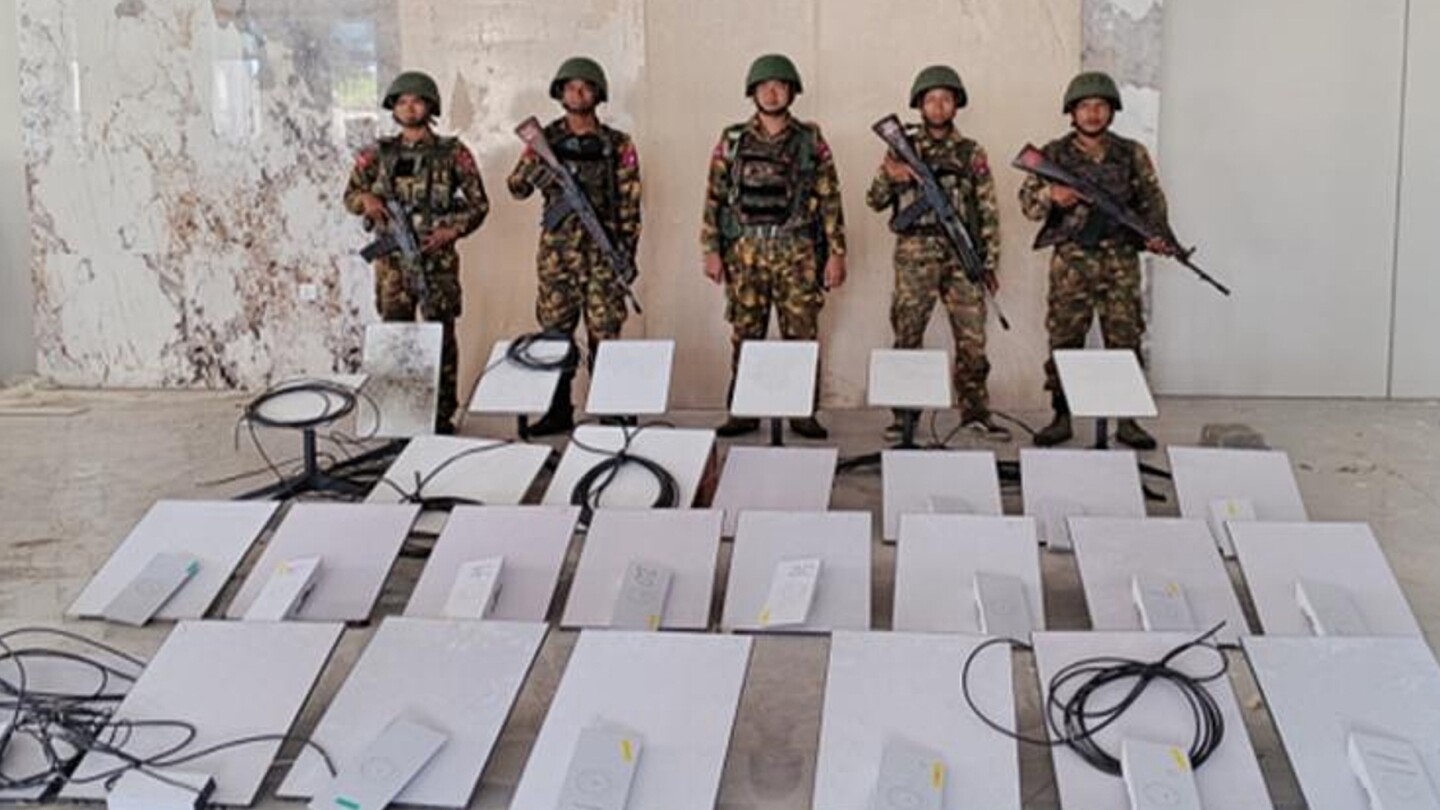
The military’s efforts to disrupt the technological infrastructure of these operations also appears incomplete. State media broadcast images of dozens of seized Starlink satellite internet units, and SpaceX announced it had cut off access to more than 2,500 Starlink units in Myanmar. Yet individuals currently trapped in scam compounds report continued internet access.
A person at Hengsheng Park 4 told reporters they continue using Starlink, with only three units disabled after SpaceX’s intervention while a fourth remains functional. Similarly, workers at Deko Park, located 35 miles south of KK Park, report uninterrupted Starlink service.
KK Park represents just one of approximately 30 scam compounds operating along Myanmar’s border with Thailand. These facilities form the backbone of an increasingly sophisticated criminal ecosystem that has ensnared tens of thousands of victims worldwide through elaborate financial scams, often executed by workers who themselves were initially trafficked to these compounds.
As international pressure mounts on Myanmar’s military government to address this growing crisis, the effectiveness of their current approach remains highly questionable, with many observers suggesting that true enforcement would require a far more comprehensive strategy than the targeted raids conducted thus far.
Fact Checker
Verify the accuracy of this article using The Disinformation Commission analysis and real-time sources.

13 Comments
The Myanmar military’s crackdown on cyberscam centers is an important development, but this report suggests the actions may be more for show than substance. Dismantling these lucrative, industrial-scale operations will require sustained, comprehensive efforts – not just high-profile raids. Curious to see if the military can follow through with meaningful disruption.
Agreed. Cosmetic responses to complex, entrenched cybercrime issues are unlikely to have a lasting impact. Myanmar’s leaders will need to demonstrate a genuine, long-term commitment to tackling this problem if they want to convince the international community of their sincerity.
The AP’s investigation into Myanmar’s cyberscam crackdown raises important questions about the military’s true intentions and the actual impact of their actions so far. Dismantling these large-scale criminal enterprises will be no easy task, and this report highlights the need for rigorous monitoring and verification to assess the government’s claims of progress.
Absolutely. With national elections looming, it’s critical that any crackdown claims are scrutinized objectively to determine if they represent genuine reform efforts or mere political posturing. Independent analysis will be key to hold the Myanmar government accountable.
Kudos to the AP and organizations like CIR for the detailed reporting and analysis on this issue. Cyberscams emanating from places like Myanmar’s border regions pose serious global risks, so it’s vital that any crackdown claims are scrutinized thoroughly. Looking forward to seeing if more substantive disruption follows.
Absolutely. Fact-based, independent analysis is crucial to cut through the potential propaganda and surface the real impact of Myanmar’s actions. Continued diligence will be needed to truly gauge if this crackdown leads to meaningful, lasting change.
The AP report paints a rather skeptical picture of Myanmar’s crackdown claims. While the military may be eager to showcase anti-scam actions ahead of elections, the limited demolitions and ongoing concerns about the industry’s resilience are troubling. This will be an important situation to monitor going forward.
This report highlights the challenges of tackling large-scale, entrenched cybercrime operations, even when governments claim to be taking action. Myanmar’s military seems eager for PR wins, but the limited demolitions and ongoing scam activity raise doubts about the true scope and effectiveness of the crackdown.
Interesting report on Myanmar’s crackdown on cyberscam centers. Seems the military’s actions so far may be more for show than real reform, given the limited demolitions and ongoing questions around effectiveness. Will be important to see if this leads to meaningful disruption of the lucrative scam industry there.
Yes, the report highlights how the military’s claims of a major crackdown may be exaggerated. Effective dismantling of these large-scale scam operations will likely require sustained pressure and follow-through.
This issue of cybercrime and online scams emanating from places like Myanmar is a real challenge globally. It’s good to see the military taking action, but as the report indicates, the real impact remains questionable so far. Ongoing monitoring and verification will be key.
Agreed. Tackling the complex web of organized cybercrime operations requires a multi-pronged approach, not just high-profile raids. Transparency and independent verification of results will be crucial to assess the true effectiveness of Myanmar’s efforts.
This report underscores the challenges of addressing Myanmar’s booming cybercrime industry. While the military’s crackdown on KK Park may generate headlines, the limited demolitions and ongoing scam activity suggest a more complicated reality. Effective disruption of these operations will require a multi-faceted, sustained approach – not just isolated, high-profile actions.