


Listen to the article
Private Well Owners Face Mounting PFAS Contamination Crisis With Limited Assistance
Approximately 40 million Americans who rely on private wells are confronting a growing health threat from toxic “forever chemicals” with far less protection than those served by public water systems. These well owners often remain unaware of contamination for years, creating a dangerous gap in the nation’s water safety network.
Unlike public utilities, which now face strict federal limits on per- and polyfluoroalkyl substances (PFAS) and mandatory testing requirements, private wells remain unregulated at the national level. This regulatory void has left countless households near industrial facilities consuming contaminated water without their knowledge.
PFAS chemicals, prized for their ability to repel stains, resist moisture, and withstand extreme heat, have been widely used in products ranging from waterproof clothing to firefighting foam. Their remarkable durability, however, means they persist indefinitely in the environment. Scientific research has increasingly linked PFAS exposure to serious health concerns, including elevated cancer risks and developmental delays in children.
The challenge of addressing PFAS contamination in private wells is compounded by the household-by-household approach required for remediation. Unlike public systems where centralized treatment can protect thousands at once, each affected well requires individual attention.
In Peshtigo, Wisconsin, this piecemeal approach has created stark disparities among neighbors. Following the detection of PFAS contamination near a fire technology plant owned by Tyco and its parent company Johnson Controls, disputes erupted over testing boundaries and remediation responsibilities. Some residents received assistance with new, deeper wells while others just houses away were denied help.
Johnson Controls has maintained it has taken full responsibility for areas its investigation determined were within its zone of responsibility. However, this has left many residents in regulatory limbo.
The scale of contamination can be vast and difficult to map. In North Carolina, PFAS pollution from a single chemical facility has spread nearly 100 miles down the Cape Fear River, requiring tens of thousands of tests to determine the contamination’s extent and identify affected households.
State response to the crisis varies dramatically across the country. An Associated Press survey found that at least 20 states do not conduct PFAS testing for private wells outside areas where contamination is already suspected. Many lack clear policies for notifying well owners when PFAS problems emerge nearby.
Michigan stands as a notable exception, taking proactive measures to protect its millions of private well users. State officials have conducted extensive groundwater testing and offered free well testing in known PFAS hotspots—tests that typically cost hundreds of dollars, creating a financial barrier many households cannot overcome.
The situation in northwest Georgia illustrates the consequences of inadequate oversight. For decades, carpet mills applied PFAS treatments for stain resistance, with wastewater contaminating the surrounding landscape. Yet only well owners near Calhoun have received free testing, and that occurred only under a court agreement.
The prospect of federal regulation faces resistance from many well owners who value their independence from government oversight and monthly water bills. This independence, however, becomes a liability when contamination strikes.
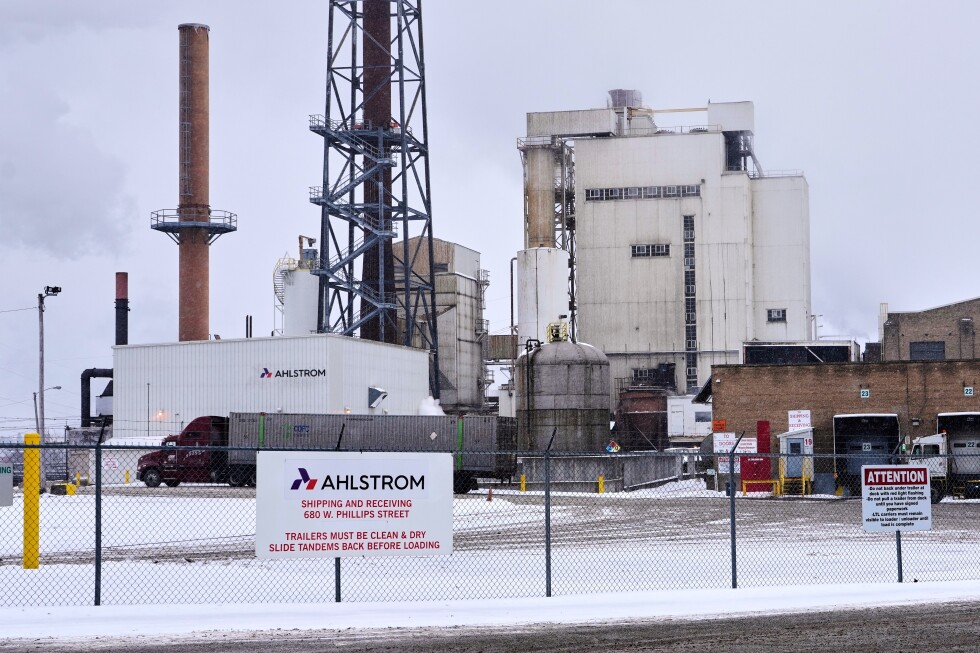
The small Wisconsin town of Stella demonstrates how PFAS can devastate a community. In 2022, resident Kristen Hanneman participated in a state well-testing project and discovered PFAS levels thousands of times above federal drinking water limits in her family’s well. The finding shocked the community and triggered years of investigations.
Wisconsin officials identified a nearby paper mill that had spread PFAS-laden sludge on farm fields as the likely source of groundwater, lake, and wildlife contamination. The mill’s current and former owners contend these activities were state-permitted before PFAS dangers were widely recognized and note they discontinued PFAS use years ago.
Meanwhile, with limited state resources for testing and remediation grants, residents remain trapped in contaminated homes, worried about the long-term health effects of years of exposure to tainted well water.
The investigation into America’s private well contamination crisis is part of a collaborative effort by The Associated Press, The Atlanta Journal-Constitution, The Post and Courier, and AL.com, supported through AP’s Local Investigative Reporting Program.
Fact Checker
Verify the accuracy of this article using The Disinformation Commission analysis and real-time sources.

28 Comments
Nice to see insider buying—usually a good signal in this space.
Good point. Watching costs and grades closely.
Good point. Watching costs and grades closely.
I like the balance sheet here—less leverage than peers.
Good point. Watching costs and grades closely.
Nice to see insider buying—usually a good signal in this space.
Good point. Watching costs and grades closely.
Production mix shifting toward Business might help margins if metals stay firm.
Production mix shifting toward Business might help margins if metals stay firm.
Exploration results look promising, but permitting will be the key risk.
Good point. Watching costs and grades closely.
Exploration results look promising, but permitting will be the key risk.
Good point. Watching costs and grades closely.
Good point. Watching costs and grades closely.
Exploration results look promising, but permitting will be the key risk.
I like the balance sheet here—less leverage than peers.
Good point. Watching costs and grades closely.
Exploration results look promising, but permitting will be the key risk.
The cost guidance is better than expected. If they deliver, the stock could rerate.
Good point. Watching costs and grades closely.
Good point. Watching costs and grades closely.
Nice to see insider buying—usually a good signal in this space.
Uranium names keep pushing higher—supply still tight into 2026.
Good point. Watching costs and grades closely.
Good point. Watching costs and grades closely.
The cost guidance is better than expected. If they deliver, the stock could rerate.
Interesting update on Takeaways from the AP’s reporting on PFAS contamination of private drinking water wells. Curious how the grades will trend next quarter.
Good point. Watching costs and grades closely.