


Listen to the article
A groundbreaking investigation by five news organizations has exposed how “forever chemicals” used in carpet manufacturing have created widespread contamination across the American South, leaving a toxic legacy that spans multiple states and decades.
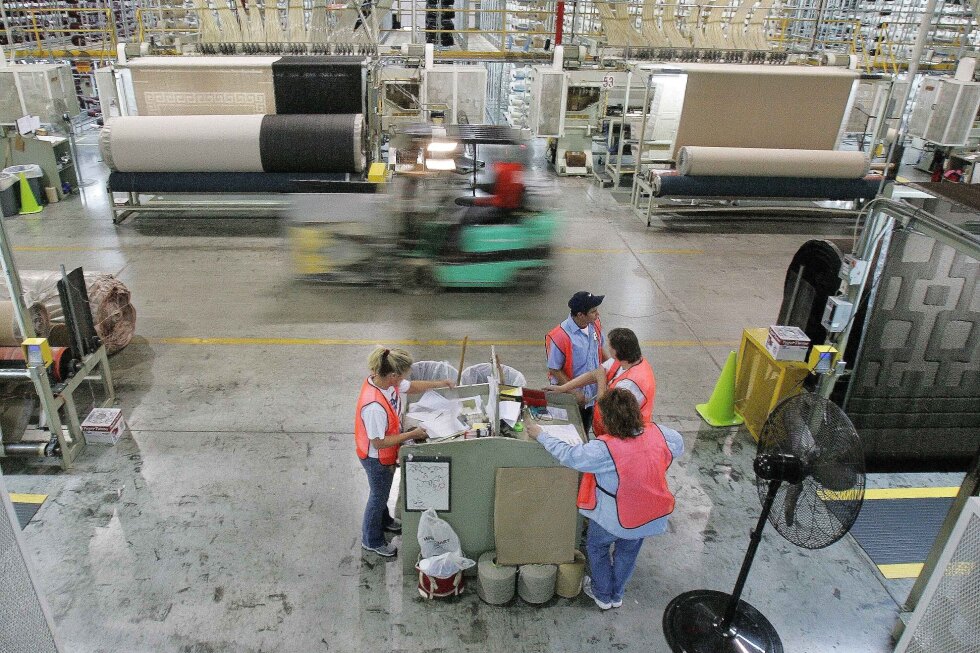
The collaborative report reveals how chemicals known as PFAS (per- and polyfluoroalkyl substances) – nicknamed “forever chemicals” because they take decades or more to break down – were extensively used in northwest Georgia’s carpet mills beginning in the 1970s to make carpets stain-resistant. These odorless, colorless compounds eventually made their way from manufacturing wastewater into rivers and drinking water supplies.
The investigation found that carpet industry executives coordinated with local public water utilities in ways that effectively shielded their companies from regulatory oversight. Meanwhile, carpet manufacturers continued using PFAS for years despite mounting scientific evidence of serious health risks, including certain cancers and compromised immune function.
“Around here, you have to understand the people. That’s all we know, right?” said Marie Jackson, a former carpet worker who now has PFAS in her blood and nodules on her thyroid gland. “You go in, you know your job, you do your job, you go home.”
Northwest Georgia has long been known as the “Carpet Capital of the World,” where generations of families have worked in textile mills. The region’s economic dependence on the industry appears to have influenced how officials responded to the growing environmental crisis.
Reporting by The Atlanta Journal-Constitution, The Associated Press, and FRONTLINE (PBS) documented how inadequate state and federal regulations allowed carpet companies and their chemical suppliers to legally switch between different versions of PFAS. For decades, mills operated by industry giants Shaw Industries and Mohawk Industries sent PFAS-contaminated wastewater through sewer systems for treatment that failed to remove these chemicals. Much of this tainted water ultimately reached the Conasauga River.
Both Shaw and Mohawk maintain they stopped using PFAS in 2019 and operated in compliance with permits issued by Dalton Utilities, the local water provider. The utility says it followed guidance from federal and state regulators, who never prohibited PFAS in industrial wastewater.
The contamination extended far beyond Georgia. In South Carolina, a river watchdog group discovered PFAS in waterways near a Shaw Industries factory. Rather than fighting the subsequent lawsuit, Shaw proposed installing a special filtration system using granular activated carbon to capture PFAS before it left the facility. This solution may provide a template for other companies facing similar challenges.
In Alabama, approximately 100 miles from Georgia’s carpet mills, cities are struggling with PFAS-contaminated drinking water. Several municipalities have sued carpet manufacturers and chemical companies, seeking funds to build new water treatment systems. Gadsden, a city of 33,000 in the Appalachian foothills, is constructing a reverse osmosis treatment plant with settlement money, though it won’t be operational until 2027. Meanwhile, residents continue to worry about health impacts.
The investigation highlights a particularly alarming gap in protection: the roughly 40 million Americans who get their drinking water from private wells face special risks. While public water utilities will soon be required to meet federal PFAS limits, these standards won’t apply to private wells. Many states don’t test private wells beyond areas where contamination is already suspected, leaving well owners vulnerable and often the last to learn about pollution problems.
While PFAS have been used in numerous consumer products – from nonstick cookware to raincoats and firefighting foam – few industries employed them as extensively as carpet manufacturing. The scale of usage was massive, though health risks can occur at incredibly low concentrations – the equivalent of less than a drop in an Olympic-sized swimming pool can make drinking water hazardous.
The collaborative investigation, which includes a documentary titled “Contaminated: The Carpet Industry’s Toxic Legacy,” provides unprecedented insight into how a powerful industry’s practices created an environmental crisis that continues to affect communities across multiple states. The documentary will be available through various PBS platforms beginning Tuesday.
As cleanup efforts continue and affected communities seek accountability, this investigation serves as a stark reminder of the long-term consequences when industrial priorities overshadow public health concerns.
Fact Checker
Verify the accuracy of this article using The Disinformation Commission analysis and real-time sources.

14 Comments
The use of ‘forever chemicals’ in carpet manufacturing is a serious issue that has had devastating impacts on communities across the South. I’m glad this investigation has brought these problems to light and hope it leads to real change in the industry.
Absolutely. The health risks from PFAS exposure are well-documented, and it’s unacceptable that communities were put at risk for the sake of corporate profits.
This is a shocking revelation about the carpet industry’s toxic legacy. The widespread PFAS contamination is deeply concerning and the lack of oversight is unacceptable. I hope this investigation leads to accountability and cleanup efforts to protect public health.
Agreed, the industry’s apparent efforts to shield themselves from regulation are very troubling. Serious action is needed to address this environmental disaster.
The revelations in this report are deeply disturbing. The carpet industry’s disregard for the health and safety of local communities is inexcusable. I hope this investigation spurs regulatory action and comprehensive remediation efforts to address the widespread PFAS contamination.
Agreed. This is a stark example of the need for stronger environmental protections and more robust corporate oversight. The public deserves answers and real accountability.
This investigation shines a light on an alarming environmental and public health crisis. The carpet industry’s reckless use of ‘forever chemicals’ has had devastating consequences that need to be addressed. I hope this leads to substantial cleanup efforts and stronger protections going forward.
Well said. The industry’s apparent efforts to shield itself from oversight are particularly concerning. Rigorous enforcement and accountability are critical to prevent future disasters.
The toxic legacy of the carpet industry’s use of PFAS is a stark example of the need for greater transparency and stricter regulations around chemical usage. I hope this investigation leads to real change and justice for the impacted communities.
Absolutely. The lack of accountability highlighted in this report is deeply troubling. Meaningful reform is long overdue.
This is a powerful and important investigation that has exposed the toxic legacy of the carpet industry’s use of PFAS. The scale of the contamination and the industry’s efforts to avoid regulation are deeply troubling. I hope this leads to meaningful change and justice for the affected communities.
Well said. The health and environmental impacts of this crisis cannot be overstated. Robust cleanup efforts and stronger safeguards are clearly needed to prevent future disasters.
This is a sobering reminder of the importance of environmental regulations and corporate accountability. The carpet industry’s disregard for public health and the environment is inexcusable. I hope the findings of this investigation spur meaningful action.
Well said. Stronger oversight and enforcement are clearly needed to prevent future environmental disasters like this one.