


Listen to the article
Taiwan’s premier lauded a recently negotiated trade deal with the United States on Friday, describing it as the “best tariff deal” among countries with trade surpluses with Washington. The agreement comes amid ongoing tensions with China, which promptly condemned the accord through official channels.
The deal reduces U.S. tariffs on Taiwanese goods to 15% in exchange for Taiwan’s commitment of $250 billion in new investments in the American technology industry. This arrangement mirrors similar agreements the U.S. has established with the European Union and Japan following President Donald Trump’s earlier proposals for extensive tariffs on major trading partners.
“For the time being, we obtained the best tariff deal enjoyed by the countries with trade surplus with the U.S.,” Premier Cho Jung-tai told reporters. “This also shows that the U.S. sees Taiwan as an important strategic partner.”
Cho emphasized that Taiwan’s objective was to reduce mutual tariffs, noting that the negotiated 15% rate with no additional fees matches tariffs imposed on Japan, South Korea, and the European Union. Trump had initially proposed a 32% tariff on Taiwanese goods before lowering it to 20% during negotiations.
The agreement has significant geopolitical implications given China’s claims over Taiwan. When asked about the deal during a routine press briefing in Beijing, Chinese Foreign Ministry spokesperson Guo Jiakun expressed strong opposition.
“China always firmly opposes countries having diplomatic relations with China and China’s Taiwan region signing any agreement that carries sovereign connotations and an official nature with China’s Taiwan region,” Guo stated.
The U.S. Department of Commerce framed the agreement as “a historic trade deal that will drive a massive reshoring of America’s semiconductor sector.” According to the department, the partnership will establish several world-class U.S.-based industrial parks aimed at boosting domestic manufacturing capacity.
Taiwan secured favorable terms for its automotive and wood furniture industries with the 15% tariff rate and no additional fees. Some components used in the aerospace industry will face no tariffs at all. However, the agreement must still be ratified by Taiwan’s parliament, where opposition lawmakers have voiced concerns about potential impacts on the island’s domestic semiconductor industry.
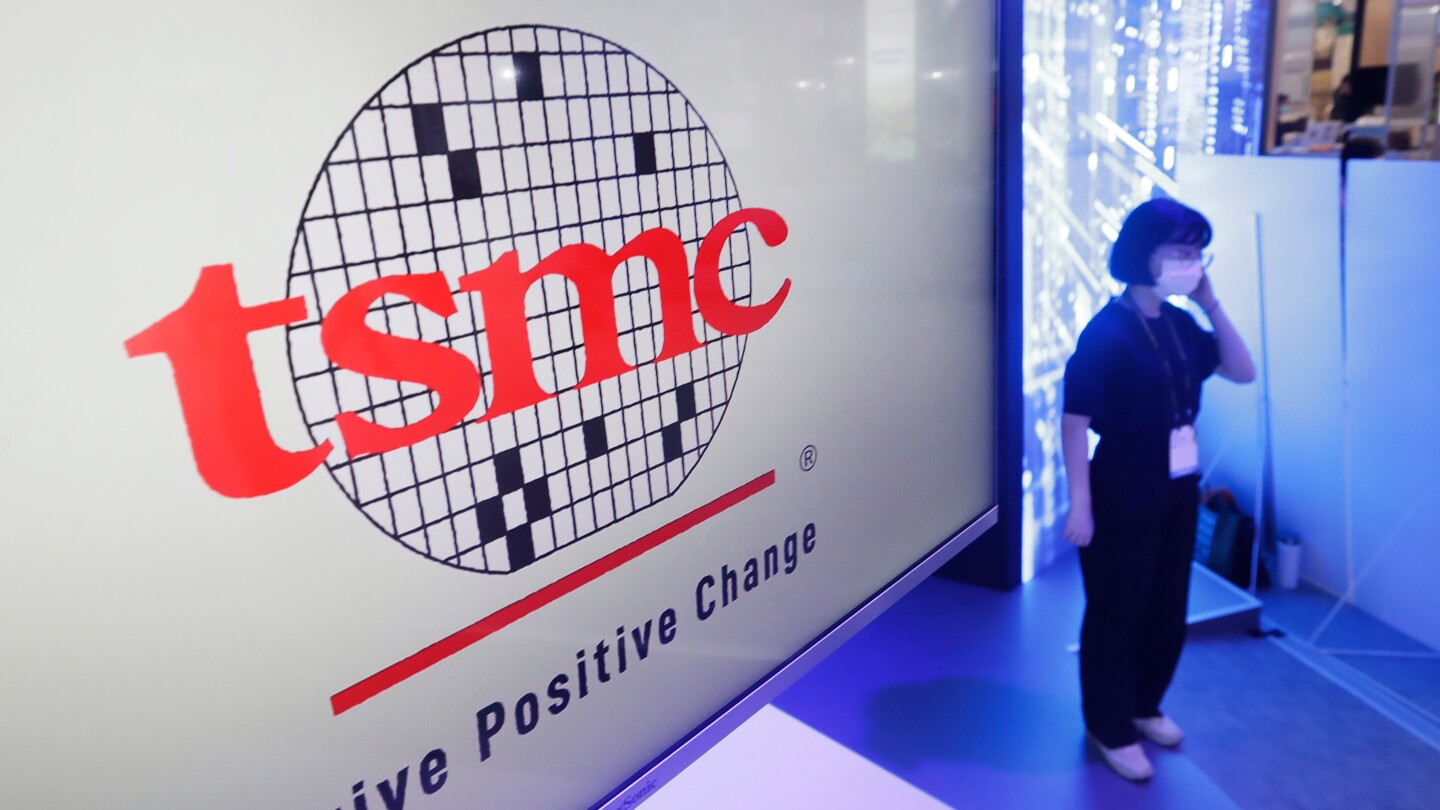
The timing of the deal coincides with Taiwan Semiconductor Manufacturing Company’s (TSMC) announcement of plans to increase its capital spending by nearly 40% this year. The world’s largest computer chip manufacturer reported a 35% increase in net profit for the latest quarter, driven largely by the artificial intelligence boom.
TSMC has already committed approximately $165 billion in investments in the United States and announced it is accelerating construction of new facilities in Arizona. The company aims to create a fabrication plant cluster to meet growing demand from clients. Under the new trade agreement, Taiwanese semiconductor producers investing in the U.S. will receive favorable tariff treatment, including exemptions.
Ryan Majerus, a trade official who served in both the Trump and Biden administrations, noted the “interesting timing” of the agreement. The U.S. Supreme Court has yet to rule on the legality of Trump’s broadest tariffs, which have been used as leverage to extract concessions from trading partners. The justices could potentially strike down these tariffs as early as this month.
Despite this uncertainty, Taiwan’s eagerness to strengthen its relationship with the United States likely accelerated the deal’s conclusion. “Wanting to solidify things with the U.S. probably played a big role here,” said Majerus, who now works as a partner at the King & Spalding law firm.
The agreement represents a significant step in U.S.-Taiwan economic relations at a time when Taiwan faces persistent pressure from China. By deepening economic ties with Washington, Taiwan gains not only trade advantages but also reinforces its strategic partnership with a key ally.
Fact Checker
Verify the accuracy of this article using The Disinformation Commission analysis and real-time sources.

9 Comments
Taiwan is hailing this as its ‘best’ trade deal with the US, which reflects its desire to strengthen economic ties and strategic importance. The $250 billion investment commitment is a significant sum. This could help boost Taiwan’s technology industry, but may also increase frictions with China.
Taiwan is clearly trying to leverage its position as a technology powerhouse to secure favorable trade terms with the US. The $250 billion investment commitment is a substantial sum that could boost Taiwan’s tech industry. However, China’s opposition to this deal will likely lead to increased regional tensions.
The Taiwan-US trade deal appears to be a strategic move by Taiwan to solidify its relationship with the US in the face of China’s opposition. Reducing tariffs and boosting investment could bring economic benefits, but the geopolitical implications are complex and merit close observation.
This trade deal with the US seems like a positive development for Taiwan. Reducing tariffs and boosting investment ties could strengthen their economic relationship. It will be interesting to see how China reacts and if this leads to further tensions in the region.
Agreed. Taiwan is trying to solidify its strategic importance to the US, which could help offset pressure from China. Balancing these geopolitical dynamics will be crucial for Taiwan’s economic and security interests.
This trade agreement aligns with the US strategy of strengthening economic and diplomatic ties with Taiwan, likely to counter China’s influence in the region. While beneficial for Taiwan, it risks further escalating tensions with Beijing. Managing these delicate dynamics will be a key challenge.
It’s interesting to see Taiwan characterize this as its ‘best’ trade deal with the US. This suggests they were able to negotiate favorable terms, likely driven by Taiwan’s strategic importance to the US in the context of rising US-China tensions. The economic benefits could be significant, but the geopolitical implications bear close watching.
The 15% tariff rate that Taiwan negotiated is quite favorable compared to the initial 32% proposal. This suggests the US sees Taiwan as an important partner and is willing to offer concessions. It will be a delicate dance managing relations with both the US and China moving forward.
You’re right, this deal seems to elevate Taiwan’s status with the US. It will be interesting to see if China responds with further economic or diplomatic pressure on Taiwan. Managing those tensions will be crucial for Taiwan’s leadership.