


Listen to the article
Syrian Interior Ministry Forces Deploy in Kurdish-Dominated Areas Under New Agreement
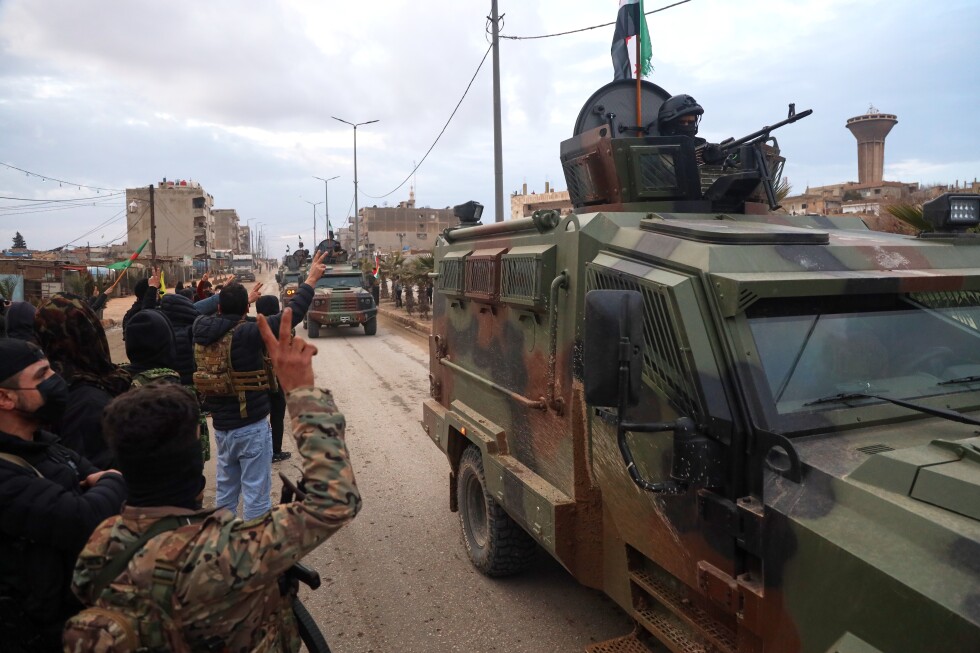
Security forces affiliated with Syria’s Interior Ministry continued their deployment in Kurdish-dominated northeastern Syria on Tuesday, marking a significant shift in the complex power dynamics of the war-torn country. The deployment is part of a recently negotiated agreement between Damascus and the Kurdish-led Syrian Democratic Forces (SDF).
A convoy of government security personnel entered the Kurdish-majority city of Qamishli in al-Hasakah province, following their initial entry into the province on Monday. The deployment represents a careful recalibration of control in a region that has maintained significant autonomy throughout much of Syria’s protracted conflict.
Under the terms of the agreement, small contingents of Interior Ministry security forces will establish a presence in Kurdish-majority areas with a limited mandate. Their primary responsibilities include securing state-affiliated institutions such as civil registry offices, passport departments, and the airport, with the goal of restoring these essential services for local residents.
Security measures were visibly heightened across Qamishli in anticipation of the deployment. The SDF imposed a curfew that left streets largely deserted, with shops shuttered and heavily armed Kurdish security personnel stationed at major roads and intersections. Some fighters concealed their identities with face coverings, and notably, several women were among the forces deployed. Yellow flags of the Kurdish People’s Protection Units flew alongside Kurdish national flags along the closed storefronts, symbolizing the continued Kurdish presence despite the agreement.
“We are coordinating with the other side inside Qamishli for our forces to deploy inside the city,” explained Nour al-Din al-Baba, spokesperson for the Syrian Interior Ministry. He outlined the broader scope of the agreement, adding, “There is a program and a time frame to finalize all of the deal’s clauses, among them is taking over the vital facilities, including the crossings, the Qamishli airport and oil facilities, managing them and making them operational in the service of the Syrian people.”
Despite the government deployment, Kurdish forces maintain their security presence in the area. Samer Ahmad, a member of the local Kurdish security forces who was monitoring the situation in Qamishli, emphasized to the Associated Press that Kurdish forces remain in control of security in the city.
“All necessary measures have been taken, and our forces are ready to confront sleeper cells and those seeking to carry out acts of sabotage,” Ahmad stated. He characterized the government presence as temporary, explaining, “The incoming forces will be deployed at four points in the city of Qamishli, and their presence here will be temporary. God willing, in the coming period, once integration is completed, they will withdraw.”
The reception to the arriving forces varied significantly across communities. Before reaching Qamishli, government convoys entered Tell Brak, east of Hasakah, where crowds lined the streets waving Syrian flags and cheering. Some residents celebrated with gunfire while women performed traditional ululations. The enthusiastic welcome reflected long-standing tensions in the region, particularly among Arab residents who have complained of political and economic marginalization under SDF control.
“We hope that the Arab Syrian army becomes the one in control, and we hope this happiness is spread across Syria, north to south to east to west,” said Adel al-Ahmad, a supporter welcoming the convoy. He expressed satisfaction over what he described as “the liberation” of areas from SDF control.
However, the agreement takes place against a backdrop of deep ethnic tensions. Arab residents in SDF-controlled areas have long voiced grievances about their treatment, while many Kurdish communities harbor fears of potential reprisals from government-affiliated fighters. These concerns have been exacerbated by sectarian violence that erupted across Syria in 2025, particularly in coastal and southern regions.
The carefully negotiated agreement represents a delicate balancing act in a region that has seen shifting alliances throughout Syria’s civil war. For the Kurdish-led authorities, maintaining some autonomy while gaining protection from other threats has been a constant challenge. For Damascus, regaining control over strategic infrastructure and border crossings without triggering further conflict serves its interests in gradually reasserting sovereignty over Syrian territory.
As the deployment continues, both sides will be closely watching how the power-sharing arrangement evolves in practice, with the potential to significantly impact northeastern Syria’s political landscape.
Fact Checker
Verify the accuracy of this article using The Disinformation Commission analysis and real-time sources.

8 Comments
This deployment appears to be part of the larger effort to consolidate government control across Syria. However, the autonomy of the Kurdish region has been a key factor in the conflict, so it will be critical to understand how this agreement is interpreted and implemented on the ground.
Well said. The delicate balance between government authority and Kurdish autonomy will be crucial in determining the real-world impacts of this deployment. Ongoing observation will be key.
The agreement between Damascus and the SDF seems designed to restore essential government services to the Kurdish-majority areas, but the details will be important to monitor. Maintaining stability and security for local residents should be the priority.
Interesting to see this shift in power dynamics in Syria. It will be important to monitor how the agreement between the government and SDF plays out on the ground and impacts local residents’ access to essential services.
Agreed, the deployment of Interior Ministry forces is a significant development that bears close watching. Restoring core government functions could have important implications for the region.
The entry of Syrian security forces into Kurdish areas is a notable development, though the specifics of their mandate and how it will impact the daily lives of residents remain to be seen. Careful monitoring will be important.
This deployment highlights the complex, evolving nature of the conflict in Syria. Maintaining security and stability in Kurdish-majority areas will require careful negotiation and compromise between all parties involved.
Absolutely, the agreement seems to strike a delicate balance, allowing limited government presence while preserving some autonomy for the Kurds. Implementation will be key to see if it can work in practice.