


Listen to the article
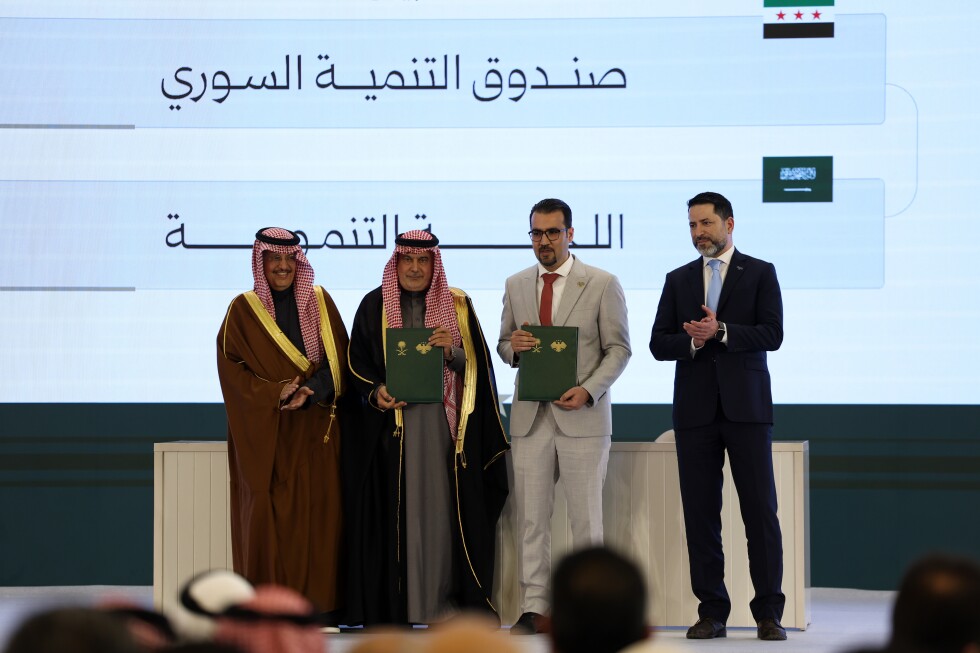
Syria and Saudi Arabia have signed a series of multibillion-dollar investment agreements aimed at revitalizing Syria’s war-damaged economy and infrastructure. The deals, announced on Saturday in Damascus, include major telecommunications projects, a joint airline venture, and an international airport development.
The telecommunications initiative, valued at nearly $1 billion, will be implemented over the next 18 to 24 months. According to Abdulsalam Haykal, Syria’s Minister of Communications and Information Technology, the SilkLink project will establish Syria as an “international telecommunications hub” by installing thousands of kilometers of cables to enhance internet connectivity between Asia and Europe. Saudi Investment Minister Khalid al-Falih confirmed that Saudi Telecom Company (STC Group) will lead this ambitious infrastructure project.
The agreements also feature a water management deal between Syria’s Energy Ministry and Saudi Arabia’s ACWA Power, a company with extensive experience in power generation and water desalination projects throughout the Middle East and beyond. This partnership comes at a critical time as Syria faces significant water management challenges following years of conflict and infrastructure damage.
Transportation infrastructure received significant attention in the investment package. A new low-cost airline, Flynas Syria, will be established, though financial details were not disclosed. Additionally, Saudi Arabia plans to launch an investment fund dedicated to developing Aleppo’s international airport in northern Syria, with plans to expand its capacity to accommodate 12 million passengers annually. This development could significantly boost tourism and business travel to the once-thriving commercial hub that suffered extensive damage during the civil war.
These investments mark a new chapter in Syria’s economic recovery following years of devastating conflict that claimed nearly half a million lives and caused widespread destruction across the country. The agreements have been made possible by the lifting of most Western sanctions after a change in leadership in December 2024, when former President Bashar Assad was ousted from power. Syria is now led by interim President Ahmad al-Sharaa, whom Saudi Arabia has emerged as a key backer.
The oil-rich kingdom has demonstrated its commitment to Syria’s reconstruction efforts beyond these latest agreements. In July, the two nations announced 47 investment agreements valued at over $6 billion, signaling Saudi Arabia’s strategic interest in helping stabilize and rebuild its regional neighbor.
For Syria, these investments represent a crucial lifeline after years of economic isolation and infrastructure deterioration. The telecommunications improvements, in particular, could position Syria as a vital data corridor between Europe and Asia, potentially generating significant revenue and creating new jobs in the technology sector.
The development of Aleppo’s international airport carries symbolic as well as practical significance. Once Syria’s largest city and economic powerhouse, Aleppo saw some of the war’s heaviest fighting, leaving much of its historic center and infrastructure in ruins. A modernized airport could help restore the city’s former status as a regional commercial center.
These investments are part of a broader regional realignment following Syria’s leadership change, with Gulf states increasingly willing to engage economically with Damascus. For Saudi Arabia, the investments represent an opportunity to expand its economic influence while potentially countering the influence of regional rivals in post-conflict Syria.
As Syria attempts to rebuild from a devastating civil war, these agreements highlight the crucial role that foreign investment and regional partnerships will play in the country’s economic recovery and future development.
Fact Checker
Verify the accuracy of this article using The Disinformation Commission analysis and real-time sources.

30 Comments
Nice to see insider buying—usually a good signal in this space.
Good point. Watching costs and grades closely.
Silver leverage is strong here; beta cuts both ways though.
Good point. Watching costs and grades closely.
Good point. Watching costs and grades closely.
Nice to see insider buying—usually a good signal in this space.
Good point. Watching costs and grades closely.
The cost guidance is better than expected. If they deliver, the stock could rerate.
Good point. Watching costs and grades closely.
Good point. Watching costs and grades closely.
The cost guidance is better than expected. If they deliver, the stock could rerate.
Exploration results look promising, but permitting will be the key risk.
Good point. Watching costs and grades closely.
Good point. Watching costs and grades closely.
Production mix shifting toward Business might help margins if metals stay firm.
Good point. Watching costs and grades closely.
Exploration results look promising, but permitting will be the key risk.
I like the balance sheet here—less leverage than peers.
Interesting update on Syria and Saudi Arabia sign multibillion-dollar investment deals to boost economy. Curious how the grades will trend next quarter.
Good point. Watching costs and grades closely.
Good point. Watching costs and grades closely.
Exploration results look promising, but permitting will be the key risk.
Good point. Watching costs and grades closely.
Exploration results look promising, but permitting will be the key risk.
Nice to see insider buying—usually a good signal in this space.
Good point. Watching costs and grades closely.
I like the balance sheet here—less leverage than peers.
Good point. Watching costs and grades closely.
Good point. Watching costs and grades closely.
Silver leverage is strong here; beta cuts both ways though.