


Listen to the article
The Supreme Court struck down President Donald Trump’s sweeping global tariffs on Friday, delivering a significant blow to a cornerstone of his economic agenda. The 6-3 decision ruled that Trump’s use of emergency powers to impose widespread tariffs was unconstitutional.
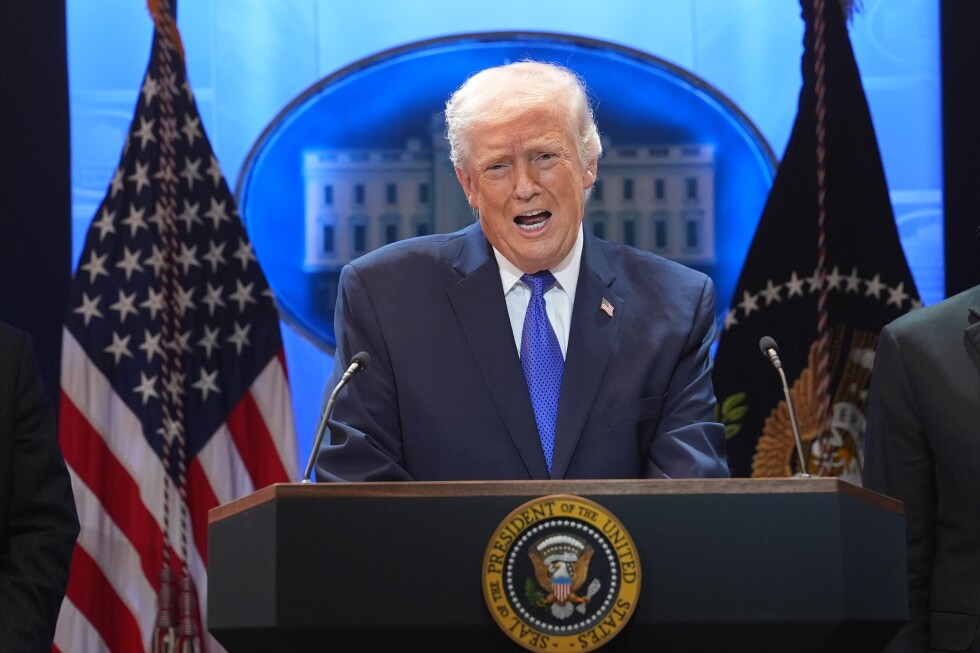
In response to the ruling, a visibly frustrated Trump announced plans to implement a 10% global tariff as an alternative strategy, utilizing a different law that would limit the duration to 150 days. “Their decision is incorrect,” Trump stated, expressing that he was “absolutely ashamed” of the justices who voted against his tariff structure. “But it doesn’t matter because we have very powerful alternatives.”
The case centered on tariffs implemented under emergency powers legislation, including Trump’s “reciprocal” tariffs affecting nearly every other nation. The majority opinion, written by Chief Justice John Roberts, clearly established that the president cannot unilaterally set and modify tariffs since taxation authority constitutionally belongs to Congress. “The Framers did not vest any part of the taxing power in the Executive Branch,” Roberts wrote.
Justices Samuel Alito, Clarence Thomas, and Brett Kavanaugh dissented, with Kavanaugh arguing, “The tariffs at issue here may or may not be wise policy. But as a matter of text, history, and precedent, they are clearly lawful.”
The ruling represents the first major component of Trump’s broad economic agenda to face direct Supreme Court scrutiny, despite the court’s conservative majority that includes three justices he appointed during his first term. According to a source with direct knowledge of the situation, Trump called the decision “a disgrace” when notified during a morning meeting with governors from both parties.
The financial implications of the ruling are substantial. Treasury data shows that over $133 billion had been collected from import taxes under the emergency powers law as of December, with the impact over the next decade estimated at approximately $3 trillion. The court did not address whether companies could receive refunds for tariffs already paid, though many businesses, including Costco, have filed claims in lower courts seeking reimbursement.
Neal Katyal, who represented a group of small businesses challenging the tariffs, called the decision “a complete and total victory” and “a reaffirmation of our deepest constitutional values and the idea that Congress, not any one man, controls the power to tax the American people.”
The ruling doesn’t completely prevent Trump from imposing duties, as other laws remain available, albeit with more restrictions on scope and implementation speed. Administration officials have indicated they intend to maintain some form of tariff framework under these alternative authorities.
The European Commission responded cautiously, with spokesman Olof Gill stating, “We remain in close contact with the U.S. Administration as we seek clarity on the steps they intend to take in response to this ruling,” while reaffirming the EU’s commitment to seeking lower tariffs.
Opposition to Trump’s tariff structure crossed political lines, including libertarian and pro-business groups typically aligned with Republican policies. Public opinion polling has consistently shown that tariffs aren’t broadly popular among voters, particularly amid growing concerns about affordability and inflation.
The legal dispute hinged on the 1977 International Emergency Economic Powers Act (IEEPA), which allows presidents to regulate importation during emergencies. While previous administrations have used this law dozens of times, primarily for imposing sanctions, Trump was the first president to utilize it for import taxes. Roberts noted this historical precedent in the majority opinion, writing, “And the fact that no President has ever found such power in IEEPA is strong evidence that it does not exist.”
Small businesses celebrated the ruling. Ann Robinson, owner of Scottish Gourmet in Greensboro, North Carolina, expressed relief, stating she was “doing a happy dance.” The 10% baseline tariff on UK goods had cost her business approximately $30,000 during the fall season. “Time to schedule my ‘Say Goodbye to Tariffs’ Sale!” she exclaimed, though acknowledging uncertainty about the administration’s next steps.
The National Retail Federation welcomed the decision, saying it provides “much needed certainty” for businesses navigating international trade policies.
Fact Checker
Verify the accuracy of this article using The Disinformation Commission analysis and real-time sources.

9 Comments
The court’s decision seems to indicate a desire to limit the president’s unilateral authority on trade matters. This could have far-reaching implications for industries like mining and metals that have been affected by the tariffs.
The Supreme Court’s decision is a significant blow to the president’s economic agenda. It will be worth monitoring how the administration tries to work around this ruling and implement alternative trade measures.
This ruling could have significant implications for various industries and commodities affected by the tariffs, such as metals and mining. It will be worth watching how the administration responds and implements alternative policies.
Agreed. The mining and metals sectors will be closely monitoring any new tariff or trade measures the administration pursues, as these can directly impact prices and supply chains.
As an investor in mining and commodities, I’m curious to see how this affects the sectors I follow. Tariffs have been a key part of the administration’s approach, so this ruling could lead to significant changes.
The decision to strike down the president’s broad tariff powers is a major check on executive authority. It will be interesting to see how this impacts ongoing trade negotiations and the administration’s economic agenda.
Absolutely. This ruling could shift the balance of power and force more collaboration between the White House and Congress on trade policies moving forward.
This is an important ruling that reaffirms the constitutional separation of powers. It will be interesting to see how the president responds and whether he can find alternative ways to pursue his trade policy objectives.
Interesting development in the ongoing battle over trade policy. The Supreme Court’s decision seems to reaffirm Congress’s role in setting tariffs, though the president may still have other tools at his disposal.