


Listen to the article
The Supreme Court appeared reluctant Wednesday to support former President Donald Trump’s attempt to remove Federal Reserve Governor Lisa Cook from her position, signaling a likely preservation of the central bank’s independence from political interference.
During nearly two hours of arguments, at least six of the nine justices, including Trump appointee Brett Kavanaugh, expressed skepticism about the unprecedented effort to fire a sitting Fed governor. Both Cook and Federal Reserve Chairman Jerome Powell attended the proceedings in the packed courtroom.
“Allowing Cook’s firing to go forward would weaken, if not shatter, the independence of the Federal Reserve,” Justice Kavanaugh remarked during the session, highlighting the gravity of the case.
No president has dismissed a Federal Reserve governor in the institution’s 112-year history. The central bank was deliberately structured to operate independently of political pressure, a principle Cook reaffirmed after the hearing.
“For as long as I serve at the Federal Reserve, I will uphold the principle of political independence in service to the American people,” Cook said in a statement following the arguments.
The case carries significant implications for U.S. monetary policy and financial markets. Critics argue Trump’s true motivation is to gain control over interest rate decisions by replacing Cook, who is the first Black woman to serve as a Federal Reserve governor, with his own appointee. This would potentially give him a majority on the Fed’s seven-member board.
Trump has openly criticized the Federal Reserve’s cautious approach to rate cuts. Speaking earlier Wednesday in Davos, Switzerland, he advocated for dramatic reductions, stating the United States should pay “the lowest interest rate of any country in the world.” While the Fed cut rates three times in late 2025, the pace has been slower than Trump desires, with indications that rates may remain stable in coming months due to inflation concerns.
The Supreme Court is specifically considering whether Cook can remain in her position while her challenge to the firing proceeds through the courts. Lower courts have allowed her to continue serving during the legal proceedings.
Chief Justice John Roberts, who also appeared skeptical of Trump’s actions, suggested it might be more efficient for the high court to issue a definitive ruling rather than sending the case back to lower courts.
The dispute has escalated beyond Cook’s case. The Justice Department has opened a criminal investigation of Powell and served subpoenas to the central bank. Powell took the unusual step of publicly responding, characterizing the threat of criminal charges as “pretexts” masking Trump’s frustration over interest rate policy. The Justice Department has claimed the investigation concerns Powell’s congressional testimony about Fed building renovation costs.
Unlike previous cases where Trump sought to fire agency heads at will, this case hinges on specific allegations. Trump’s Solicitor General D. John Sauer argued that Cook committed mortgage fraud by claiming two properties—in Michigan and Georgia—as “primary residences” in mortgage applications filed in June and July 2021, before her Fed appointment. Such designations typically allow for lower mortgage rates and smaller down payments.
Sauer characterized these applications as evidence of “gross negligence at best” justifying her removal. He further argued that courts should not review the president’s decision and that Cook has no right to a hearing.
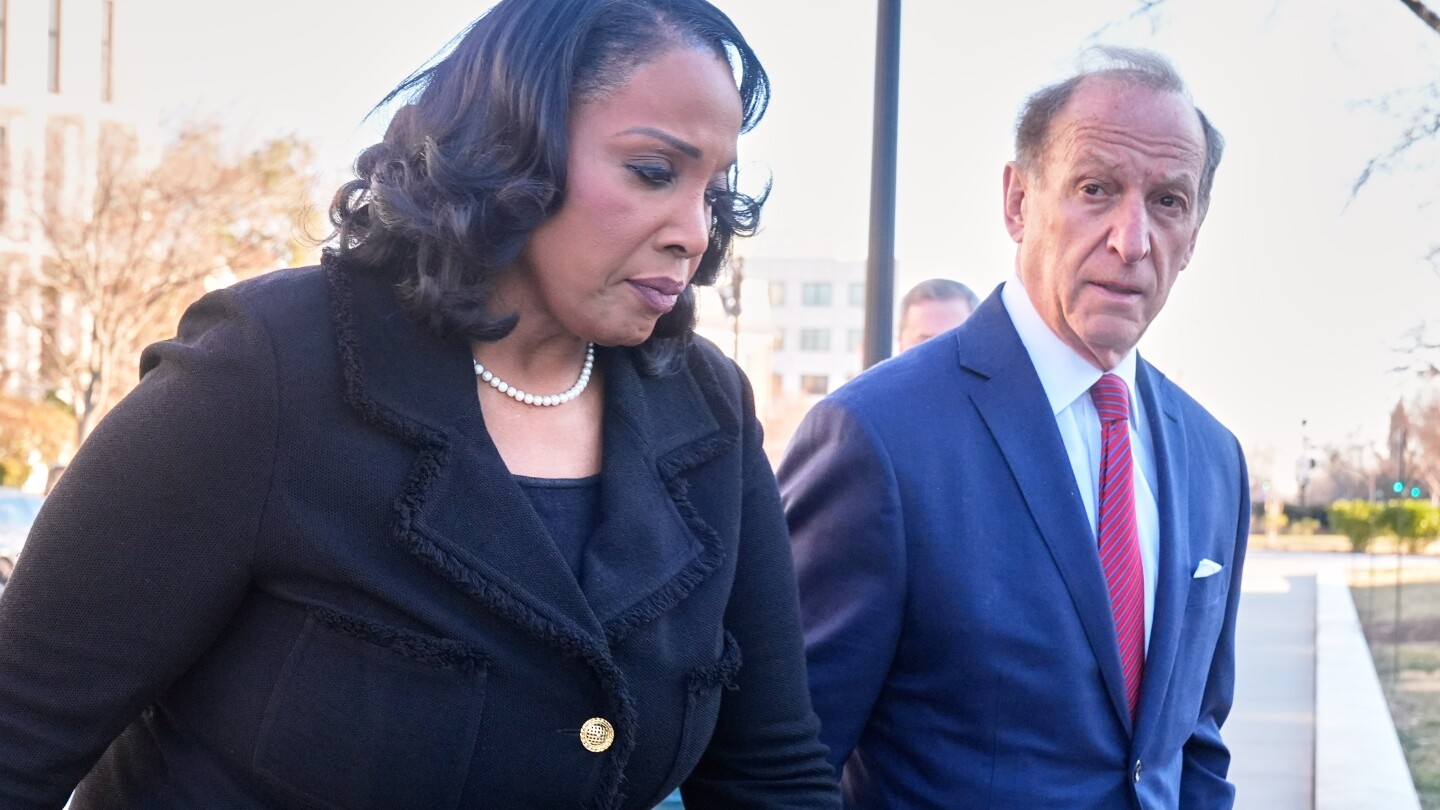
Cook has vigorously denied any wrongdoing and faces no criminal charges. Her attorney, Abbe Lowell, wrote to Attorney General Pam Bondi in November, stating: “There is no fraud, no intent to deceive, nothing whatsoever criminal or remotely a basis to allege mortgage fraud.” Lowell explained that Cook had specifically identified her Atlanta condo as a “vacation home” in a May 2021 loan estimate and as a “2nd home” in a security clearance form.
The Supreme Court has previously signaled its cautious approach to Federal Reserve independence, describing it as “a uniquely structured, quasi-private entity.” Financial analysts are closely monitoring the case, concerned about potential market instability should the court unexpectedly allow political interference in monetary policy decisions.
The court’s ruling could either reinforce the long-established independence of the Federal Reserve or open a new chapter of political influence over an institution designed to remain insulated from the electoral cycle.
Fact Checker
Verify the accuracy of this article using The Disinformation Commission analysis and real-time sources.

11 Comments
This case is a test of the Court’s commitment to the rule of law and the separation of powers. Preserving the Fed’s autonomy is vital to its ability to fulfill its mandate without political interference. I hope the justices make the right decision.
This case raises important questions about the limits of presidential power and the need for impartial, non-partisan institutions like the Federal Reserve. The Court appears poised to make the right call in favor of the Fed’s autonomy.
Absolutely. An independent Fed is essential to sound economic policymaking. Partisan politics should not compromise its ability to fulfill its mandate.
It’s good to see the justices, including a Trump appointee, recognize the critical importance of the Fed’s independence from political pressure. This should set a strong precedent going forward.
While presidents may disagree with certain Fed policies, the ability to arbitrarily fire governors sets a dangerous precedent. I hope the Court upholds the Fed’s independence as a bulwark against political manipulation.
Agreed. The Fed must remain insulated from partisan pressure to effectively carry out its responsibilities. This ruling could have far-reaching implications for the future of US monetary policy.
Governor Cook’s commitment to upholding the Fed’s political independence is commendable. Safeguarding the central bank from political interference benefits all Americans, regardless of party affiliation.
The Fed’s structure was designed to foster stability and continuity in economic policymaking. Allowing a president to dismiss governors on a whim would undermine that crucial foundation. I’m encouraged by the Court’s skepticism.
Exactly. The Fed’s independence is essential for maintaining public trust and confidence in the financial system. This ruling could have significant ramifications for the broader economy.
This is an important case for preserving the independence of the Federal Reserve. The Supreme Court’s skepticism about Trump’s attempt to fire Governor Cook signals they understand the risks of political interference with the central bank.
The Fed’s role in maintaining economic stability and monetary policy is crucial. Allowing a president to arbitrarily dismiss governors would undermine that vital independence. I’m glad the Court seems inclined to protect it.