


Listen to the article
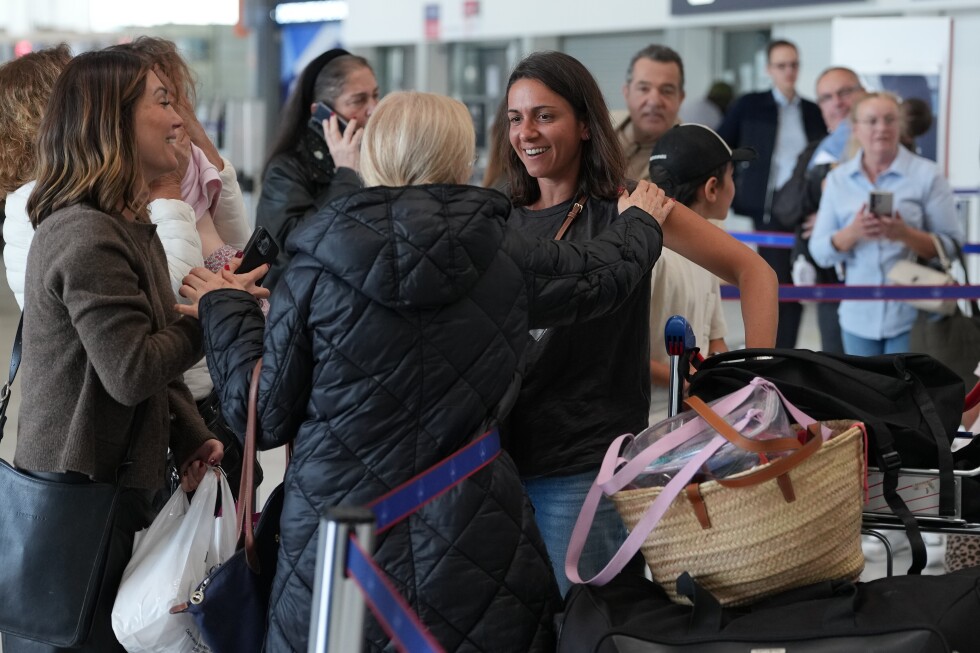
Thousands of travelers remain stranded across the Middle East as regional tensions escalate between Israel, Iran, and their allies. Flight cancellations and airspace closures have disrupted travel plans for tourists, business travelers, and migrant workers, creating a humanitarian challenge amid the growing conflict.
The war has significantly impacted transportation across the Gulf states, which serve as crucial transit hubs connecting Europe, Africa, and Asia. Despite ongoing evacuation efforts by various nations, air travel continues to be severely affected, with many airports operating at limited capacity or suspending operations altogether.
The human toll of these disruptions is evident in the stories of those caught in the middle. Viktoriia Lokhmatova from Serbia and Michael Crepin from Belgium traveled to Dubai with their children for what should have been a joyful occasion. The trip marked the first meeting between Lokhmatova’s 8-year-old daughter Anny and Crepin’s 13-year-old son Gabriel, with all four celebrating February birthdays.
Their celebrations were cut short when their return flight was canceled due to airspace disruptions. A subsequent rebooking was also canceled, forcing the family to extend their stay at considerable expense.
“We stayed on calls with the airline for almost two days trying to figure out another flight,” Lokhmatova explained. The family found temporary relief through a local initiative by AraBnB Homes, a Dubai-based luxury rental company offering vacant apartments to stranded travelers at no cost.
During their extended stay, the couple occasionally heard explosions from air defense systems intercepting missiles, but tried to remain calm for their children’s sake. They’ve secured seats on a flight scheduled for Saturday, planning to travel together to Istanbul before separating to their respective homes.
Tech entrepreneur Varun Krishnan experienced a different kind of disruption when his Qatar Airways flight from Doha to Barcelona was forced to turn around mid-journey. Krishnan, who runs the Indian technology business Fone Arena, was traveling to attend the Mobile World Congress in Barcelona.
“It seemed something was off,” Krishnan recalled, noting that he had been tracking the flight path when he noticed the aircraft wasn’t proceeding on course. Shortly after breakfast service, the captain announced that Baghdad airspace was closed due to security issues, and the plane began circling around the United Arab Emirates.
Emergency notifications sounded across the cabin as they prepared to land back in Doha. Once on the ground, Krishnan encountered chaotic scenes with departure boards filled with cancellations. Days later, he remains at a hotel still waiting for confirmation of when flights might resume.
American tourists have also been affected. Louise Herrle, a retiree from Pittsburgh, and her husband found themselves stranded in Dubai while vacationing. After multiple cancellations, they’re now scheduled to depart early Thursday, though uncertainty remains about whether that flight will operate.
Despite hearing fighter jets overhead and occasional explosions, Herrle has found support in fellow travelers. “It’s not a great experience, but it’s a shared experience and it brings people together,” she said.
The situation has also impacted expatriates living in the region. Agnes Chen Pun, a Hong Kong expatriate who relocated to Dubai last year with her husband and young child, has moved twice within the UAE seeking safety amid escalating tensions.
“We were so nervous, so anxious,” said Chen, a partner at Asia Bankers Club, an investment company based in Hong Kong and Dubai. She eventually secured expensive commercial tickets to Singapore at $2,200 per person, although her departure remains uncertain.
Despite the current crisis, Chen expressed optimism about the UAE’s future, viewing the current situation as temporary. “I think the scare, the fears, will be short-term. Definitely now, safety is the most important,” she said, adding that she plans to return once the situation stabilizes.
As the conflict continues to unfold, the plight of stranded travelers highlights the far-reaching impact of regional instability on global mobility and commerce, creating ripple effects that extend far beyond the immediate conflict zone.
Fact Checker
Verify the accuracy of this article using The Disinformation Commission analysis and real-time sources.

8 Comments
The airspace closures and flight cancellations are creating a major humanitarian challenge across the region. The impact on tourism, business, and migrant workers is concerning. I wonder what long-term effects this disruption could have on the region’s economic recovery and connectivity.
The impact on tourism and business travel in the region is concerning. These transportation disruptions will likely have ripple effects across various industries. I wonder what steps governments and airlines are taking to assist affected travelers and mitigate the broader economic consequences.
The scale of this travel disruption is staggering. Thousands of people from around the world are now stranded, facing uncertainty and inconvenience. I hope the evacuation efforts can bring some relief, but the long-term impacts on regional transportation and economic activity are worrying.
You’re right, the economic fallout from this situation could be quite significant. Travel hubs like the Gulf states play a crucial role in global supply chains and business connectivity. Restoring normal operations will be essential to mitigate wider economic damage.
The human toll of this conflict is evident in the personal stories shared by the stranded travelers. It’s heartbreaking to imagine the disappointment and anxiety they must be experiencing. I hope the various governments can work together to facilitate a swift and orderly resolution to this crisis.
This is a truly distressing situation for all the travelers caught in the middle. Having travel plans disrupted, especially for important family events, must be incredibly frustrating and disorienting. I hope the evacuation efforts can reunite these families and get everyone home safely.
It’s heartbreaking to read about the family celebrations cut short due to the travel chaos. I can only imagine how frustrating and disorienting it must be for those stuck in the middle of this conflict. Wishing the best for all the stranded travelers during this difficult time.
Distressing to hear about the travel chaos in the Middle East. The airspace closures and flight disruptions must be incredibly stressful for stranded passengers. I hope the evacuation efforts can resolve the situation and allow everyone to return home safely.