


Listen to the article
Global leaders struggle to stabilize oil prices as Iran war strands crude supplies in Persian Gulf, with emergency reserves providing only partial relief as gasoline prices soar above $4 per gallon
Global leaders have been working frantically to contain soaring oil and gasoline prices since the outbreak of the Iran war, which has created unprecedented disruption in global energy markets. Military strikes have damaged critical infrastructure while leaving tankers loaded with crude stranded in the Persian Gulf, taking a record amount of oil off the market.
In response to the crisis, President Donald Trump and other world leaders have deployed multiple strategies to ease consumer pain at the pump. A coalition of 32 nations belonging to the International Energy Agency has begun releasing 400 million barrels from emergency oil reserves—the largest coordinated release in the organization’s history. Simultaneously, the Trump administration is tapping the Strategic Petroleum Reserve, lifting sanctions on Russian and Iranian crude, and temporarily waiving the Jones Act to allow foreign vessels to transport fuel between U.S. ports.
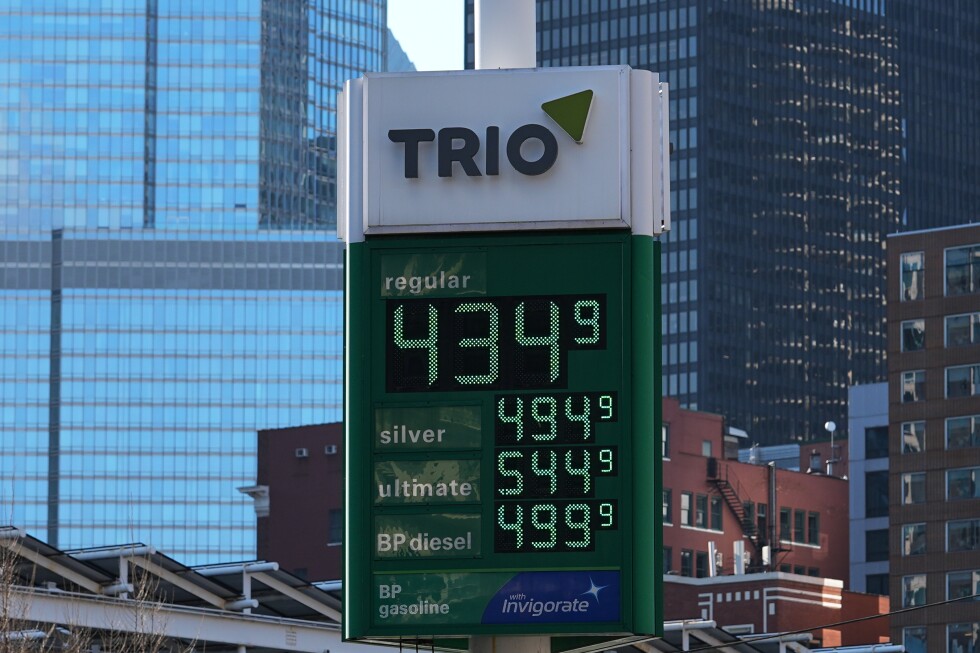
Despite these efforts, crude oil has surged well past $100 per barrel, with U.S. gasoline prices averaging $4.14 per gallon. Experts say these stopgap measures, while helpful, fall far short of replacing the stranded oil supplies.
“They’re all incremental,” explained Mark Barteau, professor of chemical engineering and chemistry at Texas A&M University. “You’re talking about these different patches being at the level of maybe 1 to 2 million barrels a day each, and you’ve got to get to 20, so it’s hard to see those actually adding up to the numbers that are needed.”
Prior to the conflict, approximately 15 million barrels of crude oil and 5 million barrels of oil products passed daily through the Strait of Hormuz, representing roughly 20% of global oil consumption. The current disruption has effectively trapped these supplies, while several Middle Eastern producers have halted production as their storage facilities reach capacity, removing an additional 10 million barrels per day from the market.
Complicating matters further, about 50% of global oil reserves are concentrated in eight Persian Gulf nations that typically coordinate their output to stabilize prices. Saudi Arabia, which usually brings spare capacity online during crises, is unable to fulfill this role as its reserves remain bottlenecked.
“All of that spare capacity is also bottled up inside the Persian Gulf right now and it can’t get to market,” said Jim Krane, energy research fellow at Rice University’s Baker Institute. “So the main emergency response system that we have is also blocked.”
The IEA has emphasized that “the resumption of transit through the Strait of Hormuz is the single most important action to return to stable oil and gas flows and reduce the strains on markets and prices.”
Some nations have implemented workarounds to move oil out of the Gulf. Saudi Arabia is utilizing its East-West pipeline to transfer approximately 5 million barrels daily from the Persian Gulf to the Red Sea. However, since this pipeline was already in use before the crisis, its capacity to accommodate additional stranded oil is limited.
The lifting of sanctions on approximately 140 million barrels of Iranian oil already in transit hasn’t added new supply to the market but instead broadened the potential buyer pool. According to Daniel Sternoff, senior fellow at the Columbia Center on Global Energy Policy, this decision primarily benefits Iran by raising prices for oil that was previously sold at steep discounts to private Chinese refiners.
“As soon as you are moving to waive sanctions on your adversary with whom you’re fighting a military conflict, to do something in their benefit, it just shows you that you are running out of options to try to prevent a rise in the price of oil,” Sternoff noted.
The waiver of Russian sanctions may prove more impactful by allowing previously stored Russian oil to enter the market. Meanwhile, the temporary suspension of the Jones Act could help ease natural gas prices by facilitating more efficient transport of liquefied natural gas from the Gulf Coast to New England, though experts don’t expect significant effects on oil or gasoline prices.
Despite being a major oil producer that exports more than it imports, the United States cannot simply ramp up production to fill the global void. “If the U.S. were to try to make up the global shortfall, we would need to nearly double our production,” Barteau explained. “We couldn’t drill wells that fast even if we wanted to.”
Even increasing domestic production by 1 million barrels daily—a feat achieved during the shale boom—would be difficult to replicate. Energy companies remain hesitant to invest heavily in long-term production based on what could be a temporary price spike.
Halting U.S. oil exports wouldn’t solve the problem either. American refineries process about 16.3 million barrels daily while domestic production stands at approximately 13.7 million barrels per day. Moreover, nearly 70% of U.S. refineries are configured to process heavy, sour crude, while much of domestic production yields light, sweet crude—creating a mismatch that necessitates ongoing imports.
“They need different crudes than the ones that are being produced right next to them now,” Krane explained.
As the crisis continues, experts warn that a prolonged disruption could create serious challenges. “A lot of people like the IEA are making the point that this is the biggest oil crisis ever, which is partly true, partly an exaggeration, depending on how you count things,” noted energy expert Michael Lynch. “A lot of it has to do with how long this lasts… if it goes on for another six weeks we get to be in some serious trouble.”
Fact Checker
Verify the accuracy of this article using The Disinformation Commission analysis and real-time sources.

16 Comments
While global leaders are taking emergency measures to address the supply crunch, it seems the Iran war and resulting disruptions are too severe for stopgap solutions. Higher prices at the pump will likely persist until the geopolitical situation stabilizes and production can ramp back up.
Agreed. The energy crisis illustrates the fragility of our oil-dependent economy and the need for accelerated investment in renewable energy sources to enhance resilience.
While the emergency measures taken by policymakers are understandable given the severity of the supply disruptions, I can’t help but feel that a more transformative, long-term vision is needed to truly address the root causes of this energy crisis. Transitioning to renewable energy sources should be the top priority to enhance energy security and protect consumers from future shocks.
The Iran war’s impact on global energy supplies is deeply troubling. While I appreciate the emergency steps taken by policymakers, it’s clear that more transformative solutions are needed to build resilience and reduce reliance on fossil fuels susceptible to geopolitical shocks. This crisis highlights the imperative for accelerating the transition to renewable energy.
Well said. Diversifying our energy mix away from oil and gas is crucial to enhancing long-term energy security and stability for consumers and businesses alike.
This energy crisis stemming from the Iran war really highlights the fragility of our current fossil fuel-dependent system. I hope global leaders can use this as a catalyst to accelerate investment in renewable energy infrastructure and technologies that can provide more stable, sustainable, and secure energy supplies for the future.
Absolutely. Diversifying our energy mix is critical to building resilience and shielding consumers from the volatility of global oil and gas markets.
The ripple effects of the Iran conflict on global energy markets are deeply concerning. While I’m glad to see policymakers taking action to release emergency oil reserves, I worry these measures may only provide temporary relief. A more holistic, long-term strategy to transition to renewable energy sources is clearly needed to insulate against future geopolitical shocks.
The energy supply disruptions stemming from the Iran war are clearly severe, and the measures taken so far seem insufficient to fully stabilize prices. This situation reinforces the importance of accelerating the transition to renewable energy sources to enhance energy security and insulate consumers from such geopolitical shocks.
The situation is quite concerning, with critical infrastructure damage and crude supplies stranded. I’m curious to see if the reserve releases and other actions can provide meaningful relief, or if more transformative policy changes will be required to stabilize energy markets long-term.
Those are good points. The geopolitical instability is certainly a major wild card, and the transition to cleaner energy will be crucial to improve energy security going forward.
As an investor, I’m closely watching the developments in energy markets amid the Iran conflict. The supply disruptions and price volatility are certainly concerning, though I’m hopeful that the coordinated efforts by global leaders can help ease the strain on consumers in the near-term.
It’s troubling to see how much the Iran conflict has impacted global energy markets. While the release of emergency oil reserves and other stopgap measures may provide some temporary relief, a more comprehensive, long-term strategy to reduce reliance on fossil fuels seems necessary to truly mitigate these kinds of supply shocks.
Agreed. This crisis underscores the fragility of our current energy system and the urgent need to invest in renewable alternatives that can better withstand geopolitical instability.
It’s disappointing to see the challenges the global leaders are facing in trying to contain the fallout from the Iran conflict. The impact on oil and gas prices is really taking a toll on consumers. I hope they can find more sustainable solutions beyond just tapping emergency reserves.
I share your concern. This crisis really highlights the need for greater investment in alternative energy sources to reduce our reliance on volatile global oil markets.