


Listen to the article
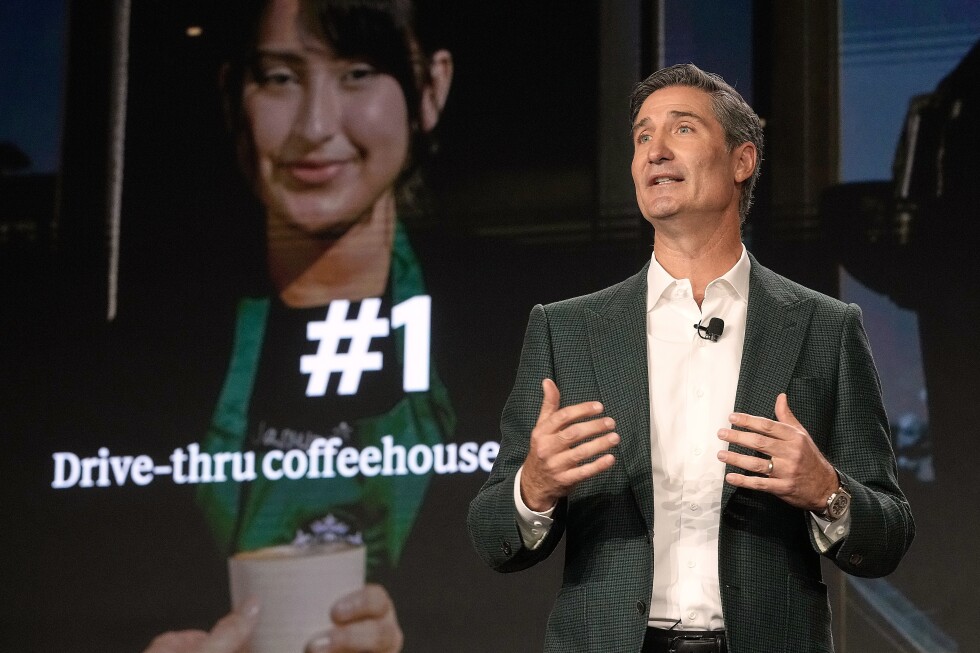
Starbucks has unveiled ambitious expansion plans that include opening hundreds of new stores across the United States and adding seating capacity to thousands of existing locations. The coffee giant announced Thursday during an investor presentation in New York that it will emphasize its cafes as community hubs, even as consumer demand for drive-thru coffee continues to grow.
After previously announcing plans to close hundreds of underperforming stores, Starbucks now expects to open up to 175 new U.S. coffee shops this year, with that number increasing to approximately 400 locations by 2028. The company’s strategy includes introducing smaller-format stores that are 20% cheaper to build while still offering comfortable seating, drive-thru service, and mobile order pickup capability.
Chairman and CEO Brian Niccol expressed confidence in the company’s growth potential, stating that Starbucks sees an opportunity to build at least 5,000 new cafes across the U.S. The company is particularly targeting the central, southern, and northeastern regions for development, noting thousands of potential sites where no Starbucks currently operates within a mile of a competitor.
The coffee giant’s focus on physical cafes seems to run counter to industry trends. According to the National Coffee Association, 59% of U.S. coffee drinkers who purchased coffee outside their home in the past week used a drive-thru—an all-time high. Meanwhile, competitors like Dutch Bros and 7 Brew continue expanding their drive-thru-only model.
However, Niccol defended the company’s strategy, revealing that over 60% of Starbucks customers came into stores to order their coffee over the past month. “Our cafes are our point of differentiation,” Niccol said. “We want people to be in our coffeehouses.”
To enhance the in-store experience, Starbucks plans to add 25,000 additional seats to its U.S. cafes by the end of its fiscal year this fall. This is part of an ongoing upgrade process designed to make existing stores warmer and more welcoming. These improvements, costing around $150,000 per location, have been completed at 200 stores so far and will expand to 1,000 locations by fall. The company expects to finish all retrofitting work by 2028 across its roughly 10,000 company-operated U.S. stores.
Niccol, who joined Starbucks earlier this year to revitalize its flagging sales, said the company’s turnaround is already taking hold. Starbucks has been increasing staff levels and adding equipment to improve service times while giving employees more opportunities to connect with customers.
One priority for the coming year is strengthening afternoon business, which currently lags behind morning performance. In spring, the company plans to introduce customizable energy drinks made with proprietary green coffee extract. New food offerings focused on protein and fiber, including flatbreads, cottage cheese, and protein popcorn, are also in development.
Technological improvements are also on the horizon. A next-generation espresso machine will reduce the time needed to pull espresso shots from 70 seconds to just 35 seconds while doubling capacity to eight shots at once. These machines will begin appearing in U.S. stores in 2027.
Changes to Starbucks’ loyalty program are expected to drive additional sales. A three-tiered program launching March 10 in the U.S. and Canada will offer varied benefits for Green, Gold, and Reserve members. The company currently has 35.5 million active loyalty members in the U.S. alone. While Green members will still earn one star per dollar spent, they’ll receive a $2 credit faster than before and get one free drink modification monthly.
Higher-tier members will enjoy additional perks, with Reserve status members—who must earn 2,500 stars in 12 months—gaining access to exclusive merchandise and events, including all-expenses-paid trips to coffee destinations like Milan and Costa Rica.
Earlier this week, Starbucks reported stronger-than-expected sales for its fiscal first quarter, with same-store sales up 4% globally and in the U.S. during the October-December period—its best U.S. performance in two years. Looking ahead to fiscal year 2028, the company expects U.S. and global same-store sales to rise at least 3%, with overall revenue growing by 5% and earnings per share reaching between $3.35 and $4.00.
Despite the positive outlook, Starbucks shares fell 1% in midday trading Thursday.
Fact Checker
Verify the accuracy of this article using The Disinformation Commission analysis and real-time sources.

11 Comments
Starbucks’ confidence in being able to add 5,000 new cafes across the US is bold. I wonder if they’ve done extensive market research to validate that level of growth potential.
While the push for hundreds of new stores is ambitious, I’m curious to see if Starbucks can avoid oversaturation, especially in markets where they already have a strong presence. Careful site selection will be key.
Interesting to see Starbucks doubling down on physical retail expansion. With the rise of remote work, I wonder if they’ll be able to maintain community hub appeal as more customers opt for drive-thru and mobile orders.
It will be interesting to see how Starbucks balances its physical retail expansion with the continued growth of online ordering and delivery. Maintaining a cohesive customer experience across channels will be crucial.
The 20% cheaper build cost for smaller-format stores is an interesting cost-saving initiative. Curious to see if this affects the overall customer experience in any way.
That’s a good point. Starbucks will need to ensure the smaller format doesn’t compromise the ambiance and amenities that customers have come to expect.
Smaller-format stores and increased seating capacity could be a smart strategy as Starbucks looks to capture more regional market share. Focusing on underserved central, southern, and northeastern areas makes sense.
You raise a good point. Starbucks will need to strike the right balance between drive-thru convenience and maintaining that community feel that has been a core part of their brand.
Starbucks’ plans to increase seating capacity is a smart move, especially as remote work persists. Ensuring their stores remain inviting community hubs will be key to their long-term success.
Expanding into more remote regions could open up new customer segments for Starbucks, but they’ll need to ensure their in-store experience and offerings resonate with local communities.
The increased focus on drive-thru and mobile order capabilities makes sense given changing consumer behaviors. But Starbucks will need to be careful not to lose the social, community-oriented aspect of their brand.