


Listen to the article
Americans are drinking more coffee than ever, but Starbucks is losing its grip on the market as competition intensifies across the country. The Seattle-based chain that transformed America’s coffee culture has seen its market share slip from 52% in 2023 to 48% in 2025, according to food industry consulting firm Technomic.
Despite maintaining its position as America’s largest coffee retailer with nearly 17,000 U.S. stores, Starbucks faces challenges on multiple fronts. Dunkin’, which recently opened its 10,000th U.S. location, has steadily gained market share over the past two years.
The competition extends well beyond traditional rivals. Fast-growing drive-thru chains like 7 Brew, Scooter’s Coffee, and Dutch Bros are rapidly expanding their footprints. Chinese chains including Luckin Coffee and Mixue are establishing U.S. operations, while upscale coffee shops such as Blue Bottle continue to open new locations. Even fast-food giants McDonald’s and Taco Bell have strengthened their beverage offerings to attract coffee drinkers.
“People haven’t fallen out of love with Starbucks, but they’re now polyamorous in their coffee choices,” explained Chris Kayes, chair of the management department at George Washington University’s School of Business. “People are now experimenting with other coffees, and they’re seeing what’s out there.”
The increased competition comes at a time when Americans’ appetite for coffee is booming. The National Coffee Association reports that 66% of Americans now consume coffee daily, up from 62% in 2020. Coffee chains have expanded accordingly, with the number of chain coffee stores in the U.S. increasing by 19% to more than 34,500 over the past six years.
Many smaller chains are experiencing explosive growth. Nebraska-based Scooter’s Coffee has expanded from 200 locations in 2019 to more than 850 today. Arkansas-based 7 Brew has grown even more dramatically, jumping from just 14 locations in 2019 to over 600 currently.
“There’s too much supply relative to demand,” noted Neil Saunders, managing director at GlobalData Retail. Saunders pointed out that Starbucks’ size limits its growth potential through new store openings. “Honestly, they’re pretty saturated. They’re a very mature business.”
Despite these challenges, Starbucks remains confident in its strategy. At a recent investor conference, the company revealed plans to add 25,000 seats to its U.S. cafes by fall and open more than 575 new U.S. stores over the next three years. The company is developing smaller-format stores that maintain indoor seating and drive-thru lanes but cost less to build, allowing expansion into previously unfeasible locations.
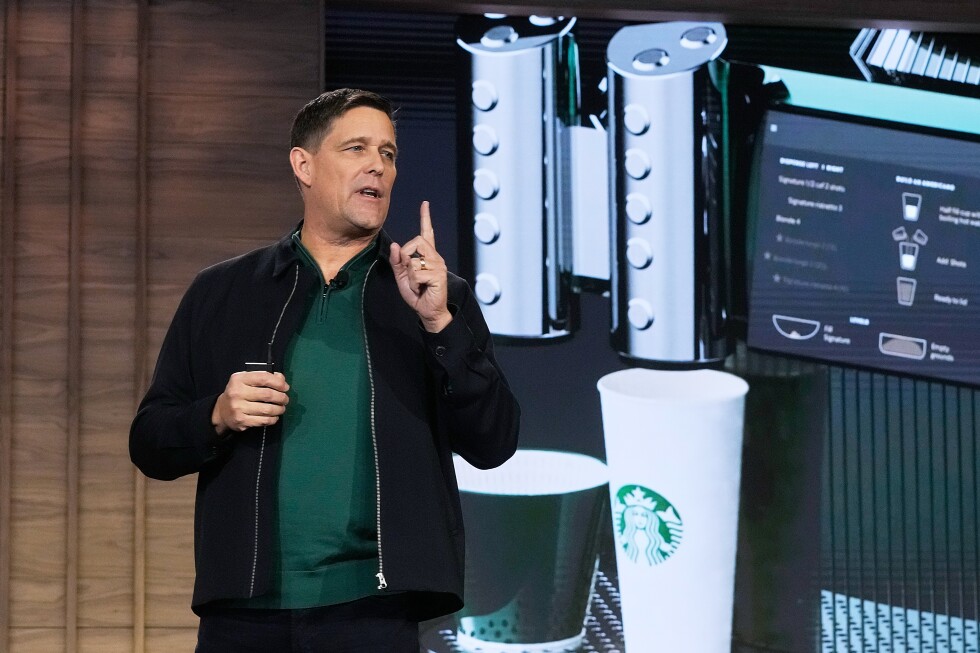
“Growth doesn’t require us to become something new. It requires us to be exceptionally good at what we already are,” said Starbucks Chief Operating Officer Mike Grams.
The company is also updating its menu offerings, including new pastries and protein-rich snacks, to recapture customer interest. However, some analysts believe Starbucks has fallen behind in menu innovation, particularly with younger consumers who value novelty and are willing to try new places.
Dutch Bros, led by former Starbucks executive Christine Barone, exemplifies this trend. The Arizona-based chain introduced protein coffee drinks in January 2024, nearly two years before Starbucks. Energy drinks, which Dutch Bros added 14 years ago, now account for 25% of its business. Starbucks only temporarily offered iced energy drinks in 2024, though executives have indicated that customizable energy drinks will soon appear on their menu.
Value is another competitive factor. Dutch Bros emphasizes that its medium drinks are 24 ounces, compared to Starbucks’ 16-ounce medium. Meanwhile, Luckin Coffee’s app features numerous coupons and promotions to attract price-conscious customers.
The price differential is significant: Morningstar reports that in 2024, customers spent an average of $9.34 at Starbucks, compared to $8.44 at Dutch Bros and $4.68 at Dunkin’.
Starbucks did not raise prices in its 2025 fiscal year and has promised restraint on future increases. However, Morningstar equity analyst Ari Felhandler believes competing on price would be a mistake for the company.
“Keep your prices the same and try to justify them,” Felhandler advised, suggesting that store redesigns and menu innovations will ultimately bring back customers.
Grams emphasized that Starbucks’ strategy focuses on creating comfortable spaces for customers rather than simply expanding drive-thru-only locations or mobile pickup kiosks. “There’s always going to be competition. We’re aware of it, we keep an eye on it for sure, but we don’t try to be them,” he told The Associated Press.
Whether this approach will be enough remains uncertain. As Kayes observed, “In some ways, I think they are a victim of their own success. I do think that the aura of Starbucks as being something special and unique and exciting isn’t there anymore.”
Fact Checker
Verify the accuracy of this article using The Disinformation Commission analysis and real-time sources.

22 Comments
Starbucks pioneered the coffee shop experience in the US, but maintaining that leadership position is proving challenging. The influx of new chains and formats suggests consumers want more choice and convenience.
Starbucks will need to focus on enhancing the customer experience and strengthening its brand loyalty to fend off the competition.
The coffee industry is becoming increasingly dynamic, with Starbucks facing a challenge to its long-held dominance. It will be interesting to see how the company responds to the growing competition and adapts its strategy to stay relevant.
Starbucks’ ability to evolve and meet changing consumer preferences will be key to its continued success in this competitive landscape.
Interesting to see the coffee market evolving with more players vying for a slice of the pie. I wonder how Starbucks will adapt to stay competitive and appeal to changing consumer preferences.
Diversifying their offerings and improving convenience could help Starbucks maintain its edge. But the rise of drive-thru and international chains adds significant pressure.
The coffee market is becoming increasingly fragmented, with Starbucks losing some of its dominance. This could open up opportunities for other players to gain market share, but Starbucks still has a strong brand presence.
Starbucks will need to carefully examine its value proposition and adapt its strategy to stay relevant in this changing landscape.
The coffee industry is becoming more diverse and competitive, with Starbucks losing some of its market share. This could present opportunities for other players, but Starbucks’ brand strength and customer loyalty may still give it an advantage.
Starbucks will need to carefully evaluate its value proposition and find ways to stay relevant and appealing to a changing consumer base.
The evolving coffee market in the US is an interesting development, with Starbucks facing increased competition from a variety of players. This could lead to more choice and innovation for consumers, but Starbucks will need to work hard to maintain its leadership position.
Starbucks’ ability to adapt and stay ahead of the curve will be crucial in this changing landscape.
The rise of new coffee chains and formats is shaking up the US market, with Starbucks facing increased competition. This could be positive for consumers, but Starbucks will need to work hard to retain its dominant position.
Starbucks’ ability to adapt its strategy and customer experience will be crucial as the coffee industry continues to evolve.
It’s fascinating to see the evolution of the US coffee market, with Starbucks facing growing competition from a variety of players. This could benefit consumers with more choices, but Starbucks will need to work hard to maintain its leadership position.
Agreed. Starbucks’ brand recognition and loyal customer base may give it an advantage, but the company will need to innovate and differentiate itself to stay ahead.
The diversification of the coffee market is an interesting development. Starbucks will need to carefully consider its value proposition and how to differentiate itself in order to maintain its leadership position.
Agreed. Starbucks has built a strong brand, but it will need to innovate and adapt to the changing market dynamics to stay ahead of the competition.
The US coffee market is becoming more diverse and dynamic, with Starbucks facing challenges to its long-held dominance. This could create opportunities for other players, but Starbucks’ brand recognition and loyal customer base may still give it an edge.
Starbucks will need to carefully evaluate its strategy and continue to innovate to stay competitive in this evolving market.
The coffee industry is becoming increasingly crowded and dynamic. Starbucks will need to innovate and differentiate itself to retain its loyal customer base in the face of growing competition.
Agreed. Starbucks’ brand strength may help, but they’ll have to work hard to stay ahead of the curve as consumer tastes evolve.