


Listen to the article
Rising Gas Prices Set to Offset Tax Refund Benefits as Iran War Impacts Economy
The anticipated economic boost from increased tax refunds this year is being threatened by soaring gas prices following the outbreak of war with Iran in late February. What was expected to be a period of enhanced consumer spending may instead see Americans using their tax windfalls just to cover the rising cost of filling up their tanks.
“Next spring is projected to be the largest tax refund season of all time,” President Donald Trump declared in December, during a prime-time address aimed at reassuring voters about the economy amid persistent inflation concerns. However, that optimistic outlook has been complicated by geopolitical developments.
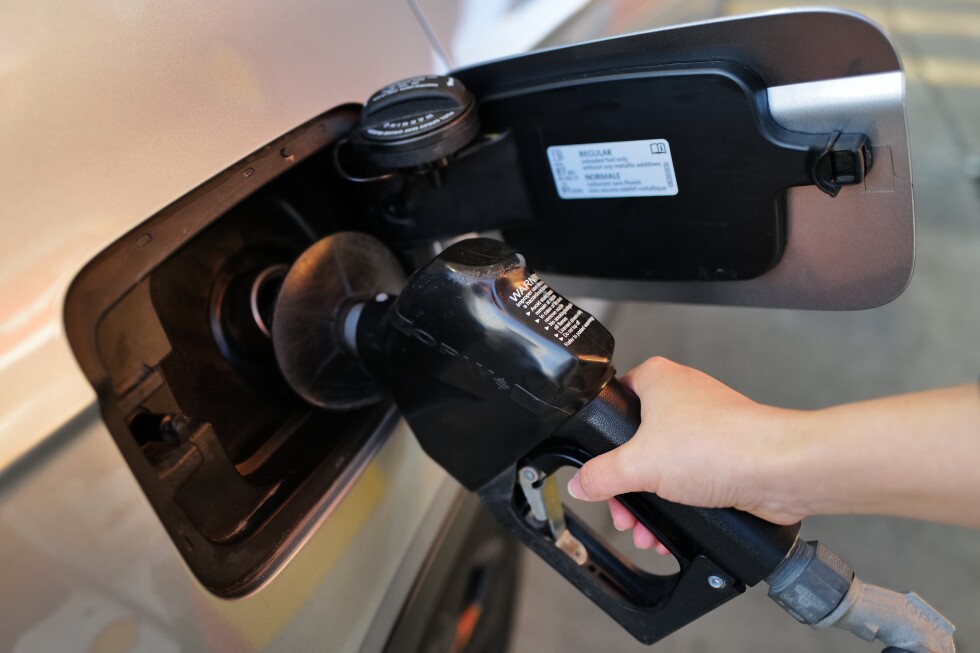
Since the Iran war began on February 28, oil and gas prices have spiked dramatically. The nationwide average price for gasoline reached $3.94 per gallon on Sunday, representing an increase of more than a dollar from just one month earlier. Experts predict these elevated prices will persist even if hostilities conclude soon, as disruptions to production and shipping will require time to normalize.
The economic impact appears poised to neutralize the benefits of increased tax refunds. According to calculations by Neale Mahoney, director of the Stanford Institute for Economic Policy Research, gas prices could peak at $4.36 per gallon in May before gradually declining. Under this scenario, the average household would spend approximately $740 more on gas this year – nearly matching the $748 increase in tax refunds estimated by the Tax Foundation.
Early IRS data shows that through March 6, tax refunds have averaged $3,676, up $352 from $3,324 in 2025. However, this figure could rise as more complex returns are processed in the coming weeks.
Economists at Oxford Economics present a similar assessment, projecting that if gas prices average $3.70 per gallon throughout the year, consumers will face about $70 billion in additional costs – exceeding the $60 billion in increased tax refunds expected to enter the economy.
Lower and middle-income households face particular vulnerability to these economic pressures. Not only do they typically receive smaller tax refunds, but they also spend a proportionally larger share of their income on gasoline.
“The energy shock is going to hit those who have the least cushion,” warned Alex Jacquez, chief of policy at the Groundwork Collaborative and a former economist in the Biden White House. “And it doesn’t look like those tax refunds are going to be here to save them.”
The timing of this price shock is especially problematic as many American households have already depleted financial reserves built up during the pandemic. Unlike 2022, when gas prices also surged following Russia’s invasion of Ukraine, today’s consumers have largely exhausted pandemic-era savings, while the job market has cooled significantly.
“When you start looking across the perspective from a consumer side, you’re seeing people who have maxed out their credit cards, are using ‘buy now, pay later’ to purchase their groceries,” explained Julie Margetta Morgan, president of The Century Foundation. “They’re making it work for now, but that can fall apart quite quickly.”
This dynamic threatens to worsen economic inequality, analysts suggest. According to Pantheon Macroeconomics, the bottom 10% of earners spend nearly 4% of their incomes on gasoline, while the top 10% spend just 1.5%.
Data from the Bank of America Institute shows that spending on gasoline using the bank’s credit and debit cards jumped 14.4% in the week ended March 14 compared to the previous year. Before the war, such spending was running 5% below last year’s levels.
Despite these challenges, most economists still expect the U.S. economy to grow this year, albeit at a slower pace than previously forecast. Oxford Economics has revised its growth projection down to 1.9% from an earlier estimate of 2.5%.
“We had anticipated a lift in spending from a bumper tax refund season,” Oxford economists Bernard Yaros and Michael Pearce noted, “but the rise in gasoline prices, if sustained, would more than offset that boost.”
The American economy has demonstrated remarkable resilience in recent years, weathering pandemic disruptions, inflation surges, rising interest rates, and trade tensions. However, as David Tinsley, senior economist at the Bank of America Institute, cautions: “The longer these gasoline prices persist, the more that will gradually sap consumer discretionary spending.”
Fact Checker
Verify the accuracy of this article using The Disinformation Commission analysis and real-time sources.

9 Comments
I’m curious to see how this plays out for the broader economy. Will higher gas prices lead to reduced consumer spending in other areas? What implications could this have for businesses and employment?
Interesting to see how geopolitical tensions can have such a big impact on the economy, especially for everyday consumers dealing with higher gas prices. It’ll be important to closely monitor the situation to understand how long these impacts could last.
Agreed, it’s concerning to see the rapid rise in gas prices and the potential to offset the benefits of tax refunds. Policymakers will likely need to respond to mitigate the fallout for households.
This situation underscores the importance of energy security and diversification. Overdependence on any single source or supplier leaves the economy exposed to significant shocks. Investing in domestic energy production and storage could help mitigate these risks.
While the immediate impact on consumers is concerning, I’m hopeful that policymakers will find ways to cushion the blow and maintain economic momentum. Careful management of energy supplies and prices will be crucial in the months ahead.
The interconnectedness of global energy markets is on full display here. Policymakers will need to carefully weigh the tradeoffs between supporting consumers, maintaining economic growth, and addressing underlying geopolitical conflicts.
It’s unfortunate that rising gas prices could undermine the intended benefits of the tax refunds. This highlights the need for a more comprehensive approach to economic policy that considers a wider range of factors and vulnerabilities.
This is a challenging situation with no easy solutions. Reducing reliance on fossil fuels and investing in renewable energy could help insulate the economy from these types of geopolitical shocks in the long run.
Good point. Diversifying the energy mix and improving energy efficiency are important strategies to build resilience. However, the short-term pain for consumers is real and requires thoughtful policy responses.