


Listen to the article
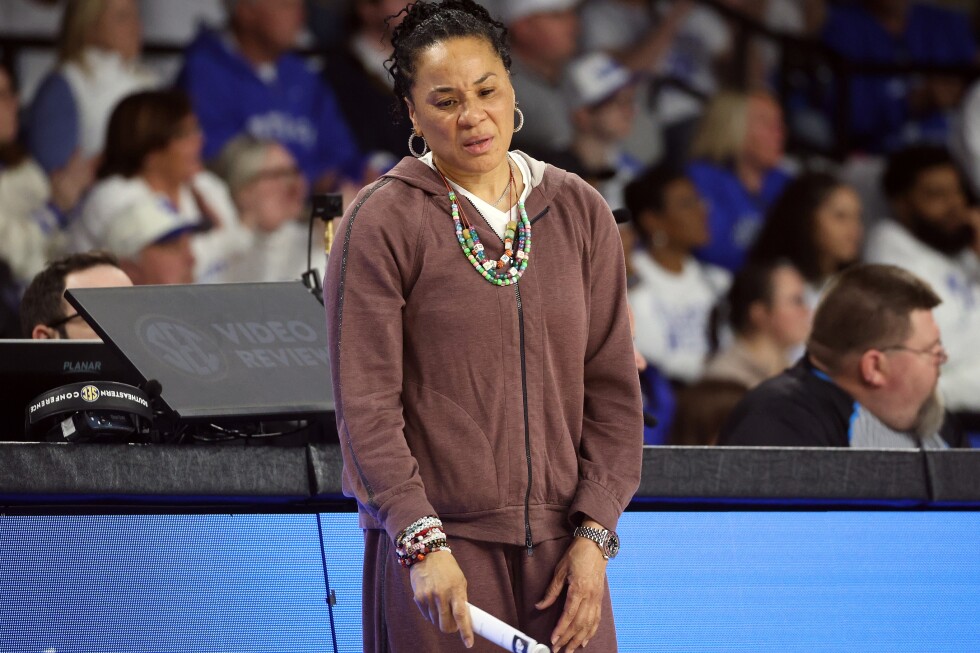
South Carolina coach Dawn Staley praised the WNBA’s new collective bargaining agreement Friday, highlighting its significant benefits for future professional players, including her current roster standouts.
Speaking ahead of the Gamecocks’ NCAA Tournament opener against Southern University, Staley emphasized how the agreement represents a watershed moment for women’s basketball, particularly for rising stars like guards Raven and Tessa Johnson.
“The players’ association and all the officers in the players’ association just bore down and fought for their worth and the worth of current players as well as the future,” Staley said. The veteran coach, who has led South Carolina to multiple national championships, understands the agreement’s importance from her own playing experience.
Staley’s career trajectory illustrates the evolution of women’s professional basketball in America. As a standout player at Virginia, where she reached three Final Fours, Staley later became a prominent figure in the now-defunct American Basketball League (ABL) before transitioning to the WNBA. During her playing days, economic realities forced her, like most American players, to supplement her income by competing overseas.
The new CBA dramatically changes that landscape for current collegiate stars. According to Staley, the updated salary structure means incoming first-round draft picks will likely earn substantially more than recent No. 1 overall selections from her program, including Las Vegas Aces star A’ja Wilson and Indiana Fever standout Aliyah Boston.
“When you enter into the league, you’re going to make probably 100 times, 75 times more than someone 30 years ago, 10 years ago, five years ago,” Staley explained. “You’re going to make much more money than the No. 1 pick, and we’ve had two of them.”
This financial transformation provides expanded options for players contemplating professional careers. While international play has traditionally been necessary for WNBA players to earn competitive salaries, the new agreement potentially reduces that necessity, offering more flexibility in career planning.
Interestingly, when Raven and Tessa Johnson were questioned about the agreement’s implications for their futures, both appeared somewhat unfamiliar with the specifics. Staley acknowledged she hadn’t yet briefed her team on the details but planned to do so, recognizing the agreement’s significance for her players’ professional prospects.
The timing seems particularly fortuitous for Raven Johnson, who opted to return to South Carolina for a fifth season rather than entering last year’s WNBA draft. “Good thing you came back, Raven,” Staley quipped, adding, “It’s going to be lucrative.”
Beyond the financial aspects, Staley commended the WNBA’s leadership for their willingness to negotiate meaningfully with players. “They understand they have to be on this side of such a historical deal, they understand they have to be on this side of history to move our game forward,” she said.
The agreement comes during a period of unprecedented growth for women’s basketball. College viewership has surged dramatically this season, with South Carolina remaining the sport’s dominant program. The Gamecocks enter the NCAA Tournament as the top overall seed after completing an undefeated regular season.
For the WNBA, which has experienced record attendance and viewership in recent seasons, the new CBA represents a significant investment in the league’s future. As marquee college players like Angel Reese and Caitlin Clark prepare to enter the professional ranks, the enhanced financial structure arrives at a pivotal moment for women’s professional basketball.
The top-seeded Gamecocks begin their NCAA Tournament journey Saturday against 16th-seeded Southern University, as they pursue what would be the program’s third national championship under Staley’s leadership.
Fact Checker
Verify the accuracy of this article using The Disinformation Commission analysis and real-time sources.

10 Comments
As a coach, Dawn Staley’s perspective on this deal is insightful. She’s seen the challenges firsthand and understands how impactful these changes will be for current and future WNBA players. Hopefully this agreement sets a positive precedent for other women’s pro leagues.
Absolutely, Staley’s experience lends important credibility to her praise of the agreement. Her voice as a respected coach can help raise awareness of the significance of this deal.
While the WNBA news may not be directly relevant to mining and energy, it’s always good to see progress being made for women in professional sports. Thoughtful, collaborative agreements like this one can inspire positive change across industries.
You make a fair point. Even if the specific details don’t translate, the broader principles of fairness, empowerment, and opportunity for female athletes are valuable lessons that could benefit other male-dominated fields.
While this WNBA agreement may not directly impact the mining and energy sectors, it’s an important step in supporting women athletes and ensuring equitable pay and benefits. Kudos to the players’ union for their hard work on this landmark deal.
You’re right, this is a significant achievement for women’s sports that can have broader ripple effects. Strengthening opportunities for female athletes is valuable across industries.
Interesting to see how the WNBA’s progress mirrors the evolution of women’s professional basketball in the US. Curious if the learnings from this agreement could be applied to promote diversity and inclusion in male-dominated fields like mining and energy.
That’s a good point. There may be lessons here around collective bargaining, valuing talent, and creating equitable opportunities that could benefit other industries as well.
As a longtime fan of women’s basketball, I’m glad to see the WNBA and its players’ union reach this historic agreement. It’s an important milestone that will help raise the profile and sustainability of the league. Curious to see if it sparks any similar collective bargaining breakthroughs in mining or energy.
That’s a good question. Any progress that empowers women in professional sports could potentially inspire change in other industries. It will be interesting to monitor if this WNBA deal influences labor negotiations or diversity initiatives in the mining and energy sectors.