


Listen to the article
West African Farmers Turn to TikTok to Boost Sales and Share Agricultural Knowledge
When Senegalese farmer Pape Fall initially downloaded TikTok, he was simply looking for football highlights and entertainment videos. Two years later, the social media platform has transformed his farming business. Today, Fall sells most of his produce through short videos showcasing his harvests, including a recent post featuring a 1.5-tonne cucumber yield accompanied by Senegalese rap music and his contact information.
Fall represents a growing movement of millions of West African farmers leveraging social media platforms to market products, exchange farming techniques, and change perceptions about agriculture in the region. Despite persistent challenges of hunger and poverty across West Africa, these digital tools are helping farmers improve their yields and secure better market access.
“Social media is democratizing access to information for farmers,” explains Abbie Phatty-Jobe, a digital agriculture specialist at Caribou, a UK-based research company. Caribou has pioneered research into regional farmers’ TikTok usage and has established a network of 24 agricultural influencers across 11 African countries, collectively reaching 5 million viewers with accessible farming information.
The knowledge exchange has tangible benefits for farmers like Fall, who implemented a technique he learned from a Moroccan farmer’s TikTok video about proper cucumber cultivation. “I’ve followed that advice ever since. It works,” he said, noting that he regularly watches farming videos from North Africa to Asia for new insights.
Platform preferences vary by region and literacy levels. West African farmers gravitate toward TikTok because of its video-based content and use of local languages, while East African farmers tend to prefer Facebook’s text-based posts, according to Phatty-Jobe’s research.
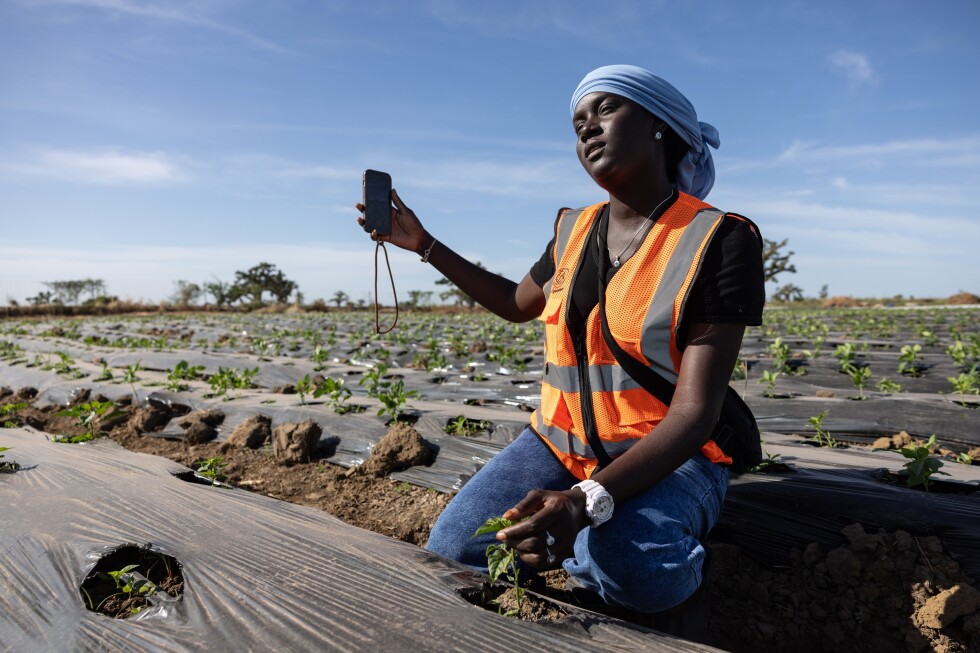
Among the rising stars in this digital agricultural landscape is 29-year-old Nogaye Sene, who manages farmland for clients with limited agricultural knowledge and for Senegalese expatriates looking to invest in their homeland. Sene attributes 70 percent of her client acquisition to Instagram and TikTok and now employs 40 staff members.
“The success of my business is thanks to social media,” Sene said. Her content ranges from chili plant cultivation to tractor operation and modern farming technologies. “We’re not used to seeing this type of modern production in Senegal, but social media is helping to change the perspective of agriculture, that it’s profitable.”
Sene is also addressing gender disparities in the predominantly male farming sector by organizing training sessions for women on both agriculture and social media marketing. In December, she facilitated training for 50 women farmers interested in enhancing their digital presence.
However, the digital agriculture revolution is not without challenges. Sene cautions that many of her clients report being scammed by individuals posing as farming consultants and influencers. Phatty-Jobe recommends partnerships with research institutions and government extension services to combat misinformation and prevent fraud.
Moreover, a significant technological divide persists among farmers. Nicolas Paget, a researcher on digital agriculture at French research institute CIRAD, notes that approximately 80 percent of farmers he has encountered do not own smartphones capable of accessing platforms like TikTok and Instagram. For those who do, data costs in West Africa remain prohibitively expensive compared to Europe.
“There is a very high risk of excluding farmers if governments and development agencies focus on this type of technology,” Paget warns. He points out that despite major investments like the World Bank’s $57.4 million digital agriculture platform in Ivory Coast in 2023, many farmers prefer adapting existing apps to their specific needs rather than using specialized platforms.
Nevertheless, the impact of social media on agricultural commerce cannot be understated. For farmers like Fall, marketing produce on TikTok represents more than convenience—it’s a pathway to economic independence. As Phatty-Jobe observes, these platforms enable farmers to bypass traditional middlemen who have historically controlled pricing, allowing for more direct sales and potentially higher profits.
The average annual farm income in Senegal is approximately $1,000, according to a 2017 study by the International Food Policy Research Institute. However, successful agricultural entrepreneurs utilizing digital tools can earn between $3,000 and $4,500—a testament to how social media is gradually reshaping West African agriculture into a more profitable and appealing profession for a new generation of tech-savvy farmers.
Fact Checker
Verify the accuracy of this article using The Disinformation Commission analysis and real-time sources.

27 Comments
Uranium names keep pushing higher—supply still tight into 2026.
Exploration results look promising, but permitting will be the key risk.
Good point. Watching costs and grades closely.
Good point. Watching costs and grades closely.
Uranium names keep pushing higher—supply still tight into 2026.
Good point. Watching costs and grades closely.
Interesting update on Some West African farmers turn to TikTok as part of agriculture’s changing image. Curious how the grades will trend next quarter.
The cost guidance is better than expected. If they deliver, the stock could rerate.
Good point. Watching costs and grades closely.
Uranium names keep pushing higher—supply still tight into 2026.
Good point. Watching costs and grades closely.
Silver leverage is strong here; beta cuts both ways though.
Good point. Watching costs and grades closely.
Good point. Watching costs and grades closely.
Nice to see insider buying—usually a good signal in this space.
Good point. Watching costs and grades closely.
The cost guidance is better than expected. If they deliver, the stock could rerate.
Good point. Watching costs and grades closely.
The cost guidance is better than expected. If they deliver, the stock could rerate.
The cost guidance is better than expected. If they deliver, the stock could rerate.
Good point. Watching costs and grades closely.
Good point. Watching costs and grades closely.
I like the balance sheet here—less leverage than peers.
Good point. Watching costs and grades closely.
I like the balance sheet here—less leverage than peers.
Good point. Watching costs and grades closely.
Good point. Watching costs and grades closely.