


Listen to the article
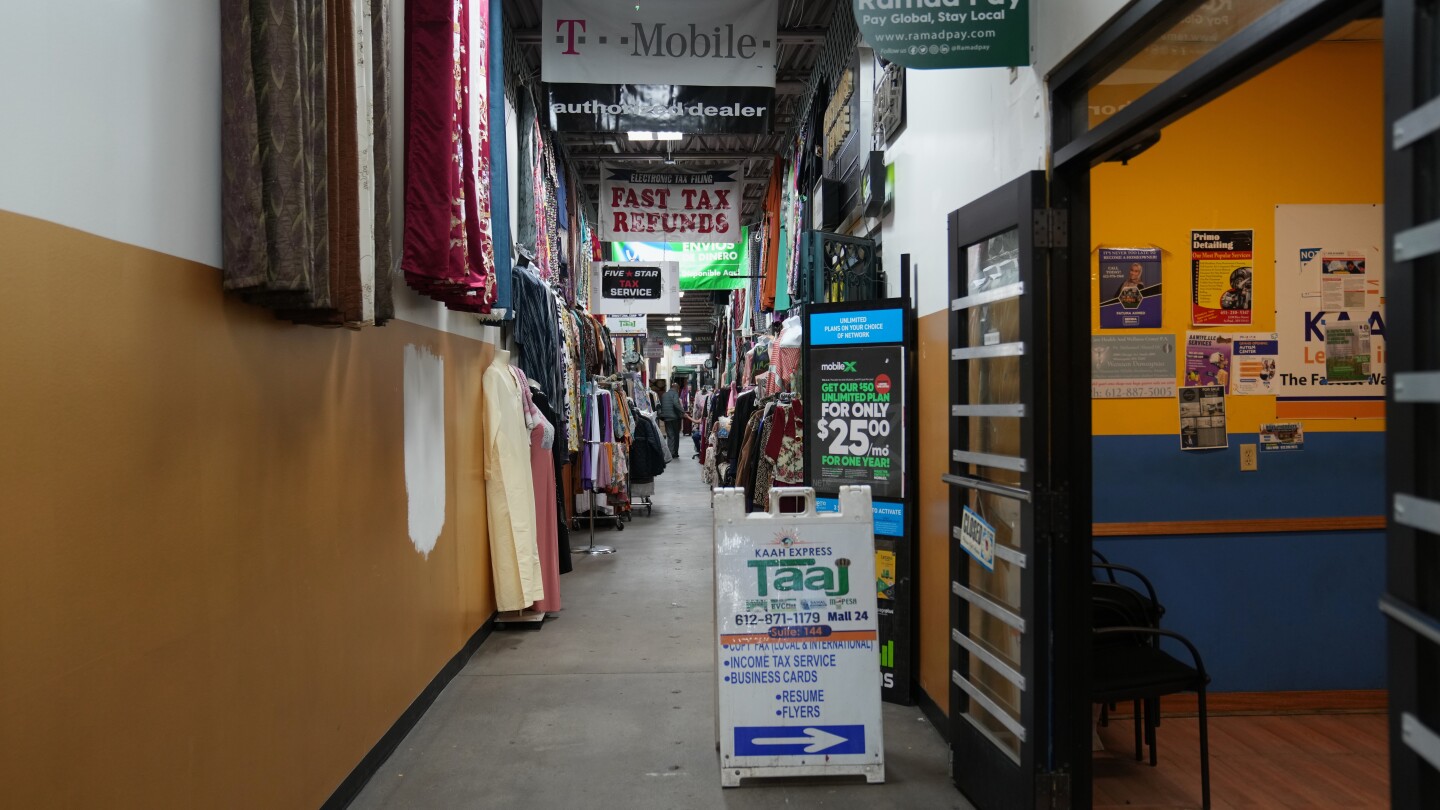
In a once-bustling hub of Somali entrepreneurship in south Minneapolis, an eerie silence has descended. Karmel Mall, home to over a hundred small businesses offering everything from clothing and traditional foods to professional services, has seen foot traffic dwindle to almost nothing in recent weeks as fear of immigration enforcement spreads through the community.
“It’s been like this for three weeks now,” said Abdi Wahid, who works at his mother’s convenience store in the mall. “Everywhere it’s all been closed up, all the stores.”
The mall serves as both an economic center and cultural heart for Minneapolis’s Somali population, the largest such community in the United States. Beyond retail spaces, it houses a mosque, Quran classes, and residential units, making it a comprehensive community center.
What was once a vibrant marketplace now sits largely dormant. On a recent afternoon, most businesses remained shuttered. In the few open shops, vendors sat alone, waiting for customers who rarely appear. The hallways, typically filled with conversation and activity, were quiet except for occasional chatter between neighboring shopkeepers and the soft sound of Quran recitations from some stores.
The precipitous decline in business coincides with the Trump administration’s “Operation Metro Surge,” an immigration crackdown that has sent waves of anxiety through immigrant communities nationwide. But business owners at Karmel Mall say the Somali community has been particularly targeted following President Trump’s recent inflammatory rhetoric.
Since December, Trump has repeatedly singled out the Somali community in his speeches, calling them “garbage” and claiming “they contribute nothing.” These comments followed a government fraud case in Minnesota that included several Somali defendants, which Trump has used to characterize the entire community.
Wahid, a U.S. citizen, noted that early afternoons at his family business typically brought 15 to 20 customers. Now, they’re lucky to see one. The fear, he explains, extends beyond immigration status.
“I think that caused a lot of people to not even want to come,” Wahid said, referring to recent incidents including the killing of Renee Good and an Immigration and Customs Enforcement (ICE) raid at Roosevelt High School in south Minneapolis. Many community members worry they could be targeted “just because of their race.”
Homeland Security assistant secretary Tricia McLaughlin responded in a statement that law enforcement uses “reasonable suspicion” to make arrests under the Fourth Amendment. “A person’s immigration status makes them a target for enforcement, not their skin color, race or ethnicity,” she said.
The economic impact has been devastating for small business owners. Upstairs at Karmel Mall, Bashir Garad runs Safari Travel & Accounting Services, where he’s seen a dramatic decline in customers. Even more concerning, existing clients—most of whom are East African and U.S. citizens—are canceling upcoming trips out of fear they won’t be allowed back into the country.
“They see a lot of unlawful things going on in the city,” Garad explained. “They look at something bad, and then they think some bad things may happen to them.”
Garad expressed frustration with what he sees as unfair treatment of the entire community. “The government is not doing the right thing,” he said. “If there’s a criminal, there’s a criminal. Regardless, there are ways to find the criminal, but to marginalize the community’s name, and a whole people, that is unlawful.”
Electronics vendor Ibrahim Dahiye reports his business is down by $20,000 monthly since the crackdown began. While winter is typically a slower season for retailers, he said the current situation is unprecedented. His employees are too afraid to come to work, and he now carries his passport at all times as a precaution.
Dahiye and other business owners are now pooling resources just to make rent payments, unsure how long they can sustain their businesses under these conditions. The economic ripple effects extend beyond Karmel Mall, impacting suppliers, service providers, and the broader Twin Cities economy.
“I don’t know what we can do,” Dahiye said. “We believe in Allah, but we can’t do anything.”
Fact Checker
Verify the accuracy of this article using The Disinformation Commission analysis and real-time sources.

16 Comments
This is a concerning situation. Immigrant-owned small businesses are crucial to local economies, and shutting them down due to enforcement actions can have devastating ripple effects. I hope the authorities can find a way to address any real issues without resorting to heavy-handed tactics that destroy community hubs like Karmel Mall.
Well said. Supporting small businesses, especially immigrant entrepreneurs, should be the priority, not driving them out.
The shutdown of Karmel Mall is a real loss for Minneapolis’s Somali community. These small businesses provide vital services and are the economic engine of immigrant neighborhoods. I hope local leaders can work to address any legitimate enforcement concerns while preserving this important community hub.
Absolutely. Maintaining a vibrant, diverse small business community should be a priority, not undermining it.
The shutdown of Karmel Mall is a stark example of the damaging impacts that overzealous immigration enforcement can have on local economies and communities. I hope local leaders can work to reassure the Somali population and find ways to keep these important businesses operating.
Agreed. Small businesses, especially those run by immigrant entrepreneurs, are the lifeblood of many neighborhoods.
This is a tough situation. While immigration enforcement may have a role, the collateral damage to small businesses and community hubs like Karmel Mall is concerning. I hope authorities can strike a better balance between security needs and supporting local economic development.
Well put. Finding that right balance is crucial – protecting public safety without decimating livelihoods.
This is a concerning situation. Immigrant businesses are vital to local economies, and fear of enforcement actions can devastate communities. I hope the authorities can find a way to address any legitimate concerns while protecting vulnerable entrepreneurs.
Yes, these businesses are often the backbone of immigrant neighborhoods. Losing them would be a major blow.
The dormancy of Karmel Mall is a troubling sign. These small businesses are the lifeblood of immigrant communities, providing both economic and cultural services. I hope local leaders can work to reassure the Somali population and find ways to keep these enterprises operating during this difficult time.
Absolutely. Preserving these community hubs should be a top priority, not allowing them to be decimated.
It’s sad to see a vibrant community hub like Karmel Mall suffer from this crackdown. These businesses provide important cultural and economic services. I hope local leaders can work to reassure the Somali community and find solutions to keep these enterprises afloat.
Absolutely. Supporting immigrant-owned small businesses should be a priority, not undermining them.
This is a concerning development. Immigrant businesses are vital economic engines, and driving them out through fear and enforcement actions hurts the whole community. I hope authorities can find a way to address any real issues without resorting to heavy-handed tactics.
Well said. Maintaining a healthy, diverse small business community should be the goal, not shutting it down.