


Listen to the article
Restaurants Embrace Small Plates as Consumer Preferences Shift
The latest restaurant trend taking hold across America doesn’t involve exotic ingredients or elaborate cooking techniques – it’s all about size. From major chains to local eateries, restaurants nationwide are introducing menus featuring smaller, less expensive portions designed to meet evolving consumer demands.
These new offerings extend beyond traditional children’s menus, catering to diverse dining preferences. Some patrons want to reduce their restaurant spending amid inflation concerns. Others seek healthier options or support weight management goals. Meanwhile, younger consumers often prefer snacking throughout the day rather than consuming larger meals.
“These changes are really driven by shifts in how people think about their relationship with food, how they spend money on it, what constitutes good value,” explains Maeve Webster, president of culinary consulting firm Menu Matters.
In Connersville, Indiana, Beth Tipton, co-owner of Daniel Girls Farmhouse Restaurant, introduced a “Mini Meals” menu last fall after multiple customer requests. The eight-item selection includes daily specials like half-portions of meatloaf with vegetables and mashed potatoes for $8, now accounting for approximately 20% of the restaurant’s orders.
Tipton notes that older adults comprise about half of her clientele, with many expressing concerns about affordability. As someone who underwent weight-loss surgery herself, she also recognized the frustration many adults face when restaurants prohibit them from ordering from children’s menus.
“We wanted it to be available to all without the word ‘kids meals’ attached,” Tipton said. “With rising costs all around us, we wanted to help in any way we can, and this is a great option.”
Some restaurants are specifically targeting users of GLP-1 weight-loss and diabetes medications like Wegovy, Ozempic, and Mounjaro. Last fall, Barry Gutin, co-owner of Cuba Libre Restaurant and Rum Bar, discovered that friends taking these medications struggled to find appropriate restaurant meals that accommodated their smaller appetites.
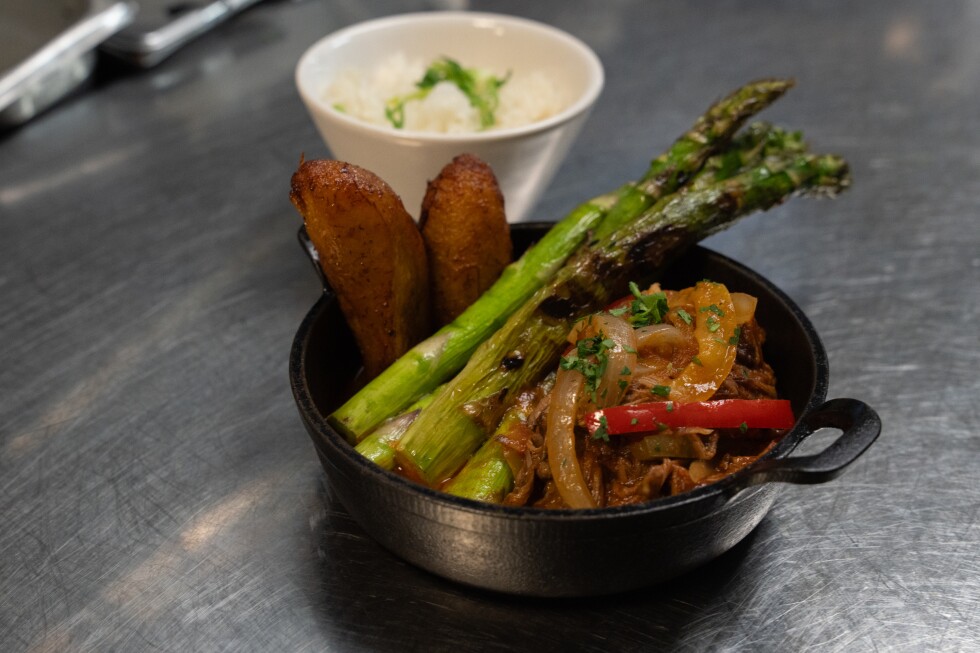
Working with a weight-loss specialist and the chain’s culinary director, Angel Roque, they developed the “GLP-Wonderful” menu for their locations in Philadelphia, Washington, Atlantic City, and Orlando. The menu features five classic Cuban dishes reformulated to be lower in calories while remaining high in protein and fiber.
“The pollo asado on our regular menu has nearly 1,000 calories,” Roque explained. “On the GLP-1 menu, that’s reduced to 400 calories, but still heavy on protein and fiber. It was important to maintain flavor and color to stimulate appetites.”
The specialized menu has boosted business, with Gutin estimating that 10-20 groups at each location weekly include at least one person requesting the GLP-Wonderful options. “People say, ‘Thank you for serving us,'” he noted.
Major restaurant chains have also embraced the small-plate trend. Olive Garden rolled out its seven-item “Lighter Portions” menu nationwide in January, acknowledging that GLP-1 users were one consideration among several target audiences seeking healthier or more affordable options.
“There is a consumer group that believes in abundance, but abundance is different for everybody,” explained Rick Cardenas, president and CEO of Darden Restaurants, Olive Garden’s parent company. “So consumers can choose. We’re not changing our entire menu to make it smaller portions.”
Other chains following suit include P.F. Chang’s, which began offering medium-sized portions last fall, The Cheesecake Factory with its “Bites and Bowls” menu, and TGI Fridays, currently testing an “Eat Like A Kid” menu with reduced portion sizes.
While small plates aren’t new – tapas restaurants were popular two decades ago – menu consultant Webster believes the current trend represents a more significant, long-term shift. Unlike previous trends tied to specific cuisines, this movement spans all restaurant types. Additionally, growing consumer awareness of food waste has made smaller portions more appealing.
“I think it is a core need that consumers have, and a demand that has been lingering under the surface for a long time because restaurant meals, particularly at chains, have become so large,” Webster said. “Sure, it sounds great to take leftovers home, but they never taste as good.”
This sentiment resonates with diners like Jack Pless, who recently visited Barkeaters Restaurant in Shelburne, Vermont. In his 60s and a former restaurant owner, Pless appreciated the restaurant’s “Teeny Tuesday” menu because his appetite has diminished with age.
“So many times you go out to restaurants, especially me or my wife, and we’ll take home a box and it’ll sit in the refrigerator for two, three days and start to grow a beard,” he said.
Julie Finestone, Barkeaters’ co-owner, introduced the Teeny Tuesday menu to boost weekday business during winter months. Though initially concerned about profitability with lower-priced items like $12 reuben sliders, she’s been pleasantly surprised by increased business volume.
“Some people, it’s dietary. Some have smaller appetites. Some people don’t like to overindulge in the middle of the week,” Finestone said. “I think that it just spoke to people.”
Fact Checker
Verify the accuracy of this article using The Disinformation Commission analysis and real-time sources.

10 Comments
Smaller portions and lower prices could really help attract more budget-conscious diners during these inflationary times. Curious to see if this trend sticks around even as the economy improves.
Good point. The health and value proposition may outlast the current economic conditions, making this a lasting shift in the restaurant industry.
It’s savvy for restaurants to offer more small plate and mini meal options. Gives customers control over their spending and calorie intake. Good to see the industry adapting to evolving preferences.
This trend toward smaller, less expensive menu items reflects the diverse dining needs of modern consumers. From budget-conscious to health-conscious, restaurants seem to be responding well.
I like that restaurants are catering to the growing desire for snack-sized portions, not just traditional kids’ menus. Flexibility is key.
Interesting to see restaurants adapt their menus to changing customer preferences. Smaller portions can help folks watch their budgets and waistlines, especially as inflation impacts spending power.
Agreed, the focus on value and health is smart. Gives diners more flexibility to sample different dishes or manage portions.
I wonder if the rise of snacking culture, especially among younger consumers, is a key driver behind this shift to smaller portions. Restaurants seem to be getting creative in responding to changing preferences.
Good observation. The younger generation’s tendency to graze throughout the day likely plays a big role in this menu evolution.
This seems like a win-win for restaurants and customers. Patrons get more flexibility and control, while eateries cater to diverse dining needs. Interested to see how far this trend goes.