


Listen to the article
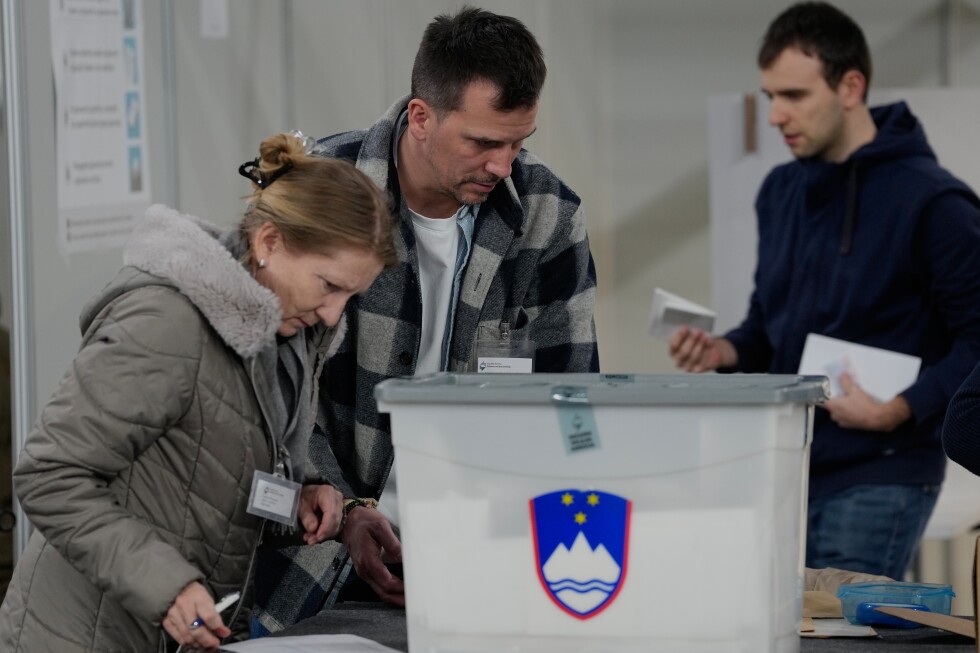
Slovenians went to the polls Sunday in a closely contested parliamentary election that has sharply divided the small European Union nation between pro-EU liberals and right-wing populists, with allegations of foreign espionage adding an extraordinary twist to the campaign.
The election primarily pits incumbent Prime Minister Robert Golob’s Freedom Movement against the Slovenian Democratic Party (SDS), led by former three-time premier Janez Jansa, a populist politician known for his admiration of former U.S. President Donald Trump.
Recent polls show the two main parties running neck and neck, with neither expected to secure a clear majority in the 90-member parliament. This tight race means smaller parties could become crucial in forming the next government, according to political analysts.
The outcome of this election carries significance beyond Slovenia’s borders. Golob’s government has positioned itself as a strong liberal voice within the 27-member EU bloc, while a victory for Jansa – a close ally of Hungary’s nationalist Prime Minister Viktor Orbán – would strengthen Europe’s growing populist movement.
“Although Slovenia is a small Balkan country, the elections taking place there could be seen as another sign of the rise of illiberal tendencies in Europe,” noted Helen Levy, a researcher at the Robert Schuman Foundation, in a recent analysis.
The campaign took a dramatic turn following allegations of foreign interference that shocked this traditionally moderate EU nation. A group of activists and journalists claimed that a series of secret video recordings showing alleged government-tied corruption were aimed at influencing voters. These allegations further suggested Jansa’s party and a private foreign agency were connected to the recordings.
Slovenian authorities have confirmed that representatives from Black Cube, a private intelligence agency run by former Israeli intelligence officers, visited Slovenia four times in recent months. One of these visits reportedly included a street in Ljubljana where Jansa’s party headquarters is located. Jansa has acknowledged having contacts with a Black Cube adviser but denied any election interference.
The controversy prompted Prime Minister Golob to call for an EU investigation during an EU summit in Brussels last Thursday. “It is so important not to act now on behalf of Slovenia, but to act now to protect every other state that will come into election process in the next months,” Golob told reporters. “I am absolutely confident that Slovenian voters will be able to recognize that foreign interference is something that shall never be allowed.”
Black Cube, which has been involved in other controversies including an undercover operation on behalf of disgraced film mogul Harvey Weinstein, did not immediately respond to requests for comment. The company has maintained that all its activities are legal and ethical.
The election also highlights stark ideological differences between the two main candidates. Jansa has faced accusations of undermining press freedoms and the rule of law during his latest term in office from 2020 to 2022. He has characterized Golob’s government as a “crime syndicate” and pledged to “take back” what he describes as a captured state.
Meanwhile, Golob, a former energy company manager who came to power in 2022 as a fresh voice for disillusioned voters, has seen his government struggle with healthcare reforms and inconsistent tax policies. His administration has also taken strong foreign policy positions, including recognizing a Palestinian state earlier this year and banning top Israeli officials from entering Slovenia – positions that Jansa strongly opposes, as he maintains a pro-Israel stance.
Slovenian sociologist Samo Uhan told The Associated Press that “the biggest differences between the government and the opposition are reflected in their understanding of global developments,” noting that the electorate “has always been polarized.”
Slovenia has routinely alternated between liberal and conservative governments since gaining independence from Communist Yugoslavia in 1991. The Alpine nation of 2 million people joined both NATO and the EU in 2004, cementing its Western alignment.
As Slovenians cast their ballots today, they are not only deciding their country’s immediate future but potentially contributing to broader political trends across Europe.
Fact Checker
Verify the accuracy of this article using The Disinformation Commission analysis and real-time sources.

22 Comments
The allegations of foreign espionage add an intriguing twist to this election. I wonder what role, if any, external actors may be playing in shaping the political discourse and dynamics in Slovenia.
Regardless of the espionage claims, it’s crucial that the Slovenian people are able to freely exercise their democratic rights and choose their representatives without undue interference.
As an investor, I’ll be closely monitoring the results of this election and how it may impact the mining, metals, and energy sectors in Slovenia and the broader region.
A shift in government could potentially lead to changes in policies and regulations that affect the commodities industries, so it’s an important factor to consider.
The allegations of foreign espionage add an intriguing layer of complexity to this election. I hope the authorities are able to thoroughly investigate and address any issues that may undermine the integrity of the democratic process.
Regardless of the outcome, it’s crucial that the Slovenian people have confidence in their elected representatives and the stability of the political system.
The allegations of foreign espionage are concerning and raise questions about the integrity of the electoral process. I hope the authorities are able to thoroughly investigate and address any issues.
Regardless of the outcome, it’s crucial that the Slovenian people have confidence in the democratic process and the legitimacy of their elected representatives.
This election is a critical test for Slovenia’s political landscape. I’m curious to see how the mining, metals, and energy sectors will be impacted depending on the outcome.
Investors will be closely watching to assess any potential shifts in regulations, policies, or investment opportunities in these industries.
This election in Slovenia looks like a tight race between pro-EU liberals and right-wing populists. It will be interesting to see how the smaller parties perform and impact the next government formation.
The outcome could have broader implications for the EU’s political landscape, given Slovenia’s position as a relatively small but influential member state.
This election in Slovenia seems to be a microcosm of the broader political tensions within the EU. It will be interesting to see how the results may impact the mining, metals, and energy sectors in the region.
Investors will be closely watching to assess any potential shifts in policies, regulations, or investment opportunities that could arise from a change in government.
The tight race between the pro-EU liberals and right-wing populists highlights the ongoing tensions and divisions within Slovenian society. I hope the election process remains peaceful and transparent.
Regardless of the outcome, it will be crucial for the next government to prioritize unity, stability, and the well-being of all Slovenian citizens.
This election seems to be a battle between pro-EU liberals and right-wing populists, with significant implications for Slovenia’s political and economic future. I’m curious to see how it plays out.
Investors in mining, metals, and energy will be closely monitoring the results to assess any potential impacts on their investments and opportunities in the region.
As a mining and commodities enthusiast, I’ll be watching this election closely to see how it may impact the industries I follow. A shift in government could lead to changes in policies and regulations.
Regardless of the outcome, I hope the next government will prioritize policies that support the sustainable development and growth of these vital sectors.
The potential strengthening of Europe’s populist movement through a victory for Jansa’s party is concerning. It could have broader implications for the EU’s commitment to liberal democratic values.
At the same time, it’s important to respect the will of the Slovenian people and the democratic process, even if the outcome may not align with one’s personal preferences.