


Listen to the article
Kenya’s Clean Energy Revolution Halts as Koko Networks Shuts Down
A pioneering clean energy initiative that transformed cooking for over 1.5 million Kenyan households has abruptly ceased operations, leaving thousands of residents without affordable fuel alternatives. Koko Networks, which operated more than 3,000 bioethanol dispensers across Kenya, has shut down its distribution system after failing to secure crucial government approvals.
For nearly a decade, Koko Networks helped transition Kenyan homes away from smoky charcoal stoves to cleaner bioethanol cooking fuel. The system was designed to be accessible and affordable – customers could refill cooking canisters with just a few shillings, similar to purchasing mobile phone airtime.
“This was a life changer for me,” said Grace Kathambi, a Koko customer. “I could not afford the $8 needed to refill a gas cylinder, and Koko was my best alternative. With about 30 U.S. cents, I could buy enough Koko fuel to cook.”
The shutdown has been particularly devastating in informal settlements like Kibera, Nairobi’s largest slum, where most Koko outlets have now closed. Some locations have completely removed their bioethanol dispensers, marking the end of a service once celebrated as a symbol of Kenya’s push toward cleaner household energy.
Fredrick Onchenge, who operated a Koko outlet that served up to 50 customers daily, expressed his shock at the sudden closure. “Initially, I was confused,” he said. “Then it dawned on me what had just happened. My livelihood was gone. I tried calling the salesperson, but their phone was switched off.”
The collapse stems from a regulatory dispute between Koko Networks and Kenyan authorities. Since 2014, the company had imported bioethanol products, but that ended in 2023 when the government withheld its import permit. This forced Koko to rely on local sources that proved both unreliable and more expensive.
More critically, Koko failed to obtain the government letter of authorization needed to sell carbon credits – permits that allow holders to emit certain amounts of greenhouse gases. These credits were central to Koko’s business model, helping to unlock millions of dollars in international financing that kept fuel prices affordable for consumers.
On January 30, Koko Networks – backed by investors including the Microsoft Climate Innovation Fund and South Africa’s Rand Merchant Bank – announced that without these approvals, its operation had become financially unsustainable.
David Ndii, Kenya’s presidential adviser on economic affairs, described the situation as “uniquely multidimensional,” citing concerns about the Paris Agreement framework, questions around cookstove carbon credit credibility, Kenya’s climate policies, carbon market regulations, and Koko’s business model transparency. Ndii dismissed the possibility of government intervention, saying, “Even good doctors lose patients.”
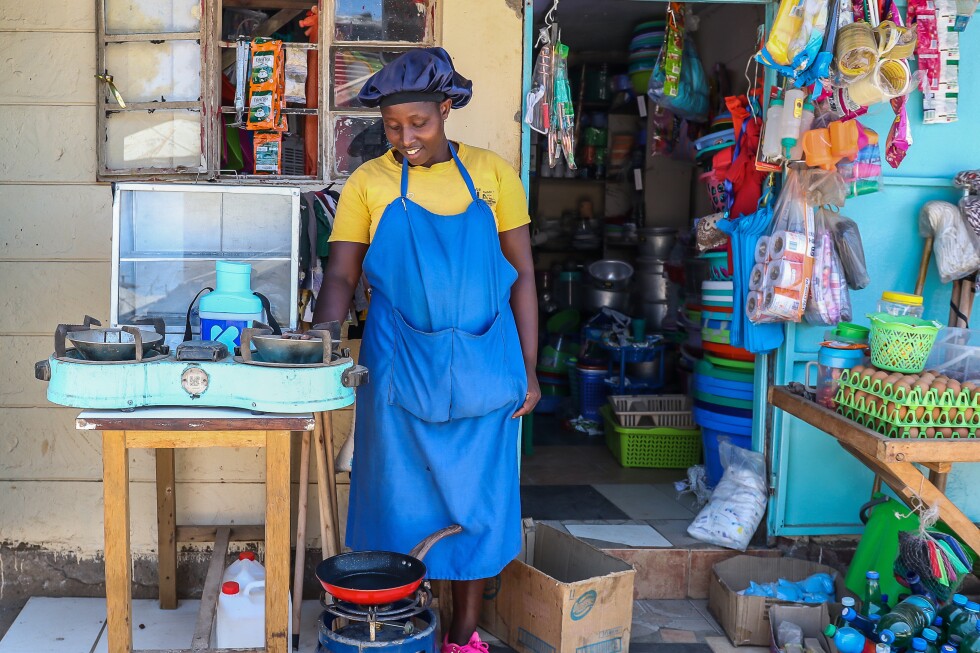
For customers, the end came abruptly. Many received only a text message announcing the shutdown, leaving their double-burner stoves idle.
“I cannot afford to use gas,” said Margaret Auma, another affected customer. “Koko made life very easy for those of us who earn little from casual jobs. We feel abandoned, yet it’s not our fault.”
Energy analysts say the collapse exposes fundamental weaknesses in how clean cooking initiatives are financed across Africa. Amos Wemanya, a senior analyst on renewable energy at Power Shift Africa, described the clean cooking situation as “a serious crisis.”
“This is not just about emissions or climate targets. It is about development, health, dignity and household survival,” Wemanya explained.
He criticized business models heavily dependent on carbon credits, suggesting they prioritize market mechanisms over people’s needs. “We are not going to solve the clean cooking challenge through carbon math or carbon credit spreadsheets,” he said. “Carbon markets allow polluters to continue emitting while households, who are supposed to be the beneficiaries, still pay for the stoves and bear the risks when projects fail.”
Wemanya argues that the Koko collapse demonstrates the need to shift priorities toward affordable electricity powered by renewable energy, especially in rural areas. “The reality is that gas-based solutions were never a long-term climate solution. They simply shift households from firewood to imported fossil fuels,” he noted.
Meanwhile, affected households face difficult choices. Many must now return to using charcoal, despite its health and environmental impacts, or somehow find money for more expensive liquefied petroleum gas.
“What are we supposed to do? Go back to using charcoal in our one-room houses?” Auma asked. “That is the smoke and sickness we were trying to escape.”
Fact Checker
Verify the accuracy of this article using The Disinformation Commission analysis and real-time sources.

11 Comments
The shutdown of Koko Networks is a major blow to clean cooking efforts in Kenya. Their bioethanol model was a promising alternative to expensive and dirty charcoal stoves. I hope the government can work to quickly revive and scale similar sustainable biofuel initiatives to serve low-income communities.
Absolutely, the government needs to prioritize supporting clean cooking solutions like Koko Networks. Ensuring access to affordable and reliable clean fuel is crucial for improving health and environmental outcomes, especially in disadvantaged urban areas.
The shutdown of Koko Networks is a significant setback in Kenya’s push for cleaner household energy. Their model of making bioethanol cooking fuel widely accessible and affordable was an important step. I hope this prompts a renewed focus on policies supporting sustainable biofuel initiatives.
This is really unfortunate news. Koko Networks was providing an affordable and accessible clean cooking solution that was making a real difference in Kenyan households, especially in urban slums. The sudden loss of this program is a setback for Kenya’s transition away from polluting fuels.
This is quite disappointing news about the shutdown of Koko Networks in Kenya. Their bioethanol cooking fuel model seemed to be a promising clean energy solution, especially for low-income households. I hope the government can work to support similar initiatives going forward.
Agreed, the loss of affordable and accessible clean cooking options is a setback for Kenya’s energy transition. Policymakers should explore ways to revive and scale sustainable biofuel programs to serve underserved communities.
This is a shame. Koko Networks seemed to be providing a valuable service by making clean cooking fuel available and affordable for Kenyan households. The sudden closure is a real loss, especially for low-income communities who relied on their network. Hopefully alternative solutions can emerge.
The collapse of Koko Networks is a disappointing development in Kenya’s clean energy transition. Their bioethanol distribution model was an innovative approach to increase access to cleaner cooking options. I wonder what the underlying issues were that led to the sudden shutdown.
Yes, it’s puzzling why a seemingly successful initiative like Koko Networks was unable to secure the necessary government approvals to continue operating. Policymakers should investigate the reasons and work to create a more enabling environment for such clean energy enterprises.
It’s concerning to see a pioneering clean energy project like Koko Networks shut down due to lack of government approvals. Reliable access to affordable clean cooking fuel is crucial, especially in urban slums. This is a worrying development that needs to be addressed.
You’re right, this is a major blow to Kenya’s efforts to transition away from polluting charcoal stoves. The government should urgently review the regulatory framework to enable the success of innovative clean cooking solutions like Koko Networks.