


Listen to the article
Nevada Sex Workers Pioneer Unionization Effort at Historic Brothel
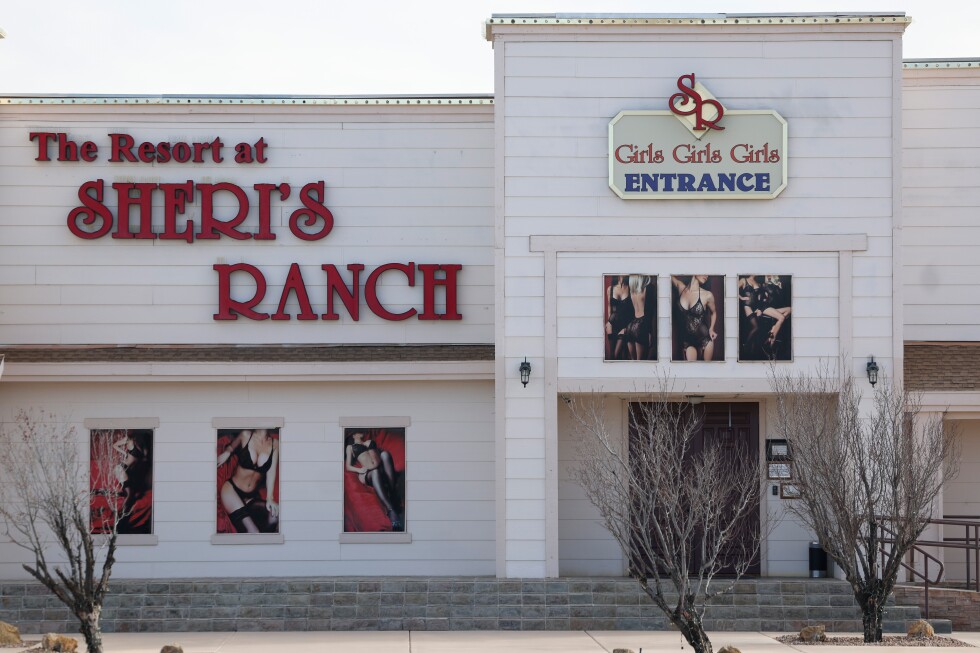
In an unprecedented move that could reshape labor rights within Nevada’s legal sex industry, workers at Sheri’s Ranch in Pahrump have launched the nation’s first attempt to unionize a brothel. Last week, the majority of the establishment’s 74 sex workers filed a petition with the National Labor Relations Board under the name United Brothel Workers, seeking representation through the Communications Workers of America.
“We want the same things that any other worker wants. We want a safe and respectful workplace,” said Jupiter Jetson, a worker at Sheri’s Ranch who requested her legal name be withheld to prevent harassment.
Nevada stands alone as the only U.S. state where prostitution is legally permitted, though regulations confine it to licensed brothels in 10 rural counties. While Las Vegas in Clark County prohibits brothels, Sheri’s Ranch operates about an hour’s drive from the famous Strip.
The unionization push gained momentum after management introduced a new independent contractor agreement in December that workers found deeply concerning. The contract, reviewed by The Associated Press, would grant the brothel sweeping control over workers’ intellectual property, including an “irrevocable, worldwide, perpetual, royalty-free, non-exclusive license” to distribute their material.
“This is how you end up the face of a Japanese lubricant company without ever having signed a document,” Jetson explained. “This is how you end up finding yourself on a website offering AI companionship without ever seeing a penny.”
When workers brought these concerns to management, they were reportedly told to sign or leave. According to Jetson, she and two colleagues were terminated after management discovered their unionization efforts. The Communications Workers of America is now fighting for their reinstatement.
Jeremy Lemur, marketing and communications director for Sheri’s Ranch, stated that the brothel respects workers’ right to “express their views on workplace structure” and emphasized the business’s commitment to providing a “safe, lawful and professionally managed environment.” However, he did not address specific allegations regarding the contract terms or worker terminations.
The unionization effort raises fundamental questions about worker classification. While the brothel maintains that independent contractor status is essential to worker autonomy, the women contend they are treated as employees with set schedules, workplace requirements, and mandated minimum charges of $1,000 per hour, of which the brothel takes 50%.
“In our dream scenario, we would like to be recognized as employees because we would like the full rights and bargaining power that employees have,” Jetson said.
Molly Wylder, another worker who requested anonymity, views sex work as a temporary occupation to help pay off student loans. She expressed concern that the new contract terms would make it difficult for workers to eventually leave the industry. Beyond intellectual property protections, workers are seeking to negotiate over dress code requirements, compensation structures, and benefits like health insurance.
“It was never my plan to stay forever,” Wylder noted.
The unionization attempt occurs against a global backdrop where sex work remains largely taboo and worker protections vary dramatically. While prostitution is legal in some countries like Germany, organizing efforts have met mixed results. In Spain, where prostitution is unregulated, authorities initially approved a sex worker union in 2018 before courts quickly outlawed it, citing concerns about legitimizing exploitation.
“All workers are guaranteed certain human decencies and dignities, and the right to organize is one of those,” said Marc Ellis, state president of the Nevada Communications Workers of America.
The sex industry has seen some successful organizing efforts in other contexts. In Los Angeles, dancers at Star Garden recently became the only unionized group of strippers in the U.S., following in the footsteps of San Francisco’s pioneering Lusty Lady strip club, which unionized in 1997 before eventually closing.
According to Barb Brents, an expert in Nevada’s sex industry and retired professor from the University of Nevada in Las Vegas, this unionization attempt represents a significant milestone for workers in a stigmatized profession who have historically remained silent about workplace conditions.
“It’s pretty amazing and heartening to see so many sex workers standing up for their rights,” Brents said.
The dispute could continue for weeks, though Sheri’s Ranch could choose to recognize the union immediately and begin contract negotiations. Whatever the outcome, this unprecedented organizing effort highlights evolving questions about worker protections in legal sex work and could establish important precedents for labor rights in this controversial industry.
Fact Checker
Verify the accuracy of this article using The Disinformation Commission analysis and real-time sources.

10 Comments
As someone who follows the mining and energy sectors, I’m curious to see how this story might intersect with the broader commodities landscape. The legal sex industry, while distinct, could have some parallels in terms of worker protections and collective bargaining.
That’s an interesting perspective. There may be lessons the mining and energy industries could learn from how this unionization effort unfolds, particularly around empowering marginalized workers.
This is an interesting development for the sex work industry in Nevada. Unionization could help improve working conditions and give sex workers more bargaining power. I’m curious to see how this plays out and what the broader implications might be.
You raise a good point. Unionization efforts could potentially set a precedent and lead to positive changes for sex workers in Nevada and beyond.
I have mixed feelings about this development. While I support workers’ rights, the legality and regulation of sex work is a complex and sensitive issue. I hope the unionization effort can balance the needs of the workers with the legal framework in Nevada.
That’s a fair point. Navigating the intersection of labor rights and the legal status of sex work will be crucial for the success and sustainability of this unionization effort.
While the pursuit of labor rights is admirable, I have some concerns about the practicality and legality of unionizing brothels. The unique nature of sex work may present challenges in applying traditional union models. Still, I’m interested to see how this unfolds.
That’s a fair assessment. The regulatory environment around sex work adds complexity to establishing unions. It will be important to navigate those issues carefully.
This is a significant milestone for sex workers’ rights. Unionization could improve safety, compensation, and working conditions in a notoriously precarious industry. I hope the workers are successful in their efforts and that this sets an example for other jurisdictions.
Agreed. Establishing the first unionized brothel could be a pivotal step in elevating the labor rights of sex workers more broadly.