


Listen to the article
Serbian Culture Minister Charged in Kushner-Linked Real Estate Controversy
Serbia’s prosecutor for organized crime has filed charges against Culture Minister Nikola Selaković and three other officials for alleged document forgery and abuse of office related to a contentious real estate development project linked to Jared Kushner, former U.S. President Donald Trump’s son-in-law.
The charges, announced Monday on the Public Prosecutor’s Office for Organized Crime website, stem from allegations that Selaković, a close ally of Serbian President Aleksandar Vučić, illegally removed protected cultural heritage status from a bombed-out military complex in central Belgrade by falsifying documentation.
At the center of the controversy is a 99-year lease agreement signed last year between the Serbian government and Affinity Global Development, a company connected to Kushner. The proposed $500 million development would transform the site into a luxury compound featuring a high-rise hotel, apartments, office spaces, and retail outlets.
Despite the criminal investigation, Serbian lawmakers passed special legislation last month to clear obstacles for construction. President Vučić has publicly supported the project, claiming it would strengthen Serbia’s relations with the United States. In a remarkable statement, Vučić even declared: “I am guilty. I am the one who wanted modernization of Serbia. I am the one who wanted to bring in a big investor.”
The president has gone further, suggesting he would pardon anyone convicted in the case, effectively undermining the judicial process before it has concluded. No trial date has been announced.
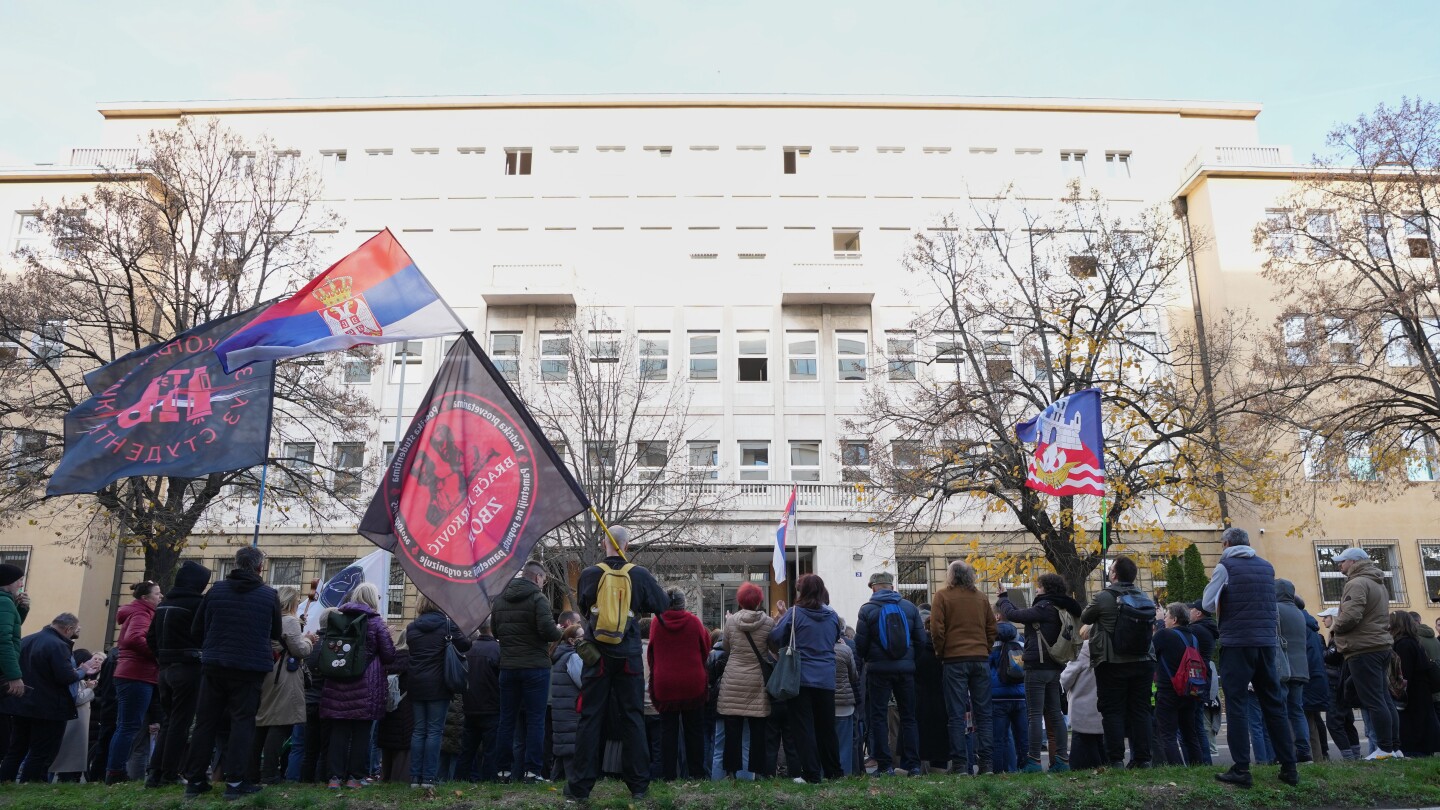
The development has sparked significant opposition from architectural experts and preservationists both within Serbia and internationally. Critics argue that the complex represents an important architectural monument from Yugoslavia’s mid-20th century period and symbolizes resistance to the 1999 NATO bombing campaign.
That 78-day bombing operation aimed to force then-President Slobodan Milošević to end his crackdown on separatist ethnic Albanians in Kosovo. The military action remains a sensitive subject in Serbia, where many citizens still view it as an unjustified aggression. The prospect of American investment transforming buildings damaged during that campaign has intensified public resistance to the project.
The controversy emerges against a backdrop of complex U.S.-Serbian relations. The United States recently imposed 35% tariffs on Serbian imports and sanctioned Serbia’s monopoly oil supplier, which is controlled by Russia. These actions reflect growing American concerns about Serbia’s alignment with Russia while simultaneously pursuing European Union membership.
For investors and market observers, the case highlights the political and legal risks associated with high-profile real estate investments in countries with shifting regulatory environments. The Serbian government’s willingness to create special legal frameworks for specific investors may attract some developers while raising concerns about regulatory predictability and rule of law.
The criminal charges against a sitting minister represent a significant political development in Serbia, a country where President Vučić’s government has faced criticism from international observers for democratic backsliding and increasing control over state institutions.
If the development proceeds despite the legal challenges, it would mark one of the largest foreign investments in Serbian real estate in recent years. However, the project’s future remains uncertain as the criminal proceedings unfold and public opposition continues.
The controversy also reflects broader tensions in Serbia’s post-Yugoslav identity and its complicated relationship with the West. As the country navigates between European integration aspirations and historical ties to Russia, projects like the Kushner-linked development become symbols of competing visions for Serbia’s future and its relationship with the United States.
Fact Checker
Verify the accuracy of this article using The Disinformation Commission analysis and real-time sources.

14 Comments
The connection to Jared Kushner and the Trump administration adds an interesting geopolitical angle to this story. I’ll be following this case closely to see how it unfolds.
The fact that special legislation was passed to clear obstacles for construction is a red flag. One has to wonder if there are broader political motivations at play here.
Accusations of document forgery and abuse of office are serious charges. Transparency and accountability are crucial, especially when high-profile political figures are involved.
It’s concerning to hear that the government is pushing forward with the project despite the ongoing criminal investigation. This raises questions about the integrity of the process.
The involvement of Jared Kushner and the Trump administration adds an intriguing geopolitical dimension to this story. I’ll be following this case closely to see how it impacts Serbia’s relationships with the US and other global powers.
The fact that special legislation was passed to clear the way for construction is concerning. It suggests that political interests may be taking priority over transparency and due process.
The allegations of document forgery and abuse of office are deeply concerning. I hope the investigation is thorough and impartial, and that any wrongdoing is swiftly addressed.
The apparent political pressure to push this project forward despite the ongoing criminal probe raises serious questions about the integrity of the process.
This case underscores the need for stronger anti-corruption measures and independent oversight in the development of large-scale projects, especially those with connections to high-profile political figures.
I’m curious to see how the Serbian public and international community respond to these allegations and the government’s handling of the situation.
This case highlights the need for robust oversight and checks and balances in the development of large-scale projects, especially those involving high-level officials and foreign investors.
It will be important for the public to have access to detailed information about the project’s financing, environmental assessments, and community impact studies.
This is a complex issue with allegations of corruption and abuse of power. It will be interesting to see how the investigation unfolds and what evidence is uncovered.
The proposed $500 million development project seems quite ambitious. I wonder how the local community views this plan and what the economic and environmental impacts could be.