


Listen to the article
Senators from opposing parties have joined forces to introduce legislation aimed at prohibiting members of Congress from trading stocks, an initiative that has garnered widespread public support but has consistently failed to gain traction on Capitol Hill.
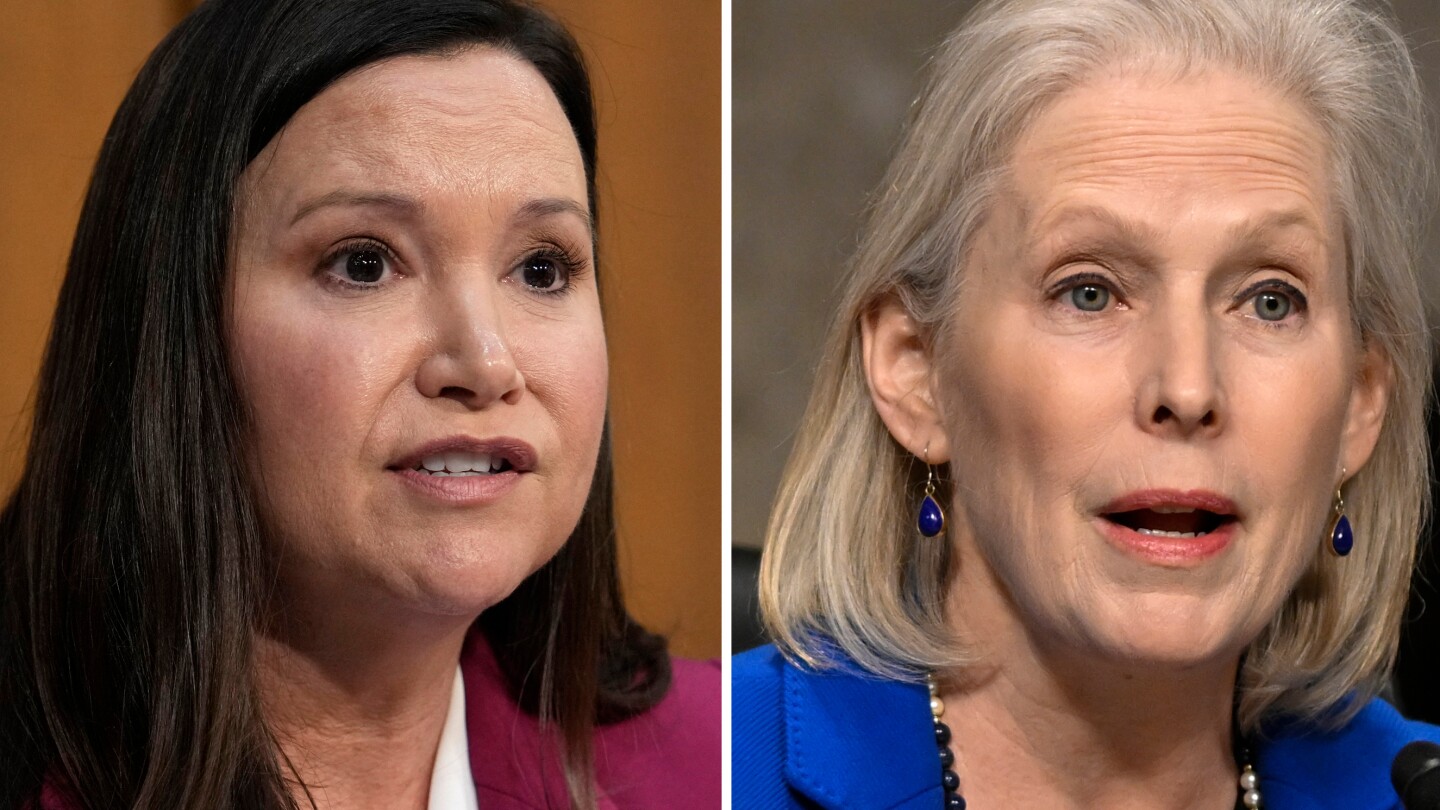
Democratic Sen. Kirsten Gillibrand of New York and Republican Sen. Ashley Moody of Florida unveiled their bipartisan bill Thursday, which would bar lawmakers and their immediate families from trading or owning individual stocks. The proposal represents the latest effort in a series of similar initiatives in both chambers of Congress, signaling growing momentum across party lines.
“There’s an American consensus around this, not a partisan consensus, that members of Congress and, frankly, senior members of administrations and the White House, shouldn’t be making money off the backs of the American people,” Gillibrand told The Associated Press in an interview.
The legislation comes amid increased scrutiny of congressional stock trading practices, with several lawmakers facing ethics investigations and criminal probes in recent years. Critics argue that members of Congress have access to sensitive information not available to the general public, potentially allowing them to profit from their positions through strategic stock transactions.
The Gillibrand-Moody bill mirrors a House proposal introduced last year by Rep. Chip Roy (R-Texas) and Rep. Seth Magaziner (D-Rhode Island). That bill, which has accumulated 125 cosponsors, would implement a complete ban on members buying or selling individual stocks.
In the House, Republican Rep. Anna Paulina Luna of Florida has attempted to bypass party leadership by gathering signatures for a discharge petition to force a vote on the Roy-Magaziner bill. So far, she has secured 79 of the necessary 218 signatures, with Democrats making up the majority of supporters.
House Republican leadership has put forward an alternative, less stringent proposal that would prohibit lawmakers and their spouses from purchasing individual stocks but would not require divestment of existing holdings. The leadership-backed bill would mandate a seven-day public notice before a lawmaker sells stock. While the bill advanced in committee Wednesday, its future remains uncertain.
House Democrats, including Reps. Magaziner and Alexandria Ocasio-Cortez of New York, expressed disappointment with the Republican leadership’s approach, stating that it “fails to deliver the reform that is needed.”
Under the Senate bill proposed by Gillibrand and Moody, lawmakers would have 180 days after the bill’s implementation to divest their individual stock holdings, while newly elected members would have 90 days from their swearing-in date. The legislation would also prohibit trading and ownership of certain other financial assets, including securities, commodities, and futures.
“The American people must be able to trust that their elected officials are focused on results for the American people and not focused on profiting from their positions,” Moody said in a written statement.
Notably, the legislation exempts the president and vice president from its restrictions, a carveout likely to face criticism from some Democrats. Similar concerns were raised last year regarding a bill that prohibited members of Congress from issuing certain cryptocurrencies but did not apply the same restrictions to the executive branch.
Gillibrand acknowledged this limitation but defended the bill as “a good place to start,” adding, “I don’t think we have to allow the perfect to be the enemy of the good.”
Moody emphasized the constitutional significance of congressional financial integrity, noting that Congress’s “power of the purse” demands that its members not have “any other interests in mind, financial or otherwise.”
Whether the bill will advance to a vote in the Senate remains uncertain. A similar proposal introduced by Gillibrand and Republican Sen. Josh Hawley of Missouri in 2023 never progressed beyond committee.
The issue continues to resonate with voters, potentially providing political leverage for both sponsors. Moody is campaigning for her first full term in Florida this year after being appointed to fill Marco Rubio’s seat, while Gillibrand chairs the Senate Democrats’ campaign committee.
“The time has come,” Gillibrand declared. “We have consensus, and there’s a drumbeat of people who want to get this done.”
Fact Checker
Verify the accuracy of this article using The Disinformation Commission analysis and real-time sources.

6 Comments
I’m glad to see Senators from both parties working together on this. Banning lawmakers from trading individual stocks is a common-sense reform that could reduce unethical behavior and increase transparency. Curious to see if this bill can gain traction.
Agreed, this is a positive step towards cleaning up Capitol Hill. Even if it’s a tough sell, I hope they can build enough momentum to get it passed. The public deserves representatives who are focused on serving the national interest, not their own portfolios.
This is a complex issue with valid arguments on both sides. On one hand, banning stock trading could reduce conflicts of interest. But on the other, some may argue it infringes on lawmakers’ financial rights. It will be interesting to see how the debate unfolds.
This is an important issue that deserves bipartisan action. Lawmakers shouldn’t be able to profit from insider information or create conflicts of interest. A ban on stock trading would help restore public trust in Congress.
While I’m generally skeptical of lawmakers’ ability to self-regulate, a bipartisan effort to ban stock trading does seem like a reasonable measure. It could help mitigate potential conflicts of interest and insider trading concerns. I’ll be watching this closely.
Ending stock trading by Congress members is an idea that has broad public support, and I’m glad to see it gaining bipartisan momentum. Increased transparency and accountability in this area could go a long way toward restoring faith in government institutions.