


Listen to the article
Iran’s Deadly Crackdown on Dissent Leaves Cities Scarred, Thousands Dead
The bloodiest suppression of protests since Iran’s 1979 Islamic Revolution is gradually becoming visible, despite authorities severing the Islamic Republic from the internet and much of the outside world.
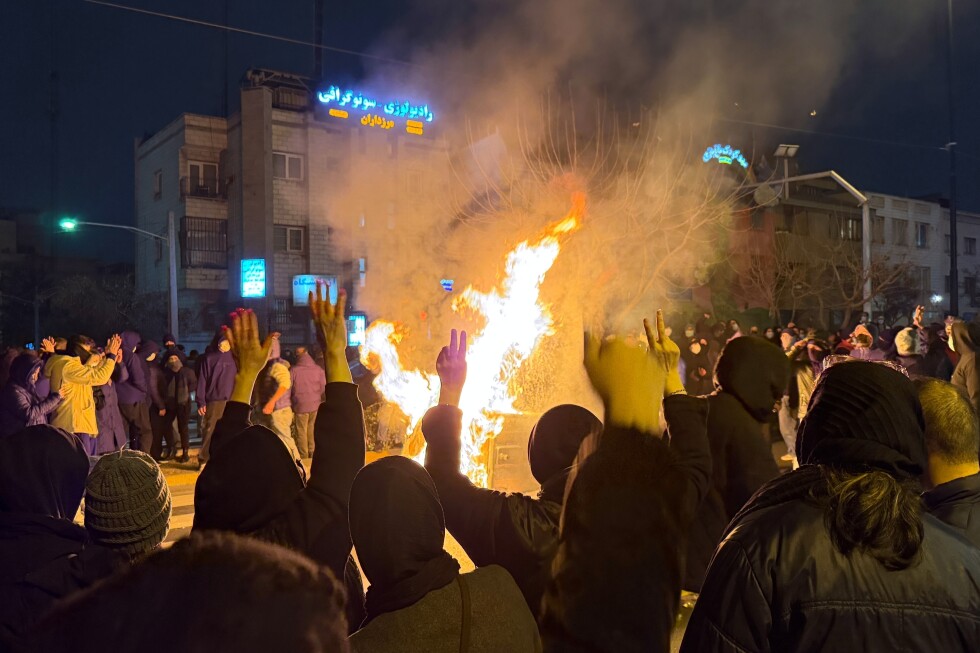
Across Iran, cities and towns bear the scars of recent violence. The acrid smell of smoke hangs in the air as damaged mosques and government offices line streets. Banks stand torched, their ATMs smashed and unusable. According to an Associated Press compilation of reports from the state-run IRNA news agency covering more than 20 cities, officials estimate the damage at a minimum of $125 million.
Human rights organizations report that the death toll of demonstrators continues to rise dramatically. Activists warn that Iranian authorities are employing familiar tactics, but at an unprecedented scale – firing from rooftops into crowds, shooting birdshot at protesters, and deploying motorcycle-riding paramilitary Revolutionary Guard volunteers to beat and detain those unable to escape.
“The vast majority of protesters were peaceful. The video footage shows crowds of people – including children and families – chanting, dancing around bonfires, marching on their streets,” said Raha Bahreini of Amnesty International. “The authorities have opened fire unlawfully.”
The killing of peaceful protesters and threats of mass executions have become a red line for potential military action from U.S. President Donald Trump. American naval forces, including an aircraft carrier, are approaching the Middle East, potentially enabling Trump to launch another attack on Iran following last year’s bombing of its nuclear enrichment facilities. Such action risks igniting a broader regional conflict.
Iran’s mission to the United Nations did not respond to detailed questions from the Associated Press regarding the crackdown.
The demonstrations began on December 28 at Tehran’s historic Grand Bazaar, initially protesting the collapse of Iran’s currency, the rial, before spreading nationwide. Tensions escalated dramatically on January 8, following calls for demonstrations by Iran’s exiled crown prince, Reza Pahlavi. Witnesses in Tehran told AP reporters that they observed tens of thousands of protesters on the streets before authorities cut internet and phone communications. As digital blackouts spread, gunfire echoed through Tehran’s streets.
“Many witnesses said they had never seen such a large number of protesters on the streets,” said Bahar Saba of Human Rights Watch. “Iranian authorities have repeatedly shown they have no answers other than bullets and brutal repression to people taking to the streets.”
Ali Akbar Pourjamshidian, a deputy interior minister speaking on state television Wednesday, acknowledged the violence intensified on January 8, noting, “More than 400 cities were involved.”
By January 9, Revolutionary Guard General Hossein Yekta, previously identified as leading plainclothes units of the force, appeared on Iranian state television warning parents to keep their children at home. “Tonight you all must be vigilant. Tonight is the night for keeping mosques, all bases everywhere filled with ‘Hezbollahi,'” Yekta said, using a term that refers to fervent supporters of Iran’s theocratic government.
Already weakened by Israel’s 12-day military campaign against Iran in June, authorities apparently decided to employ full-scale violence to end the demonstrations, according to experts.
“I think the regime viewed it as this was a moment of existential threat and that they could either allow it to play out and allow the protests to build and allow foreign powers to increase their rhetoric and increase their demands on Iran,” said Afshon Ostovar, an expert on the Revolutionary Guard and professor at the Naval Postgraduate School in Monterey, California. “Or they could turn out the lights, kill as many people as necessary… and hope they could get away with it. And I think that’s what they ultimately did.”
In Iran, one of the primary methods the theocracy uses to suppress demonstrations is through the Basij, the volunteer arm of the Revolutionary Guard. Mosques throughout Iran include facilities for the Basij. Guard General Heydar Baba Ahmadi was quoted by the semiofficial Mehr news agency in 2024 as estimating that “79% of Basij resistance bases are located in mosques and 5% in other holy places.”
Videos show Basij members carrying long guns, batons, and pellet guns. Anti-riot police appear in helmets and body armor, armed with assault rifles and submachine guns. Footage reveals security forces firing shotguns into crowds – an action authorities deny despite corpses showing wounds consistent with metal birdshot. Scores of protesters have reportedly suffered blinding eye wounds from birdshot, similar to injuries seen during the 2022 protests following Mahsa Amini’s death.
Iran’s semiofficial ILNA news agency reported that Tehran’s Farabi Eye Hospital, the country’s premier facility for eye injuries, called in “all current and retired doctors” to assist the wounded.
For two weeks, Iran offered no overall casualty figures. Then on Wednesday, the government announced 3,117 people were killed, including 2,427 civilians and security forces. Pourjamshidian classified the remaining 690 dead as “terrorists.”
These figures conflict with those from the U.S.-based Human Rights Activists News Agency, which on Saturday placed the death toll at 5,137, based on activists inside Iran verifying fatalities against public records and witness statements. The agency reported 4,834 were demonstrators, 208 were government-affiliated personnel, 54 were children, and 41 were civilians not participating in protests.
Death tolls in Iran have historically been manipulated for political purposes. However, the fact that Iran’s theocracy offered any figure – and one that exceeds any previous political unrest in the country’s modern history – underscores the scale of the violence. It also provides justification for the ongoing mass arrest campaign and internet shutdown, with state media reporting dozens to hundreds of detentions daily.
Uncertainty now looms for Iran’s leadership regarding potential U.S. action. Traditionally, Iranians hold memorial services 40 days after deaths, meaning the country could face renewed demonstrations around February 17. Videos from Behesht-e Zahra, the massive cemetery outside Tehran, show mourners chanting: “Death to Khamenei!”
Satellite photos analyzed by the AP reveal large numbers of cars daily at the southern reaches of Behesht-e Zahra, where those killed in the demonstrations are being buried.
Elaheh Mohammadi, a journalist at Tehran’s pro-reform newspaper Ham Mihan, recently noted the publication had been shut down by authorities. She said journalists had been working on stories about Behesht-e Zahra they weren’t permitted to publish.
“We send out a message to let people know we’re still alive,” Mohammadi wrote online. “The city smells of death. Hard days have passed and everyone is stunned; a whole country is in mourning, a whole country is holding back tears, a whole country has a lump in its throat.”
Fact Checker
Verify the accuracy of this article using The Disinformation Commission analysis and real-time sources.

17 Comments
It’s horrifying to see the brutal tactics the Iranian authorities are using – firing into crowds, using birdshot, and deploying paramilitary forces. This level of violence against peaceful protesters is unconscionable.
Agreed. The crackdown seems designed to terrorize the population into submission. But history has shown that this kind of heavy-handed repression often backfires and further inflames public anger.
I’m curious to see how this will impact Iran’s economy and political stability in the long run. The damage to infrastructure and the loss of life will likely have ripple effects that undermine the regime’s control.
That’s a good point. The economic costs of this crackdown, combined with the erosion of public trust and legitimacy, could significantly weaken the Iranian government’s position over time. The unrest seems far from over.
I’m curious to see how the international community responds to these events. Economic sanctions and diplomatic pressure may be needed to compel the Iranian regime to show more restraint. But the protesters also need tangible support and solidarity.
That’s a good point. The international response will be crucial. Iran needs to face real consequences for this level of violence against its own citizens. Providing aid and support to the protesters would also be an important step.
The scale of the damage and loss of life is truly staggering. I hope the world is paying close attention and takes strong action to hold the Iranian regime accountable. This is a human rights crisis that cannot be ignored.
The internet blackout makes it challenging to get a full picture, but the available information indicates a truly devastating response from the authorities. This will likely further inflame tensions and anger across the country.
Agreed. Cutting off internet access is a tactic to limit transparency and information flow, but it won’t stop people from expressing their frustrations. The world is watching, and Iran will face consequences for this brutal crackdown.
Tragic to see the scale of violence against peaceful protesters in Iran. This crackdown seems unprecedented in its brutality and scope. I hope the international community can put pressure on Iran to end the violence and respect human rights.
Yes, the reports of the damage to cities and the death toll are deeply concerning. The Iranian regime appears to be resorting to extreme measures to try to crush the protests.
It’s heartbreaking to see the images and accounts of the violence against civilians, including children and families. This crackdown seems intended to terrorize the population into submission, but it may only further inflame the protests.
Absolutely. The regime’s heavy-handed response is likely to backfire and galvanize more Iranians to join the protests. The world is watching, and Iran will face consequences for this brutal suppression of dissent.
The reports of mosques, banks, and government buildings being damaged or destroyed suggest the scale of the protests and the level of public anger. This is a complex and rapidly evolving situation that bears close watching.
This is a truly distressing situation. The level of violence and repression against peaceful protesters is horrifying. I hope the world is paying close attention and taking concrete steps to pressure the Iranian regime to end the crackdown.
The reports of the authorities employing familiar tactics like rooftop snipers and motorcycle-riding paramilitary forces are especially disturbing. This level of ruthlessness shows the regime’s desperation to cling to power.
The scale of the damage and loss of life is truly staggering. I hope the international community can find ways to support the protesters and hold the Iranian regime accountable for these human rights abuses.