


Listen to the article
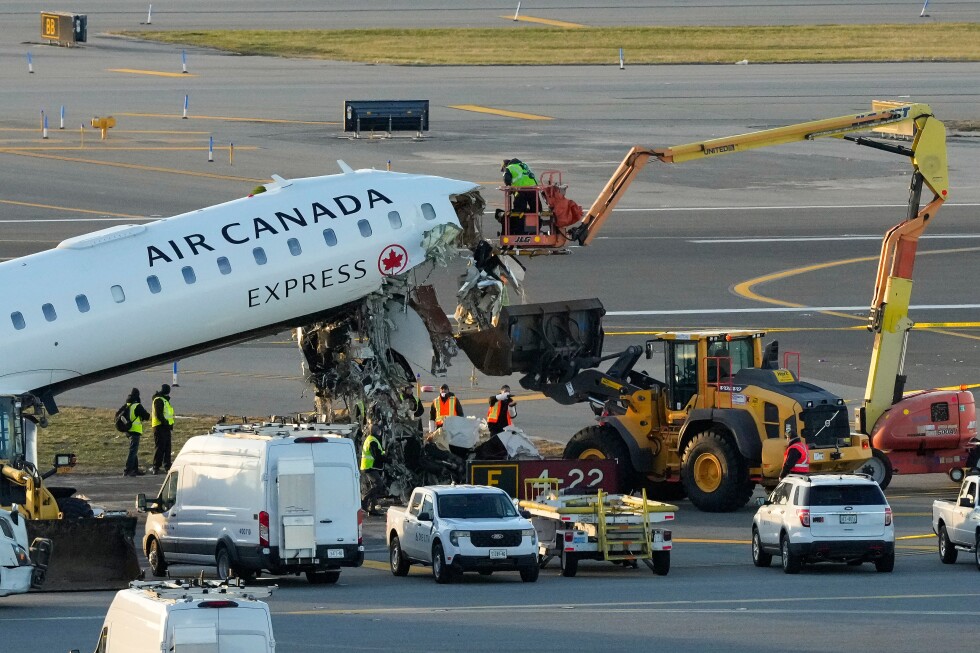
A collision at New York’s LaGuardia Airport between an Air Canada jet and a fire truck has exposed critical flaws in the airport’s ground collision prevention systems. The incident, which occurred Sunday, claimed the lives of both pilots and left dozens injured when the aircraft struck a fire truck that had just entered the runway during landing.
The National Transportation Safety Board (NTSB) has launched an investigation into the catastrophic failure of safety protocols. Preliminary findings revealed that an air traffic controller cleared the fire truck to cross the runway a mere 12 seconds before the plane, carrying 76 passengers, touched down. Despite frantic last-second calls from the tower ordering the truck to stop, the collision could not be averted.
Aviation safety experts note that such incidents typically involve multiple contributing factors, as the industry relies on overlapping layers of protection. The wreckage was moved to a secure hangar on Wednesday for comprehensive examination as investigators begin interviewing all involved parties and testing relevant equipment.
LaGuardia is equipped with the Airport Surface Detection System (ASDE-X), a sophisticated tracking system deployed at 35 major U.S. airports. This technology integrates radar data with information from transponders in aircraft and ground vehicles to provide controllers with a comprehensive view of all ground movements. The system is designed to trigger alarms when potential collisions are detected.
The ASDE-X system has previously prevented numerous accidents. Last August, it alerted controllers to a potential collision between a private jet and a Southwest Airlines plane in San Diego, allowing them to intervene before the aircraft came within 100 feet of each other. Similarly, the system prevented a JetBlue aircraft from striking another plane crossing a runway in Boston in 2023.
NTSB Chairwoman Jennifer Homendy stated that the system at LaGuardia failed to sound an alarm prior to Sunday’s crash because it had difficulty predicting the collision. One significant factor was the fire truck’s lack of a transponder that would have provided more precise location data to controllers.
“While the FAA has encouraged airports to install transmitters in ground vehicles and offered financial assistance, implementation varies across facilities,” Homendy explained. Even without transponders, the ASDE system should track vehicles using radar, but its effectiveness may be compromised in complex situations.
The collision brings to mind the aviation industry’s darkest moments, including the 1977 Tenerife disaster when two Boeing 747s collided on a runway, killing 583 people, and a 1991 incident at Los Angeles International Airport that claimed 35 lives when a landing aircraft struck another preparing for takeoff.
Rick Castaldo, who helped develop the ASDE systems during his FAA career, explained that the technology is more effective at predicting collisions when vehicles are in motion. “The system’s computer cannot predict what a stopped vehicle will do,” Castaldo said. The fire truck at LaGuardia didn’t begin crossing the runway until after receiving controller approval 20 seconds before impact.
Even if the system had triggered an alarm, it might not have provided much more warning than the controller’s urgent “Stop, stop, stop” calls nine seconds before the crash. Castaldo noted that early in the system’s development, concerns about false alarms led to adjustments that may have reduced its sensitivity.
Beyond electronic surveillance, LaGuardia has runway status lights embedded in the pavement that should have flashed red to warn the fire truck driver not to cross, regardless of controller instructions. Aviation safety expert Jeff Guzzetti emphasized, “The driver should have known not to cross, even if the controller told them to cross, because the runway status lights were flashing red.”
However, both the fire truck crew and the controller were likely distracted by an ongoing emergency involving a United Airlines plane that had reported a strange odor affecting flight attendants. Mike O’Donnell, a former FAA safety program manager, suggested the fire truck’s radios would have been active with communications from the New York Fire Department as first responders rushed to assist the United aircraft.
While Homendy indicated the runway lights appeared to be operational, investigators will need to examine and test the system to verify its functionality. These warning lights, present at 20 airports nationwide, rely on data from the ASDE system to indicate runway activity.
The Federal Aviation Administration is currently installing a lower-cost version of the surface detection system at 200 additional airports over the next few years, part of its broader initiative to eliminate runway incursions and collisions.
O’Donnell emphasized that no single safety system is designed to be foolproof. “It’s just one of several layers that are designed to reduce the risk of incursions,” he explained. “It’s a broader framework. There’s procedures. There’s communication. There’s decision-making. All those other layers are there as well.”
Fact Checker
Verify the accuracy of this article using The Disinformation Commission analysis and real-time sources.
