


Listen to the article
The Supreme Court decision striking down President Donald Trump’s sweeping tariffs has complicated an already delicate U.S.-China relationship, creating new dynamics as both nations attempt to navigate trade tensions while preserving economic stability.
Friday’s ruling appears to strengthen China’s negotiating position, but analysts expect Beijing to exercise restraint rather than capitalize aggressively on this legal victory. Both countries have incentives to maintain their fragile trade truce, particularly with Trump’s upcoming visit to Beijing on the horizon.
“It will give China a moral boost in their negotiations with Trump’s team ahead of the summit, but they are prepared for the scenario that nothing actually changes in reality,” said Sun Yun, director of the China program at the Stimson Center, a Washington-based think tank.
Trump responded forcefully to the defeat, quickly announcing a temporary 10% global tariff before raising it to 15% and vowing to pursue alternative methods for implementing import duties. He specifically highlighted China as justification for his tariff strategy, framing the issue as critical to countering Beijing’s economic and military rise.
“China had hundreds of billions of dollars in surpluses with the United States. They rebuilt China. They rebuilt the army. We built China’s army by allowing that to happen,” Trump told reporters Friday. “I have a great relationship with President Xi, but he respects our country now.”
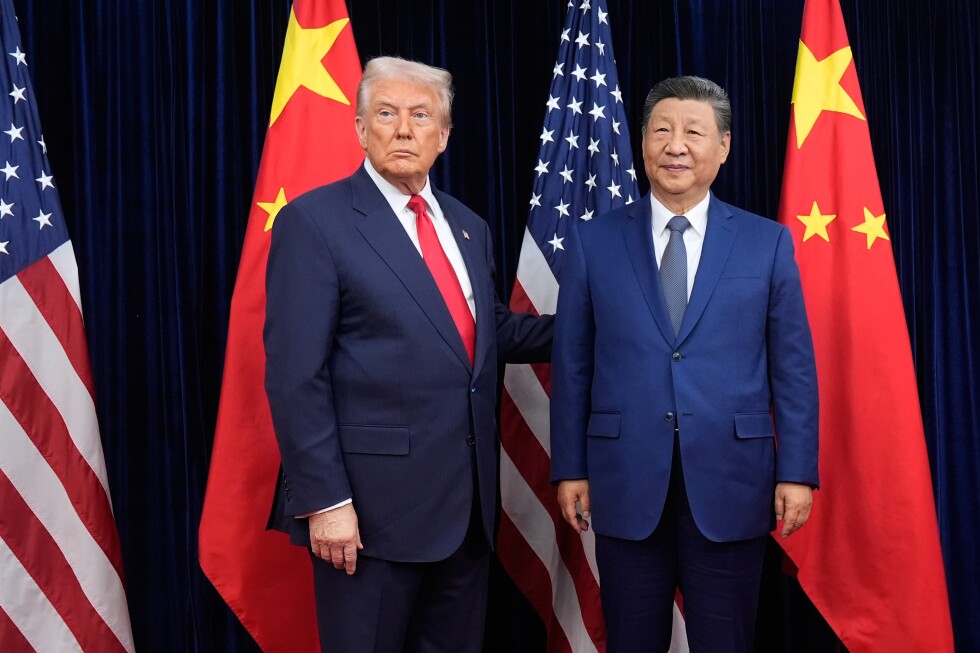
The White House has confirmed Trump will travel to China from March 31 through April 2 to meet with President Xi Jinping, a visit that now takes on heightened significance following the court ruling.
Experts believe Xi will adopt a measured approach during the upcoming summit rather than leveraging the court decision as a point of triumph. Ali Wyne, senior research and advocacy adviser at the International Crisis Group, suggests Xi will prioritize strengthening personal rapport with Trump instead.
“The more that Xi can do that, the more likely it is that the fragile trade truce between the United States and China will take hold in earnest and that Trump will be amenable to security concessions that give China greater freedom of maneuver in Asia,” Wyne explained.
When asked about the implications of the ruling, Chinese Embassy spokesperson Liu Pengyu offered only that tariff and trade wars serve neither country’s interests, calling for cooperation to provide “greater certainty and stability for China-U.S. economic and trade cooperation and the global economy.”
The court decision creates uncertainty beyond just U.S.-China relations, potentially affecting numerous American trading partners in Asia and elsewhere, particularly those who negotiated trade agreements in response to Trump’s original tariff policies.
“I would expect most Asian partners to proceed cautiously, with existing agreements largely holding as both sides work through the implications in the coming weeks,” said Dan Kritenbrink, a partner at The Asia Group and former assistant secretary of state for East Asian and Pacific affairs in the Biden administration.
Japan’s position merits special attention ahead of Prime Minister Sanae Takaichi’s planned Washington visit in March. As a key U.S. ally whose relations with Beijing have deteriorated recently, Japan faces particular challenges navigating the shifting trade landscape.
Despite the setback, Trump retains multiple options for imposing tariffs on Chinese goods. Early in his return to the White House, he invoked emergency powers to implement 20% tariffs on Chinese imports, citing Beijing’s alleged failure to control precursor chemicals used in fentanyl production.
Trump later expanded this approach with reciprocal tariffs reaching 34% on Chinese goods, prompting retaliatory measures from Beijing that briefly sent duties soaring before both sides de-escalated. Following trade talks and a summit between Trump and Xi in South Korea last October, they agreed to a one-year truce with a 10% baseline tariff, with Trump reducing the “fentanyl tariff” while China resumed cooperation on restricting relevant chemical exports.
Wendy Cutler, vice president of the Asia Society Policy Institute, believes the Trump administration likely has contingency plans ready. The Office of the U.S. Trade Representative is actively investigating China’s compliance with previous agreements, potentially providing legal justification for new tariffs if non-compliance is determined.
Representative Ro Khanna, the top Democrat on the House Select Committee on the Chinese Communist Party, urged the administration to develop a more robust approach that “holds China accountable for its unfair trade practices and leverages the collective power of our allies and partners.”
Gabriel Wildau, managing director at consultancy Teneo, noted that Trump has previously demonstrated willingness to employ various legal authorities to impose tariffs on China, suggesting Beijing likely assumes the tariffs could be maintained or reimplemented “with only modest difficulty.”
“But Beijing also holds out hope that they can persuade Trump to lower this tariff in exchange for purchase guarantees or other concessions,” Wildau added, highlighting the ongoing potential for negotiated solutions despite the current legal complications.
Fact Checker
Verify the accuracy of this article using The Disinformation Commission analysis and real-time sources.

12 Comments
This legal blow to Trump’s tariff strategy seems to bolster China’s negotiating position, but their measured response will be crucial. Overconfidence could jeopardize the fragile trade truce they’ve been working to preserve.
I agree. China will likely try to leverage this win without provoking a harsh backlash from the US. Maintaining stability in the relationship appears to be the priority for both countries.
It’s clear Trump is doubling down on his tariff strategy, even in the face of this legal setback. His rhetoric about countering China’s rise suggests this issue remains a top priority for the administration.
Trump’s forceful response indicates he’s not backing down easily. This sets the stage for a tense negotiation process as the two sides try to find common ground.
While the court ruling strengthens China’s negotiating position, I expect they will be cautious in capitalizing on it. Overplaying their hand could jeopardize the fragile trade truce both sides have been trying to maintain.
Good point. China likely knows the importance of restraint here. Pushing too hard could backfire and lead to an escalation neither country wants right now.
The court’s decision casts new uncertainty over the future of US-China trade relations. With Trump doubling down on his tariff agenda, it sets the stage for a tense negotiation process ahead of his Beijing visit.
Definitely a complex and high-stakes situation. Both sides will need to exercise careful diplomacy to find common ground and avoid further escalation of tensions.
This legal setback for Trump’s tariffs adds an extra layer of complexity to the already delicate US-China trade relationship. Both sides have incentives to maintain stability, so it will be interesting to see how they navigate this new dynamic.
You’re right, with Trump’s upcoming China visit, the stakes are high for both countries to find a constructive path forward. Preserving economic stability seems to be the priority.
The Court’s decision certainly complicates the already delicate US-China trade dynamic. Both countries have strong incentives to maintain stability, so it will be interesting to see how they navigate this new landscape.
Absolutely. With the high stakes involved, I imagine both sides will be looking for ways to de-escalate tensions and find a mutually acceptable solution, if possible.