


Listen to the article
US to Allow Venezuela Oil Sales Under Treasury Oversight
The Trump administration will soon permit Venezuela to sell oil currently subject to U.S. sanctions, with revenue initially directed toward essential government services like policing and healthcare, Secretary of State Marco Rubio announced Wednesday.
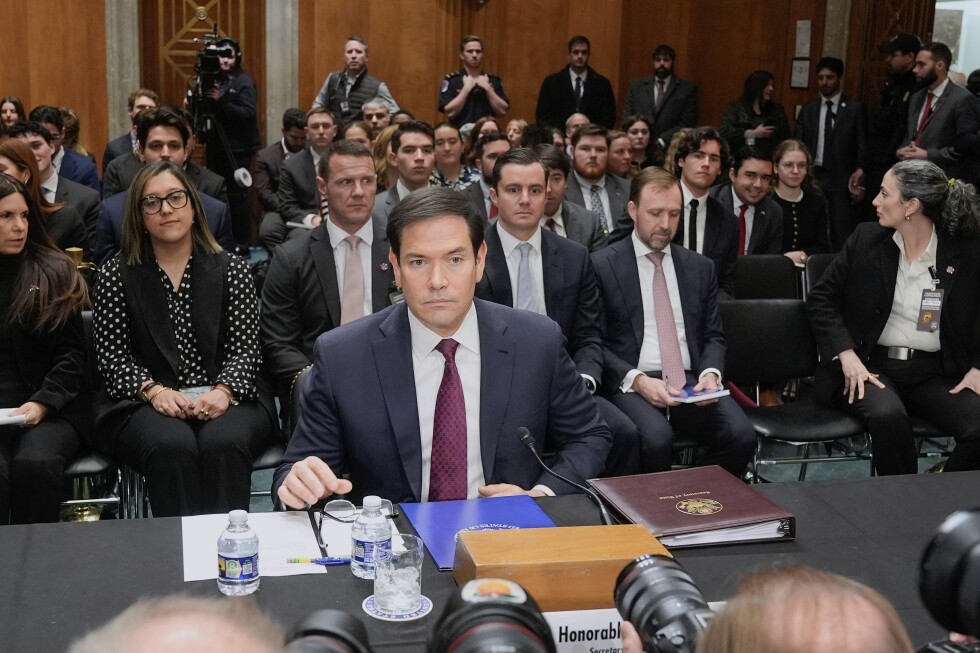
Speaking at a Senate Foreign Relations Committee hearing, Rubio outlined how the United States will maintain oversight of oil revenue to ensure it benefits the Venezuelan people rather than being diverted to corrupt officials.
“The funds from that will be deposited into an account that we will have oversight over,” Rubio explained. “Venezuela will spend that money for the benefit of the Venezuelan people.”
The Treasury Department will directly control the process, requiring Venezuela’s interim government to submit monthly budgets detailing planned expenditures. This arrangement represents a significant shift in U.S. policy toward Venezuela, which possesses the world’s largest proven crude oil reserves.
The decision comes in the wake of a U.S. operation that captured former President Nicolás Maduro earlier this month. Under the new framework, American authorities aim to leverage Venezuela’s vast oil resources to influence the country’s transition while preventing economic collapse.
“This is simply a way to divide revenue so that there isn’t systemic collapse while we work through this recovery and transition,” Rubio said, emphasizing that the arrangement is a temporary measure. “We only control the dispersal of the money, we don’t control the actual money.”
During the hearing, Democrats and some Republicans pressed Rubio for additional details about the administration’s plans. Senator Chris Murphy (D-Conn.) sought assurances that oil sales would be conducted fairly and openly, not structured to benefit companies aligned with President Trump.
“You are taking their oil at gunpoint, you are holding and selling that oil… you’re deciding how and for what purposes that money is going to be used in a country of 30 million people,” Murphy said. “I think a lot of us believe that that is destined for failure.”
Rubio countered that under Maduro’s leadership, Venezuela’s oil industry primarily benefited corrupt officials and countries like China, which purchased Venezuelan crude at discounted prices. He added that Venezuela’s interim leadership is now helping the U.S. seize illegal oil shipments.
The revenue mechanism involves funds initially set up in Qatar to avoid seizure by American creditors and other legal complications stemming from the U.S. not recognizing Maduro’s government as legitimate. Hundreds of millions of dollars have already been placed in this account, with an anticipated $3 billion more expected to flow in.
Venezuela’s acting President Delcy Rodríguez previously announced that oil revenue would be directed into two sovereign wealth funds: one supporting the country’s crisis-stricken healthcare system and another bolstering public infrastructure, including the electric grid.
The country’s healthcare system has deteriorated to the point where patients must provide their own medical supplies, from syringes to surgical screws, and pay for laboratory tests and imaging at private facilities.
During a televised event Tuesday announcing healthcare facility upgrades, Rodríguez said her government and the U.S. administration “have established respectful and courteous channels of communication” since Maduro’s capture. At her request, Venezuelan lawmakers last week began debating an overhaul of the country’s energy law aimed at creating conditions to attract much-needed private foreign investment.
Rubio clarified that the U.S. will not subsidize oil industry investments in Venezuela, but is merely overseeing the sale of sanctioned petroleum as an “interim step” while the country works through its political transition.
Fact Checker
Verify the accuracy of this article using The Disinformation Commission analysis and real-time sources.

10 Comments
The Trump administration’s plan to control Venezuela’s oil money is an interesting approach, but I’m concerned about the potential for unintended consequences. Oversight and accountability will be crucial.
Interesting move by the Trump administration to try and control Venezuela’s oil revenue. Maintaining oversight to ensure the money benefits the Venezuelan people rather than corrupt officials is important, but I’m curious how effective this will be in practice.
Agreed, the devil will be in the details on how this oversight mechanism actually functions. It’s a delicate balance to strike.
Directing Venezuela’s oil revenue towards essential services like healthcare and policing is a laudable goal. However, I question whether the US will be able to truly prevent corruption and misuse of the funds.
Capturing former President Maduro was a significant development, but I wonder how much this will actually change on the ground in Venezuela. Maintaining control over the country’s oil revenue will be an ongoing challenge.
I appreciate the Trump administration’s efforts to ensure Venezuela’s oil wealth is used to help the people, not corrupt officials. However, I’m skeptical about how much influence the US will realistically have over Venezuela’s budget and spending decisions.
You raise a fair point. Venezuela’s government may resist US oversight and try to work around it. Monitoring the situation closely will be crucial.
This seems like a pragmatic move by the US to try to improve the situation for everyday Venezuelans. Controlling the oil revenue directly is a bold step, but I wonder if it will be effective long-term.
Agreed, the long-term sustainability of this arrangement is uncertain. A lot will depend on Venezuela’s cooperation and whether the US can maintain tight oversight.
While the goal of ensuring Venezuela’s oil wealth benefits the people is commendable, I’m skeptical about the US government’s ability to effectively manage and monitor the spending of these funds. Corruption and misuse may be hard to prevent.