


Listen to the article
London’s Ancient Streets Pose Challenge for Autonomous Vehicle Trials
A Ford Mustang Mach-E navigates London’s congested streets, its artificial intelligence system working to avoid jaywalkers and negotiate roadwork while maintaining a steady pace. This test run, conducted by British startup Wayve Technologies, represents the vanguard of the United Kingdom’s upcoming robotaxi trials scheduled to begin this spring.
London is set to become the latest battleground in the global competition for autonomous vehicle supremacy, with tech giants including Google-owned Waymo and China’s Baidu planning to participate in the government-backed pilot program. While self-driving taxis have already launched in cities like San Francisco and Phoenix, London’s unique infrastructure presents distinct challenges.
Unlike the grid layouts of many American cities, London’s road network is a convoluted spiderweb dating back to Roman times. The British capital, with nearly 10 million residents, ranks among the world’s most congested urban centers. Its streets are already crowded with private vehicles, buses, scooters, bicycles, and electric rental bikes.
Another potential obstacle facing autonomous vehicles is pedestrian behavior. Unlike in the United States, jaywalking is not illegal in Britain, meaning pedestrians frequently cross streets at unpredictable locations and times.
“It’s virtually impossible to drive anywhere in London without somebody walking in front of you,” notes Steven McNamara, general secretary of the Licensed Taxi Drivers’ Association (LTDA), which represents London’s iconic black cab drivers. “How are these cars going to deal with those volumes of people?”
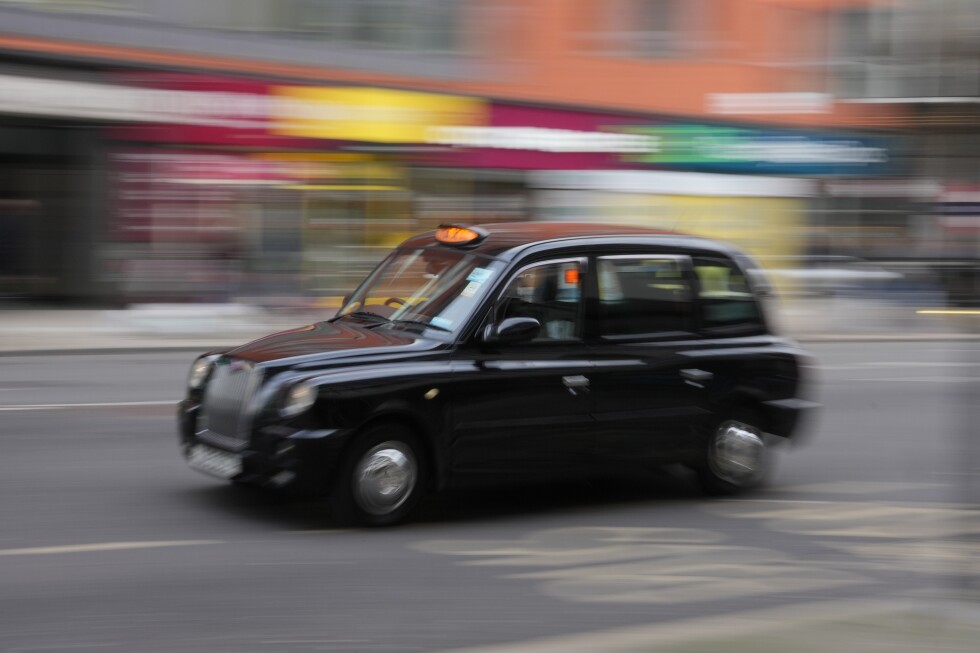
London’s black cab drivers have historically resisted technological disruptions to their industry. Drivers must complete “The Knowledge,” a rigorous training program requiring memorization of hundreds of routes across the city, a process that typically takes years to master. The LTDA previously organized protests against Uber’s entry into the London market.
McNamara dismisses robotaxis as “a solution looking for a problem,” questioning their potential advantages in London’s complex urban environment.
Despite these skeptics, the companies behind autonomous vehicle technology remain optimistic about their London prospects. Wayve CEO Alex Kendall believes “Londoners are going to love autonomous driving” as an additional transportation option alongside existing choices like the Underground, cycling, and walking.
Wayve is partnering with Uber for the upcoming trials, which form part of Britain’s initiative to establish national regulations for self-driving vehicles. The UK government aims to position the country as a global leader in autonomous transportation technology.
Chinese tech giant Baidu is also collaborating with Uber and Lyft to operate its Apollo Go autonomous service during the London pilot. Meanwhile, Waymo plans to launch a passenger service in London by the third quarter of 2026.
Waymo representatives have attempted to address concerns about flooding London’s streets with robotaxis, noting that the company operates approximately 1,000 vehicles in San Francisco since launching full service in 2024. “We’re not here to replace anyone,” said Waymo spokesman Ethan Teicher. “We’re here to add another option for people who will choose to take black cabs or other modes of transportation when it suits them.”
Both Waymo and Wayve have already been conducting test runs in London with human safety drivers present. During a recent demonstration for The Associated Press, Wayve’s Ford Mustang Mach-E successfully navigated a three-mile loop in North London with only minor issues, including one somewhat abrupt stop at a changing traffic light.
Wayve’s approach differs from traditional self-driving technology. Rather than relying on high-definition maps and pre-programmed safety rules, the company uses artificial intelligence trained on millions of hours of driving data. “This is the key thing for self-driving, because every time you drive on the road, you’re going to experience something different,” Kendall explained.
Wayve positions itself as a technology provider offering hardware and software that can make any vehicle autonomous. The company recently signed a deal with Nissan to develop self-driving cars for the Japanese and North American markets by 2027.
Pricing details for these upcoming robotaxi services remain largely undisclosed, though Waymo officials have indicated their fares will be “competitive” and potentially “more premium” than traditional options.
Transportation experts suggest that robotaxis may initially find their niche by filling gaps in Britain’s public transport network, particularly in underserved rural areas that have lost bus connections to larger towns and cities due to budget cuts.
However, many believe human drivers will continue to play a crucial role, especially for tourists and visitors unfamiliar with the city. As Frank O’Beirne, a 14-year veteran black cab driver, points out, autonomous vehicles cannot replicate the personalized service that human drivers provide. He recently assisted blind passengers by walking them from his cab to a restaurant located in the basement of a casino—a level of service that autonomous vehicles simply cannot match.
“There’s nothing like us,” O’Beirne concluded. “I can’t see the space where autonomous taxis can operate, really.”
Fact Checker
Verify the accuracy of this article using The Disinformation Commission analysis and real-time sources.

8 Comments
The black cab drivers in London must be watching these robotaxi trials with a mix of apprehension and curiosity. Their traditional livelihood is facing disruption, but autonomous vehicles could also help reduce congestion and emissions in the city. It will be an interesting transition to observe.
I agree, the black cab drivers are in a tough spot. Their specialized knowledge of London’s labyrinthine streets gives them a real advantage, but technology is quickly catching up. It will be a challenge for them to adapt and remain relevant.
Interesting to see how autonomous vehicles will handle the unique challenges of London’s historic, winding streets. Will they be able to safely navigate the congested traffic and avoid the many obstacles? The results of these trials could have big implications for the future of transportation in cities worldwide.
I’m curious to see how the self-driving tech copes with the unpredictability of London’s roads. Negotiating jaywalkers, construction zones, and all the other traffic will really put these systems to the test.
London’s unique urban layout poses some significant hurdles for autonomous vehicle developers. The winding roads, heavy traffic, and unpredictable pedestrians will really put these systems to the test. I’m curious to see if the self-driving tech can handle the complexity and prove its worth in a dense, historic city like this.
London’s unique infrastructure and traffic patterns pose a real challenge for autonomous vehicle developers. The winding, historic streets and unpredictable pedestrians are a far cry from the grid layouts of many American cities. These robotaxi trials will be a true test of the technology’s capabilities.
The robotaxi trials in London could have major implications for the future of urban transportation. If the autonomous vehicles can safely and efficiently navigate the city’s congested streets, it could pave the way for wider adoption. But the skepticism from the black cab drivers is understandable – their livelihoods are on the line.
Agreed, the black cab drivers have good reason to be wary. Their specialized knowledge and skills are being challenged by emerging technology. It will be an interesting transition to see how they adapt and whether they can find a way to coexist with the autonomous vehicles.