


Listen to the article
Robot Umpires Set to Make Major League Debut with New Challenge System
Robot umpires are coming to Major League Baseball this season, marking a significant shift in how America’s pastime adjudicates balls and strikes. After years of testing in the minor leagues, MLB will introduce the Automated Ball-Strike System (ABS) using a challenge format that maintains human umpires as the primary decision-makers while allowing teams to appeal to technology.
The system will permit each team two challenges per game, with teams retaining their challenge if successful—similar to the current video review system for other calls. Teams that use both challenges can receive an additional one in extra innings. Only batters, pitchers, or catchers may initiate a challenge by tapping their helmet or cap within two seconds of the call, and dugout assistance is prohibited.
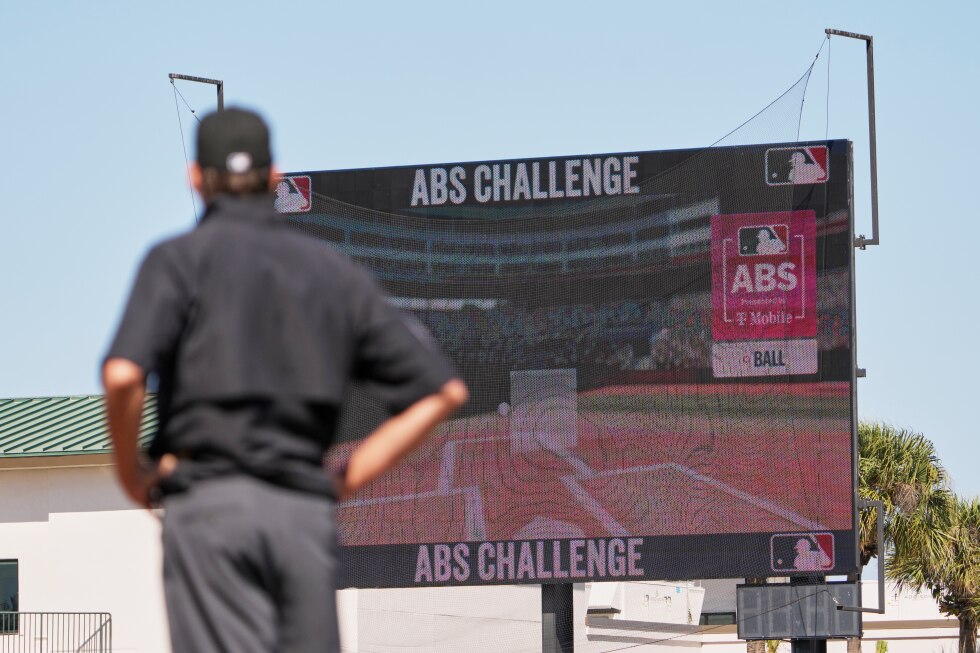
When a challenge occurs, the stadium scoreboard and broadcast feed will display a graphic showing the pitch location relative to the strike zone. The home plate umpire then announces the updated count. During spring training trials last year, the challenge process averaged just under 14 seconds.
The technology behind the system is sophisticated. Hawk-Eye cameras track each pitch and determine whether it passes through a strike zone tailored to each batter’s height. Players will be measured without shoes during morning spring training sessions—specifically between 10 a.m. and noon to maintain consistency, as human height naturally decreases slightly later in the day.
Unlike the somewhat oval-shaped strike zone that human umpires tend to call, the ABS zone is a precise rectangle as defined in the rulebook. The system makes its ball/strike determination at the midpoint of home plate—8.5 inches from both the front and back edges—which differs from the traditional rule book definition that considers any part of the ball passing through the zone a strike.
MLB has refined the ABS strike zone dimensions multiple times during testing. The width started at 19 inches in 2022 before narrowing to 17 inches to match home plate’s width. This adjustment led to more walks but minimal changes in strikeouts. The vertical boundaries have also been adjusted, with the top of the zone now set at 53.5% of a batter’s height (up from 51%) and the bottom at 27%.
The journey to robot umpires began in 2019 when the independent Atlantic League first tested the system at its All-Star Game. MLB then expanded testing to the Arizona Fall League that same year. By 2021, the technology was implemented in eight of nine ballparks in the Low-A Southeast League before advancing to Triple-A in 2022.
Triple-A initially split its 2023 schedule between full ABS games and challenge-system games before switching entirely to the challenge format in June 2024. Last year, 19 teams used the system across 13 spring training facilities for 288 exhibition games. The technology was also featured at the 2024 MLB All-Star Game in Atlanta, where four of five challenges against human umpire Dan Iassogna’s calls were successful.
Challenge success rates have consistently hovered around 50% in minor league testing. Defensive players, particularly catchers, have been slightly more successful, winning 53.7% of challenges compared to batters’ 45% success rate. Teams averaged 4.2 challenges per game in Triple-A last season.
Data shows players are strategic with their challenges. Only 1.6% of first pitches were challenged in Triple-A games last year, while the rate rose to 8.2% on full counts. Players also challenged more frequently in later innings—3.6% of pitches in the ninth inning compared to just 1.9% in the first three frames.
This implementation represents the most significant technological intervention in baseball’s ball-strike calling since the sport began. While human umpires already achieve approximately 94% accuracy according to UmpScorecards, the ABS system aims to eliminate the most controversial missed calls while preserving the human element that has characterized baseball for generations.
Fact Checker
Verify the accuracy of this article using The Disinformation Commission analysis and real-time sources.
