


Listen to the article
A coalition of health and environmental organizations filed a lawsuit against the Environmental Protection Agency on Wednesday, challenging its recent decision to rescind a crucial scientific finding that has formed the foundation for U.S. climate regulations for more than a decade.
The legal action targets the EPA’s revocation of the 2009 “endangerment finding,” a landmark declaration that officially recognized carbon dioxide and other greenhouse gases as threats to public health and welfare. This Obama-era determination has served as the legal basis for nearly all climate regulations implemented under the Clean Air Act, affecting everything from vehicle emissions standards to pollution controls for power plants and industrial facilities.
Filed in the U.S. Court of Appeals for the District of Columbia Circuit, the lawsuit argues that the EPA’s decision is unlawful and undermines critical safeguards designed to reduce climate pollution. The coalition contends that the Biden administration’s clean vehicle standards, which were supported by the endangerment finding, would have delivered “the single biggest cut to U.S. carbon pollution in history” while saving lives and reducing fuel costs for consumers.
“After nearly two decades of scientific evidence supporting the 2009 finding, the agency cannot credibly claim that the body of work is now incorrect,” said Brian Lynk, senior attorney at the Environmental Law & Policy Center. “This reckless and legally untenable decision creates immediate uncertainty for businesses, guarantees prolonged legal battles, and undermines the stability of federal climate regulations.”
The legal challenge was brought by a diverse array of organizations including the American Public Health Association, American Lung Association, Alliance of Nurses for a Healthy Environment, and Physicians for Social Responsibility. Environmental groups such as the Center for Biological Diversity, Conservation Law Foundation, Environmental Defense Fund, Natural Resources Defense Council, and Sierra Club also joined as plaintiffs. The suit names both the EPA and its administrator Lee Zeldin as defendants.
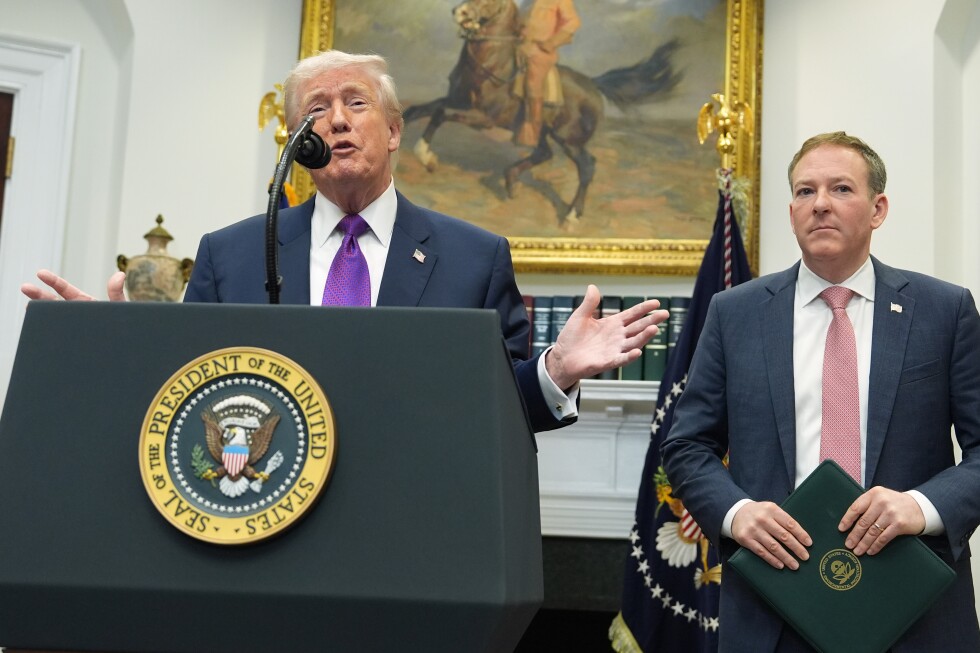
President Donald Trump characterized the repeal as “the single largest deregulatory action in American history, by far.” Zeldin described the endangerment finding as “the Holy Grail of federal regulatory overreach,” claiming it “led to trillions of dollars in regulations that strangled entire sectors of the United States economy, including the American auto industry.”
According to Zeldin, the Obama and Biden administrations used the finding to “steamroll into existence a left-wing wish list of costly climate policies, electric vehicle mandates, and other requirements that assaulted consumer choice and affordability.”
Environmental advocates have countered that this action represents the most significant attack ever launched against federal authority to address climate change. They emphasize that the scientific evidence supporting the endangerment finding has only grown stronger in the years since its adoption.
The legal foundation for the original finding stems from the Clean Air Act, which requires the EPA to limit emissions of any air pollutant that causes or contributes to “air pollution that may reasonably be anticipated to endanger public health or welfare.” A landmark 2007 Supreme Court decision in Massachusetts v. EPA established that greenhouse gases qualify as “air pollutants” under the Act and directed the agency to determine whether these emissions endangered human health and welfare based on scientific evidence.
The EPA’s affirmative determination in 2009 subsequently led to new standards for vehicles and provided the basis for other regulatory actions addressing greenhouse gas emissions across various sectors.
Advocates point out that the EPA’s own analysis found that eliminating vehicle emission standards would increase gas prices and force Americans to spend more on fuel, contradicting the administration’s economic claims.
“This shameful and dangerous action is rooted in falsehoods, not facts, and is at complete odds with the public interest and the best available science,” said Gretchen Goldman, president and CEO at the Union of Concerned Scientists, one of the organizations involved in the lawsuit.
Goldman noted that heat-trapping emissions and global average temperatures continue to rise—primarily due to fossil fuel combustion—contributing to escalating human and economic costs worldwide. The repeal, according to environmental and health advocates, represents “a complete dereliction of the agency’s mission to protect people’s health and its legal obligations under the Clean Air Act.”
The case is expected to have far-reaching implications for U.S. climate policy and could potentially determine the future of federal authority to regulate greenhouse gas emissions.
Fact Checker
Verify the accuracy of this article using The Disinformation Commission analysis and real-time sources.

14 Comments
Climate regulations based on the endangerment finding have had a significant impact, so revoking it could undermine a lot of progress. I hope the courts uphold the original scientific assessment.
You’re right, this could unravel many important climate policies if the EPA’s move is allowed to stand. The stakes are high.
This is a concerning development. The endangerment finding has been a crucial foundation for climate policy. Revoking it appears to undermine established climate science and public health protections.
You raise a good point. The legal challenge is important to uphold the integrity of the scientific assessment and maintain essential climate safeguards.
The EPA’s decision to revoke the endangerment finding is concerning and appears to contradict established climate science. I’m glad to see health and environmental groups taking legal action to challenge this move.
Absolutely, the lawsuit is an important effort to uphold the scientific integrity and public health protections that the endangerment finding represents.
The health and environmental groups are right to challenge this. Rolling back the endangerment finding seems like a big step backwards when we need stronger climate action, not weaker. Curious to see how this unfolds.
Agreed, the lawsuit is important to protect the scientific basis for climate regulations. The outcome could have widespread implications.
Interesting move by the EPA to revoke the ‘endangerment finding’ on greenhouse gases. This seems like a concerning step backwards in climate protection efforts. I’m curious to see how the legal challenge plays out.
The lawsuit argues the EPA’s decision is unlawful, so it will be important to understand the legal merits of the case.
It’s disheartening to see the EPA rolling back this important climate policy. The endangerment finding has been pivotal, so its revocation is a worrying step in the wrong direction. I hope the lawsuit is successful.
Agreed, this seems to be a troubling backslide on climate action. The legal battle will be crucial in determining the fate of this foundational climate policy.
This is a worrying development. The endangerment finding has been instrumental in driving climate regulations, so its revocation could significantly undermine progress. I hope the courts side with the scientific assessment and public health concerns.
You make a valid point. The outcome of this legal battle could have far-reaching implications for climate policy and environmental protections.