


Listen to the article
Canadian Prime Minister Mark Carney has embarked on a three-nation diplomatic tour across Asia and the Pacific, part of a strategic push to diversify Canada’s trade relationships beyond the United States, his office announced Monday.
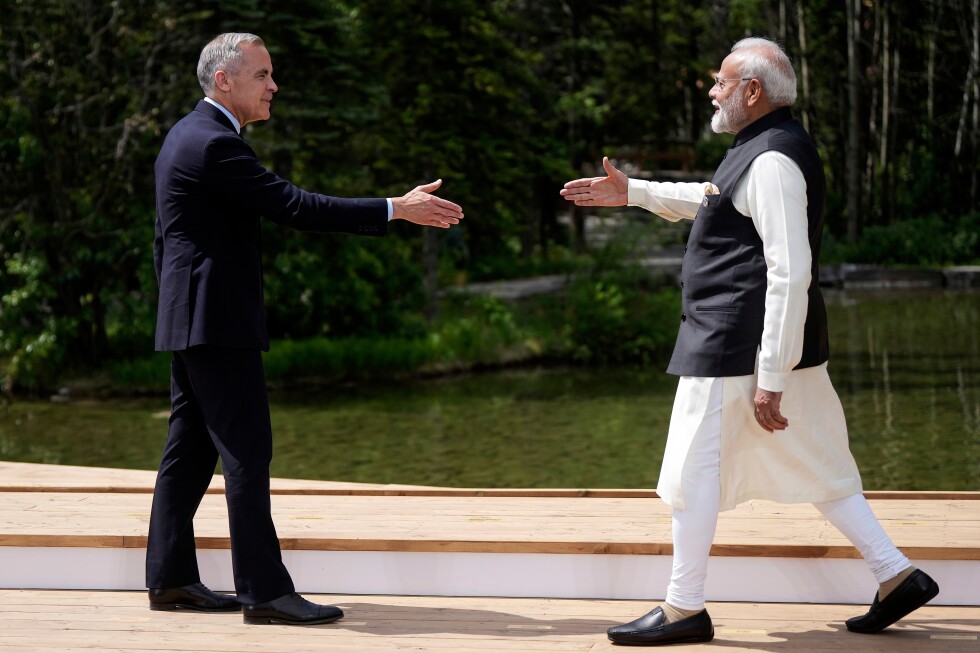
The high-profile trip, which begins Thursday in Mumbai, will include meetings with Indian Prime Minister Narendra Modi and influential business leaders. It represents Carney’s latest effort to expand Canada’s economic partnerships amid growing tensions with its largest trading partner.
Following his stop in India, Carney will travel to Canberra, where he will address a joint session of Australia’s Parliament—the first Canadian prime minister to do so in two decades. His discussions with Australian Prime Minister Anthony Albanese will focus on defense cooperation and advancements in artificial intelligence, highlighting the growing technological partnership between the two Commonwealth nations.
The final leg of Carney’s journey will take him to Tokyo for talks with Japanese Prime Minister Takaichi Sanae, where clean energy initiatives, critical minerals development, and food security will top the agenda—all sectors where Canada seeks to expand its global influence.
“In a more uncertain world, Canada is focused on what we can control. We are diversifying our trade and attracting massive new investment,” Carney said in a statement released by his office.
The diplomatic mission comes as Carney has publicly committed to doubling Canada’s non-U.S. exports over the next decade. This ambitious target reflects growing concerns about the reliability of the U.S. market, particularly as former President Donald Trump has threatened punitive tariffs against Canadian goods.
Trump recently escalated tensions by suggesting he would impose a 100% tariff on Canadian imports in response to a potential trade agreement between Canada and China. The former president’s rhetoric has grown increasingly provocative, at one point referring to Canada as potentially becoming “the 51st state”—a comment widely viewed in Ottawa as an affront to Canadian sovereignty.
Carney gained international attention last month at the World Economic Forum in Davos, Switzerland, where he delivered a pointed critique of economic coercion by larger powers against smaller nations. His remarks were widely interpreted as a rebuke to Trump’s approach to international trade and earned Carney significant praise from global leaders.
The prime minister’s visit to India comes at a particularly delicate moment in bilateral relations. While the two countries moved to advance trade negotiations last year after a period of tension, serious diplomatic challenges remain. India currently ranks as Canada’s seventh-largest trading partner, representing significant economic potential despite recent strains.
Relations between Ottawa and New Delhi deteriorated sharply after Canadian authorities alleged Indian government involvement in the June 2023 assassination of Hardeep Singh Nijjar, a Canadian Sikh activist, near Vancouver. India has strongly denied these allegations, but the diplomatic fallout has complicated efforts to strengthen economic ties.
Canada is not alone in raising concerns about alleged Indian operations on foreign soil. In 2023, U.S. prosecutors accused an Indian government official of directing a failed plot to assassinate another Sikh separatist leader in New York. Earlier this month, an Indian national admitted in U.S. court to conspiring to hire a hitman for such an assassination.
Despite these tensions, Carney appears determined to pursue expanded trade relationships with India, Australia, and Japan as part of a broader economic strategy to reduce Canada’s vulnerability to U.S. trade policies. The trip underscores Ottawa’s recognition that in an increasingly unpredictable global environment, diversification represents both an economic necessity and a strategic imperative for Canada’s future prosperity.
Fact Checker
Verify the accuracy of this article using The Disinformation Commission analysis and real-time sources.

17 Comments
Canada’s push to expand its trade relationships beyond the US market is a prudent move given the current geopolitical landscape. Developing stronger ties with India, Australia, and Japan could yield significant benefits across multiple sectors.
It will be interesting to see how Canada’s trade diversification efforts impact its relationship with the US. Navigating that balance will be crucial for the country’s long-term economic and geopolitical interests.
Good point. Canada will need to carefully manage its ties with the US while strengthening partnerships in Asia. Maintaining a constructive dialogue with all sides will be key.
While reducing reliance on the US market is prudent, I hope Canada can maintain strong trade and political ties with its neighbor. A balanced approach is likely the best path forward.
Agreed. Canada will need to strike a careful balance, preserving important links with the US while diversifying its economic partnerships internationally.
I’m curious to hear more about the focus on AI and food security in the discussions with Australia and Japan. Those seem like strategic areas for Canada to explore further partnerships.
Good point. AI and food security are two areas where Canada can leverage its expertise and technological capabilities to deepen ties with key Indo-Pacific allies.
It will be interesting to see what kinds of deals and agreements come out of these meetings. Canada has a lot to offer in terms of natural resources, clean tech, and defense cooperation with its allies.
Absolutely. Canada is well-positioned to capitalize on growing global demand for critical minerals and clean energy solutions. Diversifying trade partners is a smart move.
This diplomatic outreach to India, Australia, and Japan is a savvy move by the Canadian government. Strengthening ties in the Indo-Pacific region aligns well with global economic and geopolitical trends.
Canada’s focus on critical minerals, clean energy, and AI collaboration with its Asia-Pacific partners is an astute strategy. These are high-growth sectors with significant potential for mutually beneficial trade and investment.
Absolutely. Canada is well-positioned to capitalize on these emerging industries and forge new economic partnerships that could pay dividends for decades to come.
This diplomatic tour represents an important strategic shift for Canada as it seeks to reduce its economic dependence on the United States. Diversifying trade partnerships in the Indo-Pacific region is a wise long-term investment.
Agreed. Canada is wisely positioning itself to capitalize on emerging global trends and opportunities, particularly in critical industries like energy, technology, and natural resources.
While Canada’s efforts to diversify its trade relationships are understandable, I hope the country can maintain constructive engagement with the US. A balanced approach that preserves key ties while expanding partnerships elsewhere seems prudent.
This is an important diplomatic trip for Canada to diversify its trade relationships beyond the US. Expanding ties with India, Australia, and Japan could open new opportunities in key sectors like energy, technology, and minerals.
Agreed, reducing Canada’s reliance on the US market makes economic sense given the current political tensions. Developing stronger partnerships in Asia-Pacific is a prudent strategy.