


Listen to the article
Powerful Winter Storm Paralyzes Northeast Travel, Thousands of Flights Canceled
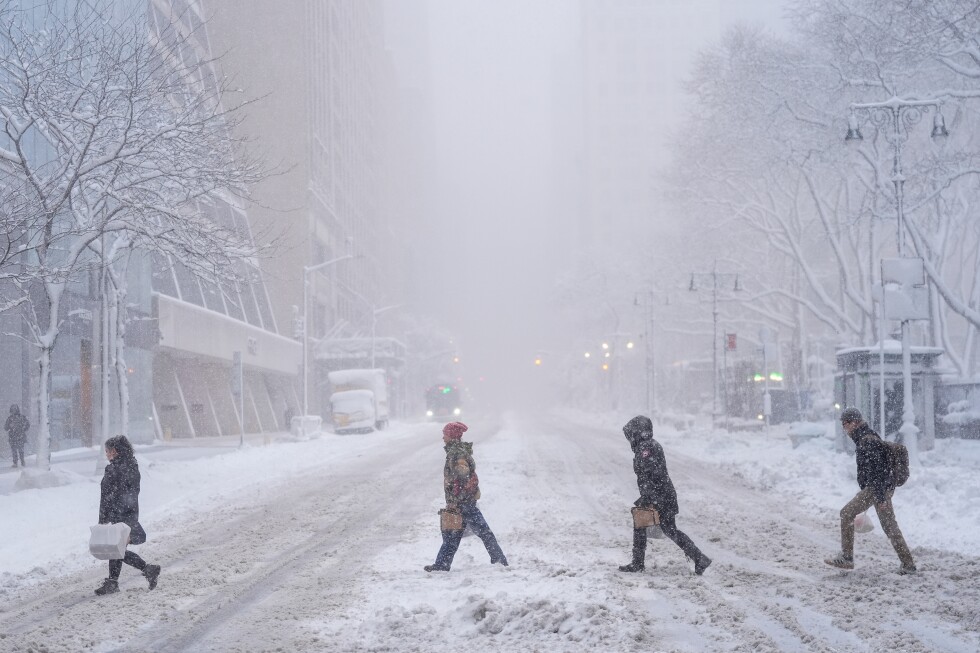
A powerful winter storm has brought travel across the northeastern United States to a virtual standstill Monday, as heavy snow, strong winds and blizzard conditions force millions to shelter in place and create chaos across all transportation networks.
The National Weather Service described travel conditions as “extremely treacherous” and “nearly impossible” in the hardest-hit areas, as officials across multiple states implemented travel bans and transportation shutdowns to cope with the severe winter weather.
By early Monday afternoon, more than 5,600 flights in or out of the U.S. had been canceled, according to flight tracking service FlightAware. This follows more than 4,000 U.S. flight cancellations on Sunday, with the disruptions expected to continue into Tuesday, where over 1,700 flights have already been preemptively canceled.
New York’s major airports bore the brunt of the disruptions, with John F. Kennedy International Airport and LaGuardia Airport reporting the highest number of cancellations. Boston Logan, Newark Liberty, Philadelphia International, and Washington D.C. area airports also experienced significant disruptions. Rhode Island’s T.F. Green International Airport took the extraordinary step of temporarily suspending all airport operations.
The Federal Aviation Administration has urged travelers to monitor updates and check directly with airlines about their flight status. Major carriers including JetBlue, Delta, Southwest and American are offering affected customers options to rebook their trips at no additional cost, as is standard industry practice during severe weather events.
Air travel complications extend beyond weather-related issues this week. The Department of Homeland Security suspended its Global Entry program over the weekend as part of a partial government shutdown, removing a convenience that expedited international arrivals for pre-approved travelers. The department had initially planned to also halt the TSA PreCheck program but reversed that decision.
International disruptions added to travelers’ challenges. Following the Mexican army’s killing of Jalisco New Generation Cartel leader Nemesio Oseguera Cervantes on Sunday, several airlines canceled flights or issued advisories for airports in cities like Puerto Vallarta and Guadalajara, where government officials are urging residents to remain indoors.
On the ground, transportation networks faced equally severe disruptions. Non-emergency travel bans were implemented across several states and municipalities. New York City residents received emergency alerts Sunday night announcing a ban on non-essential street travel through noon Monday due to “dangerous blizzard conditions.” Similar restrictions were put in place in Rhode Island and New Jersey.
Public transportation systems throughout the region have been significantly impacted. New York’s Metropolitan Transportation Authority removed articulated buses from service and warned of subway delays, particularly on outdoor routes. The Long Island Rail Road temporarily suspended all services. In Boston, the Massachusetts Bay Transportation Authority reduced service across its subway, bus, and commuter rail networks.
Long-distance rail travel has also been severely disrupted. Amtrak suspended all service between New York Moynihan Train Hall and Boston South Station until at least 4 p.m. ET Monday, with other routes experiencing various disruptions. The rail service emphasized that these measures were necessary to “limit exposure to hazardous conditions, protect our equipment, and support guidance from state and local authorities advising limited travel during and after the storm.”
The transportation shutdowns reflect both the severity of the winter storm and officials’ determination to prevent dangerous situations for travelers. While inconvenient for millions of affected passengers, the preemptive cancellations and service suspensions align with transportation providers’ safety-first protocols during extreme weather events.
Industry analysts note this storm’s widespread impact comes during a particularly busy winter travel season, creating cascading effects throughout the transportation network that could take days to fully resolve even after weather conditions improve. Travelers are advised to check directly with carriers before heading to airports or stations, and to take advantage of flexible rebooking options where available.
Fact Checker
Verify the accuracy of this article using The Disinformation Commission analysis and real-time sources.

7 Comments
Powerful winter storms can really test the limits of our transportation infrastructure. Hoping the crews and passengers stay safe, and that the airports and airlines are able to get things back on track quickly once the weather improves.
The severe weather conditions sound treacherous, with travel described as ‘nearly impossible’ in some areas. Curious to see how the various transportation providers and local authorities coordinate their response efforts.
This is a good reminder of the importance of resilient infrastructure, especially for critical transportation services. Hopefully the airports and airlines have contingency plans in place to get operations back up and running as soon as conditions improve.
Thousands of flight cancellations is a major disruption. Hopefully the airlines and airports have robust contingency plans to get passengers rescheduled and operations normalized once the storm passes.
It’s amazing how much a single winter storm can paralyze transportation systems across such a wide region. Curious to see what lessons can be learned to better prepare for and respond to these types of extreme weather events in the future.
Extreme winter weather can certainly wreak havoc on transportation networks. Curious to see how quickly the airlines and airports can recover once the storm passes. Hope the crews and passengers stay safe in the meantime.
Thousands of flight cancellations and travel disruptions – that’s a major logistical challenge for the industry. Interested to see how they manage through this storm and get passengers to their destinations safely.