


Listen to the article
Portuguese voters are set to choose between a moderate center-left candidate and a controversial far-right challenger in Sunday’s presidential runoff election, a contest that may signal the strength of populism’s appeal in one of Western Europe’s traditionally more politically moderate nations.
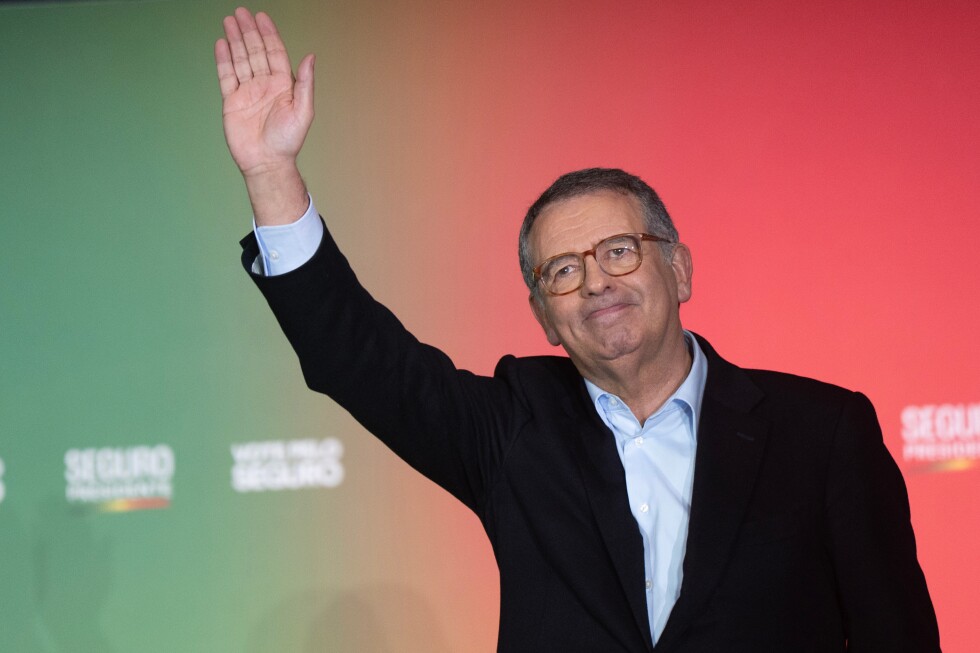
António José Seguro, a veteran Socialist politician, faces off against André Ventura, founder of the hard-right Chega (Enough) party, after neither candidate secured the required majority in last month’s first round of voting. Recent polling suggests Seguro holds a commanding lead, with predictions indicating he may receive twice as many votes as his opponent.
For Ventura, however, reaching the runoff represents a significant achievement that underscores Chega’s rapid ascent in Portuguese politics. The party’s rise parallels similar right-wing movements gaining traction across Europe, from Italy to Sweden, often fueled by anti-immigration sentiment and dissatisfaction with established political parties.
“This runoff represents more than just a presidential contest—it’s a referendum on the direction of Portuguese politics,” said Maria Fernandes, a political analyst at the University of Lisbon. “Even if Ventura loses, his presence in the final round legitimizes his party as a major political force.”
Seguro has positioned himself as a unifying figure who pledges to work constructively with Portugal’s center-right minority government, led by Prime Minister Luís Montenegro. Throughout his campaign, Seguro has emphasized stability and cooperation, qualities particularly appealing to voters weary of recent political turbulence.
Portugal has weathered considerable political instability, with three general elections in the past three years disrupting governance and economic planning. The May election resulted in a fragile minority government that will need to navigate complex parliamentary dynamics to implement its agenda.
While Portugal’s presidency is largely ceremonial, the role carries significant influence. The president can veto legislation (though parliament can override these vetoes) and possesses the authority to dissolve parliament and call early elections—a power sometimes referred to in Portuguese political circles as the “atomic bomb.”
Ventura’s approach stands in stark contrast to the traditionally conciliatory role of Portugal’s president. He has gained notoriety for his provocative rhetoric, particularly regarding immigration. During the campaign, his party erected billboards declaring “This isn’t Bangladesh” and “Immigrants shouldn’t be allowed to live on welfare,” messages that resonated with some voters but horrified others.
“Portugal is ours,” Ventura has repeatedly declared at campaign rallies, echoing nationalist sentiments heard across Europe.
Immigration has become an increasingly visible issue in Portugal, which has historically been more a country of emigration than immigration. In recent years, however, labor shortages in sectors like agriculture, construction, and hospitality have drawn workers from Brazil, Nepal, India, and various African nations.
Chega’s meteoric rise—from its founding less than seven years ago to becoming parliament’s second-largest party after May’s elections—has shocked Portugal’s political establishment, which had long prided itself on resisting the far-right populism that has gained ground elsewhere in Europe since the 2008 financial crisis.
The winner of Sunday’s election will replace outgoing center-right President Marcelo Rebelo de Sousa, who has served the maximum two five-year terms. Rebelo de Sousa’s presidency was marked by his approachable style and efforts to remain above partisan politics—qualities that many observers say Portugal needs now more than ever.
As voters head to the polls, the question remains whether they will embrace Seguro’s promise of stability and moderation or if Ventura’s populist challenge will prove stronger than expected, potentially reshaping the country’s political landscape for years to come.
Fact Checker
Verify the accuracy of this article using The Disinformation Commission analysis and real-time sources.

8 Comments
The rise of right-wing populism is a concerning trend across Europe. However, I’m hopeful that Portuguese voters will ultimately choose a more inclusive, democratic path forward.
I agree. A moderate, center-left candidate winning could be an important counterpoint to the populist wave in the region.
The populist candidate’s rise reflects real grievances, but simplistic solutions rarely address complex issues. I hope the election spurs thoughtful discourse on Portugal’s challenges.
Well said. Demonizing the ‘other’ is an easy trap, but real progress comes through nuanced dialogue and inclusive policymaking.
The populist candidate’s success so far is concerning, but I remain hopeful that Portuguese voters will ultimately choose a path of pragmatism and pluralism over divisiveness.
As an investor, I’ll be watching this election closely to gauge the potential policy implications for business and the economy. Stability and pragmatic governance are key.
This election will be an interesting barometer of Portugal’s political climate. It will be telling to see if the populist movement can gain more traction or if the more moderate candidate prevails.
This election will be a test of Portugal’s democratic institutions. I’m curious to see if the country can resist the siren call of populism in favor of more moderate leadership.